We are currently open! 12:34:21PM
Our Services



✖


Replacing a hot water system is rarely something homeowners plan for. One morning, the shower runs cold, the storage tank starts leaking, or the unit stops heating water altogether. Suddenly, you need to choose a replacement, compare quotes and work out how much the installation will cost.
For Melbourne homeowners, the right decision involves more than buying a new appliance. Your household size, existing plumbing, energy source, installation access and eligibility for government incentives can all affect the final bill.
Understanding Hot Water System Installation Melbourne pricing before requesting a quote can help you avoid unexpected expenses and choose a system that suits your home for years to come.
The cost of replacing a hot water system depends primarily on the system type and whether the new unit can use the existing connections. A straightforward replacement is generally less expensive than switching from gas to an electric heat pump or relocating the appliance.
As a starting point, the following ranges can help you plan a household budget.
| Hot water system type | Indicative installed cost |
|---|---|
| Electric storage system | $900–$3,150 |
| Gas storage system | $1,250–$3,675 |
| Continuous-flow gas system | $1,500–$3,800 |
| Heat pump hot water system | $3,150–$6,500 |
| Solar hot water system | $3,675–$7,500 |
These are indicative Australian and Melbourne-market budgeting ranges, not fixed quotes. The final price depends on capacity, brand, installation complexity, required compliance work and available discounts. Some installations may fall outside these ranges. Published 2026 pricing guides show substantial variation between system types and individual properties.
A like-for-like replacement may cost less because the existing location and connections can often be reused. A conversion to a different technology may require electrical work, additional pipework, a suitable mounting base or changes to the existing switchboard.
When requesting a quote, confirm whether the price includes GST, the new unit, labour, removal of the old system, valves, commissioning and any compliance documentation.
This guide explains typical replacement prices, the factors that influence Hot Water System Cost, how to compare different systems, and practical ways to manage Hot Water Installation Costs without compromising safety or long-term efficiency.
Two Melbourne households can purchase similar water heaters and still receive significantly different installation quotes. The reason is that the physical work involved can vary considerably.
The purchase price changes according to the technology, storage capacity, recovery rate and manufacturer.
A smaller storage tank may suit a couple, while a family with several bathrooms may need a larger tank or a system capable of supplying multiple outlets simultaneously.
Buying the cheapest available unit can become a false economy if it struggles to meet your household’s peak demand.
Replacing an old electric storage unit with a similar model is often relatively straightforward. Changing to a heat pump or a different fuel source may require new electrical circuits, isolation switches, pipework or drainage arrangements.
For example, a homeowner replacing a leaking gas storage heater with an electric heat pump may need electrical modifications in addition to the appliance installation. Those extra tasks should be identified in the quote rather than treated as unexpected additions on installation day.
A system installed in an accessible outdoor area is usually easier to replace than one positioned behind narrow gates, inside a restricted cupboard or on an elevated platform.
Restricted access can increase labour time and make lifting and transporting equipment more complicated. Heat pumps also need appropriate airflow, while solar systems require suitable roof space and collector positioning.
An older installation may need updated valves, temperature controls, pipework or other safety measures to meet applicable requirements.
These items are not necessarily unnecessary extras. A qualified installer should explain which work is required, why it is needed and whether it is included in the quoted price.
A failed unit that can be safely isolated may give you time to compare options. An active leak, an unsafe gas appliance or a complete loss of hot water during winter can create pressure to arrange urgent work.
Emergency call-outs, after-hours labour and limited equipment availability can increase costs. Where possible, obtain an itemised quote before authorising replacement work.
Choosing a new water heater means balancing the upfront purchase and installation price against energy consumption, maintenance and expected service life.
Conventional electric storage systems are often among the more affordable options to purchase and install. They heat water in an insulated tank and store it until it is needed.
Advantages include:
However, conventional electric resistance systems can cost more to run than efficient alternatives, depending on electricity tariffs and household consumption.
They can be a practical choice when upfront spending is the main concern, but homeowners should compare estimated annual energy costs before making a final decision.
Gas hot water systems include storage heaters and continuous-flow units.
Storage systems heat water held in a tank, whereas continuous-flow systems heat water as it passes through the appliance. Continuous-flow models can reduce the need to maintain a large tank of hot water, but their performance depends on the model’s flow rate and the number of outlets being used.
Gas systems may suit homes with existing gas connections, but the full cost comparison should include gas supply charges, usage rates, servicing and any future conversion expenses.
Melbourne homeowners should also consider Victoria’s changing building requirements. From 1 March 2027, in most cases, a gas hot water appliance that breaks and cannot be repaired in a home must be replaced with an electric alternative. Check the current official rules and whether any exceptions apply to your circumstances before committing to a replacement.
Heat pump water heaters extract heat from the surrounding air to heat water. They use electricity to operate a refrigeration cycle rather than relying entirely on electrical resistance heating.
This technology can substantially reduce electricity consumption compared with a conventional electric storage heater. Australian Government guidance notes that heat pumps can use around 30% of the energy required by a conventional electric water heater, although actual performance varies by product and operating conditions.
Heat pumps generally cost more upfront, but potential energy savings and eligible incentives can improve their overall value.
Before purchasing one, check:
A household that uses substantial hot water and plans to stay in its home for several years may benefit from assessing a heat pump’s total ownership cost rather than judging it by the initial invoice alone.
Solar hot water systems use roof-mounted collectors to capture solar energy and heat water stored in a tank. Many systems include an electric or gas booster to provide hot water when sunlight is insufficient.
The initial cost can be higher because the installation may involve collectors, additional pipework, roof access and a backup heating system.
Solar hot water may suit properties with appropriate roof orientation, sufficient space and favourable installation conditions. However, shading, roof structure and the cost of any necessary modifications should be assessed before proceeding.
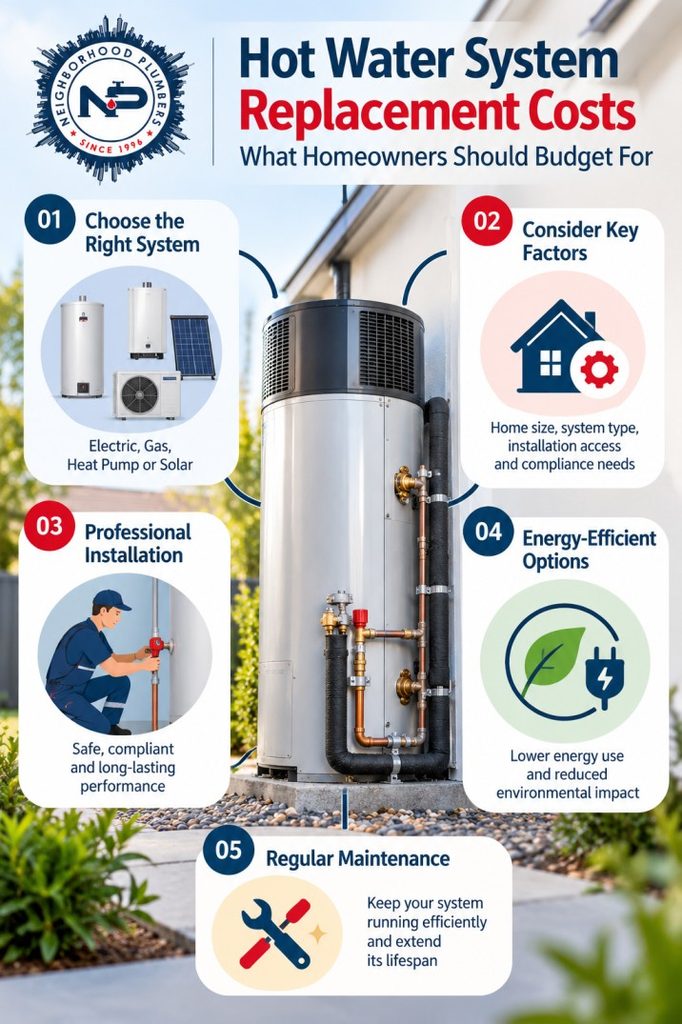
The appliance is only one part of the overall budget. Additional plumbing and electrical work can affect the final price, particularly when the existing installation is old or the replacement uses a different technology.
Ask whether the installer will disconnect, remove and dispose of the old unit. A quote that excludes removal may initially look cheaper but leave you with an additional expense.
Existing components may need replacement or adjustment. The installer should explain the reason for each item and distinguish essential safety work from optional improvements.
A heat pump or electric conversion may require additional wiring, an isolation switch or switchboard work. The cost depends on the existing electrical installation and the selected appliance.
Moving the unit to a new position can require extended pipe runs, drainage changes or a new base. Solar systems may require roof-related work.
The completed installation should be tested to confirm correct operation and safe delivery of hot water. Ask what commissioning, compliance certificates, warranty registration and handover documentation are included.
For a fair comparison, request itemised quotes that identify these costs separately. This makes it easier to compare equivalent installations rather than choosing a provider based only on the headline price.
There are several practical ways to control your budget without sacrificing safety or system suitability.
Provide each installer with the same information about the existing system, household size and preferred technology.
Compare the total installed price, warranty, removal, compliance work and any exclusions. A lower quote is not necessarily better if important tasks are missing.
Eligible households may qualify for incentives through the Victorian Energy Upgrades program and Solar Victoria’s Solar Homes program.
As published in October 2026, Victorian Government information describes potential discounts of up to $560 for eligible gas-to-heat-pump replacements and additional savings when eligible programs are combined. The available amount depends on the appliance, program rules and household eligibility.
Check the current requirements and obtain confirmation from an eligible provider before committing to the purchase. Do not assume that every system or household qualifies, or that a discount can be claimed retrospectively.
A tank that is too small can run out of hot water during peak periods. An oversized system may increase purchase costs and, depending on the technology, operating expenses.
Discuss your household’s typical morning and evening demand with the installer. The number of occupants matters, but so do bathing habits, the number of bathrooms and whether appliances use hot water simultaneously.
Compare the estimated annual energy consumption, applicable tariffs, servicing requirements and expected replacement timeframe.
A more expensive system can provide better value over its lifetime if the energy savings are substantial. However, the result depends on your household’s usage, energy prices and the system’s actual performance.
If your unit is ageing, arrange an inspection before it develops a major fault. Planning gives you time to investigate options, check incentives and select an appropriate replacement rather than making a rushed decision during an emergency. Neighborhood Plumbers provides reliable hot water system maintenance to help keep your system efficient, safe, and running smoothly all year round.
The initial installation price does not tell the whole story. A more useful comparison considers the total cost of ownership.
A simple budgeting method is:
Total ownership cost = installed price − confirmed incentives + estimated running costs + maintenance costs.
For example, imagine two households comparing a conventional electric storage system with a heat pump. The conventional system may have the lower upfront price, while the heat pump may consume substantially less electricity.
To compare them fairly, estimate annual hot water consumption and use your current electricity tariff. Then calculate the potential annual savings and compare them with the additional upfront investment.
If the heat pump costs $2,000 more after confirmed incentives and saves an estimated $400 annually, the simple payback period would be five years. This is an illustration, not a forecast or guaranteed saving. Actual results depend on usage, tariffs, installation quality and system performance.
Melbourne households with rooftop solar may also benefit from scheduling a compatible system to heat water when solar generation is available. The suitability of this approach depends on the system controls, household routines and the value of exported electricity.
Before accepting a quote for Hot Water System Installation Melbourne, ask the installer these practical questions:
A professional quote should clearly describe the work, identify exclusions and explain any uncertainties that could affect the final price.
The cheapest unit may have higher operating costs or insufficient capacity. Compare installed cost and long-term performance together.
Changing from gas to electric, relocating a tank or upgrading to a heat pump may require additional work. Confirm the scope before approving the job.
Rebates often depend on the appliance, existing system, property and installer. Confirm eligibility before purchase rather than relying on an advertised maximum discount.
Heat pumps need suitable airflow and may produce noticeable compressor noise. Installation planning should consider neighbours, bedroom windows, condensate drainage and future maintenance access.
Rust-coloured water, visible corrosion, recurring loss of hot water or a leaking tank can indicate a problem that warrants professional assessment. If a tank is leaking significantly, isolate the water supply if safe to do so and arrange prompt assistance. If you suspect a gas leak, avoid operating electrical switches, leave the affected area and contact the appropriate emergency gas service.
A few details can make the difference between a suitable installation and an expensive disappointment.
First, describe your real usage. Tell the installer how many people live in the home, whether showers overlap and whether there is a large bathtub or other high-demand fixture.
Second, ask for the assumptions behind any savings estimate. An estimate should identify the system being replaced, the proposed model, household consumption and energy tariff. Broad claims about savings are less useful than calculations based on your circumstances.
Third, check the warranty conditions. Confirm the manufacturer’s product warranty and the installer’s workmanship warranty separately. Ask who handles a fault and whether maintenance is required to preserve coverage.
Fourth, prioritise safety and compliance. Gas work must be undertaken by an appropriately licensed gasfitter, and relevant plumbing and electrical work must be completed by qualified tradespeople. Victorian safety guidance specifically advises using licensed gasfitters for hot water installation and related gas work.
Finally, keep the paperwork. Retain the quote, invoice, model and serial numbers, warranty documents, compliance records and rebate confirmation. These records are useful for future maintenance, warranty claims and property transactions.
The right replacement depends on your household’s hot water needs, existing connections, available installation space and long-term energy budget. Conventional electric and gas systems can have lower upfront costs, while heat pump and solar options may offer different operating-cost advantages.
Before making a decision, compare itemised quotes, confirm current incentives and assess the full cost of ownership. These steps can help you make a better-informed choice and reduce the risk of unexpected expenses.
For homeowners researching Hot Water System Installation Melbourne, Neighborhood Plumbers can be considered as part of your process of comparing local plumbing options. Ask any prospective installer to explain the recommended system, itemise the full installation cost and clarify compliance requirements before authorising work.
As a broad starting point, allow approximately $900–$3,675 for many conventional electric or gas replacements, with heat pump and solar systems potentially costing $3,150–$7,500 before applicable incentives. These are indicative ranges, not guaranteed prices. The actual cost depends on the unit, capacity, access, labour and additional work. Request an itemised quote for your property.
Repairing a system can be more economical when the fault is isolated, replacement parts are available and the tank remains in sound condition. Replacement may be more appropriate when the tank is leaking, corrosion is extensive, faults keep recurring or the system is nearing the end of its useful life. Ask a qualified plumber to assess the fault and compare the repair cost with the price and expected benefits of replacement. A leaking storage tank generally cannot be repaired in the same way as a replaceable valve or heating component.
They can be, particularly for households with substantial hot water demand and suitable installation conditions. Heat pumps use ambient heat and electricity to heat water, often consuming considerably less electricity than conventional electric resistance systems. However, savings depend on the model, weather conditions, electricity tariffs and household usage. Compare the installed price after confirmed incentives with estimated annual running costs before deciding.
Potentially. Eligible households may access discounts through the Victorian Energy Upgrades program and, where applicable, the Solar Homes program. Eligibility depends on factors such as the property, existing appliance, replacement technology and approved installation arrangements. Check the latest requirements with the relevant government program or an eligible provider before purchasing. Do not assume that the maximum advertised incentive will apply to your installation.
A straightforward like-for-like replacement may be completed within several hours, although the actual timeframe varies by system and property. Converting from gas to a heat pump, relocating the unit, upgrading electrical infrastructure or carrying out additional compliance work can take longer. Ask your installer for an estimated timeframe and confirm whether hot water will be available again on the same day.
For a replacement that is safe, suitable and properly budgeted, Neighborhood Plumbers recommends comparing the complete installation scope rather than focusing solely on the appliance price. A clear quote and an informed system choice are the best starting points for managing your replacement costs.