We are currently open! 12:34:21PM
Our Services



✖


A small plumbing problem can become an expensive repair when it is ignored. A dripping tap, slow-draining sink or minor pipe leak might appear harmless at first, but over time, these issues can waste water, damage property and lead to unexpected repair bills.
For Melbourne homeowners, understanding the difference between routine plumbing maintenance Melbourne services and emergency repairs is an important step towards protecting their property and household budget. Regular inspections can help identify developing faults before they become urgent, while emergency plumbing is essential when a sudden problem threatens your home or safety.
So, which option saves more money? In most situations, preventative maintenance is the more cost-effective long-term approach. However, the actual savings depend on the condition of your plumbing, the age of your property, the severity of a fault, and how quickly you respond.
This guide from Neighborhood Plumbers explains how preventative care compares with emergency repairs, what affects Plumbing Maintenance Costs, and which practical steps can help you avoid unnecessary plumbing expenses.
Plumbing Maintenance Melbourne involves checking, cleaning, and maintaining plumbing fixtures, pipes, drains, and water connections to help keep a property’s plumbing system working properly.
Preventative maintenance focuses on identifying potential problems before they cause significant disruption. Rather than waiting for a pipe to burst or a drain to become completely blocked, homeowners can arrange periodic checks and address early warning signs.
Typical maintenance tasks include:
Not every property needs the same maintenance schedule. Older homes, properties with recurring drainage issues, and houses with ageing pipework may require closer attention than newer properties with well-maintained plumbing.
The objective is straightforward: identify developing problems early, repair them before they escalate, and reduce the likelihood of avoidable disruption.
The main difference between preventative maintenance and emergency repairs is the timing of the work. Maintenance addresses warning signs and potential weaknesses before they develop into major faults. Emergency repairs respond to failures that need immediate attention.
Both are necessary, but they serve different purposes.
Preventative maintenance can reduce costs in several ways.
1. It helps identify minor leaks early.
A leaking pipe joint or worn tap washer may be relatively straightforward to repair. If the leak continues behind a wall or beneath flooring, it can cause damage that requires additional investigation, drying, and restoration.
2. It helps prevent serious blockages.
A drain that repeatedly empties slowly may indicate a developing obstruction. Investigating the cause early can help prevent a complete blockage, wastewater overflow or disruption to household activities.
3. It reduces water waste.
Dripping taps, leaking toilets and damaged connections can increase water consumption. Fixing these faults promptly can help reduce unnecessary water charges. Australian government guidance also recommends checking for leaks and monitoring water use to identify potential problems.
4. It supports better maintenance planning.
When a plumber identifies deteriorating pipework or worn components, the homeowner has more time to compare repair options, obtain quotes, and plan the work.
This is the practical value of a preventative plumbing investment. The benefit is not that every future failure can be prevented, but that avoidable damage and unexpected costs may be reduced.
Emergency plumbing is required when a fault creates an immediate risk of significant water damage, sewage exposure, loss of essential services or another urgent safety concern.
Examples include:
Emergency plumbing Melbourne services are particularly important when waiting could make the situation worse.
For example, a small leak under a kitchen sink might initially require only a local repair. If the pipe fails completely while the homeowner is away, water could spread into cabinetry, flooring and adjoining rooms. The final expense may then include plumbing work and property restoration.
When a serious leak occurs, shut off the relevant isolation valve or the main water supply if it is safe to do so. Keep clear of water near electrical equipment, and seek qualified assistance. If there is an immediate electrical danger, do not enter the affected area.
Understanding Plumbing Maintenance Costs requires more than comparing the price of a routine inspection with the cost of a call-out. The full financial impact includes labour, parts, urgency, access to damaged pipes and any secondary property damage.
There is no single price that applies to every Melbourne property. The cost of a repair depends on the fault, materials, labour required, accessibility and the plumber’s pricing structure.
The main factors affecting Plumbing Costs include:
Before approving work, ask for an explanation of the fault, the proposed solution, the expected total price and any possible additional charges.
The following scenarios demonstrate how maintenance and emergency repairs can differ financially. They are examples for comparison, not verified local quotes or guaranteed savings.
| Situation | Preventative approach | Emergency scenario |
|---|---|---|
| Minor tap leak | Repair a worn component before further water is wasted | Continued leakage increases water use and may damage surrounding fittings |
| Slow kitchen drain | Investigate the recurring blockage and clear it appropriately | A complete blockage disrupts the kitchen and may cause an overflow |
| Ageing pipe connection | Arrange an inspection and plan a targeted repair | The connection fails and water damages nearby surfaces |
| Concealed leak | Investigate early signs such as unexplained dampness | Prolonged leakage causes extensive damage and more complex repairs |
The key lesson is that the lowest immediate expense is not always the lowest overall expense. A planned repair may cost more than doing nothing today, but waiting can expose the property to a much larger bill.
At the same time, preventative maintenance should be proportionate. Replacing every functioning pipe or fixture without evidence of deterioration is not automatically cost-effective.
Leak Detection is one of the most valuable parts of preventative plumbing because some leaks remain hidden until damage becomes noticeable.
A leak may occur under a sink, inside a wall, beneath a slab or around a hot water system. The water might not appear at the actual point where the pipe has failed, making the source difficult to identify.
Look for these common indicators:
A useful initial check is to turn off taps and water-using appliances, then observe the water meter if the property’s supply arrangement permits it. Unexpected movement can indicate water use or a leak, although meter configuration and other connected systems may affect the result. If the reading changes unexpectedly, investigate further rather than assuming the exact location of the problem.
Do not open walls, dig around underground pipes or dismantle pressurised plumbing without the appropriate skills and equipment.
A qualified plumber can assess the symptoms and choose an appropriate diagnostic method. Depending on the situation, this may involve pressure testing, moisture assessment, acoustic equipment or other specialised techniques.
Accurate diagnosis matters because repairing the wrong section of pipe can waste money while leaving the original problem unresolved.
For instance, a damp patch near a bathroom may result from a leaking water pipe, a failed shower seal or water escaping through another part of the installation. Identifying the actual source helps determine whether plumbing repairs, waterproofing work or another solution is required.
Early investigation does not guarantee that walls or floors will never need to be opened. It can, however, help narrow the problem and support a more targeted repair.
Pipe Repairs are not always avoidable. Pipes deteriorate, fittings loosen, ground movement occurs and external damage can affect plumbing systems. The objective of maintenance is to recognise problems early and choose a repair that addresses their cause.
Common causes include:
A visible leak may be only one symptom of a broader issue. If the same connection fails repeatedly, replacing the component without investigating the underlying cause may lead to further costs.
A targeted repair may be appropriate when the fault is localised and the surrounding pipe remains in sound condition. Replacement may be worth considering when a section is extensively corroded, repeatedly leaking or otherwise unsuitable for continued use.
The decision should account for the pipe’s condition, age, material, location, repair history and the likely cost of future disruption.
For example, a homeowner with a single damaged pipe connection may benefit from a local repair. A property with several leaking sections of deteriorated pipework may be better served by a planned replacement strategy.
Ask the plumber to explain both options where practical. A clear comparison should cover immediate costs, expected durability, access requirements and the consequences of postponing the work.
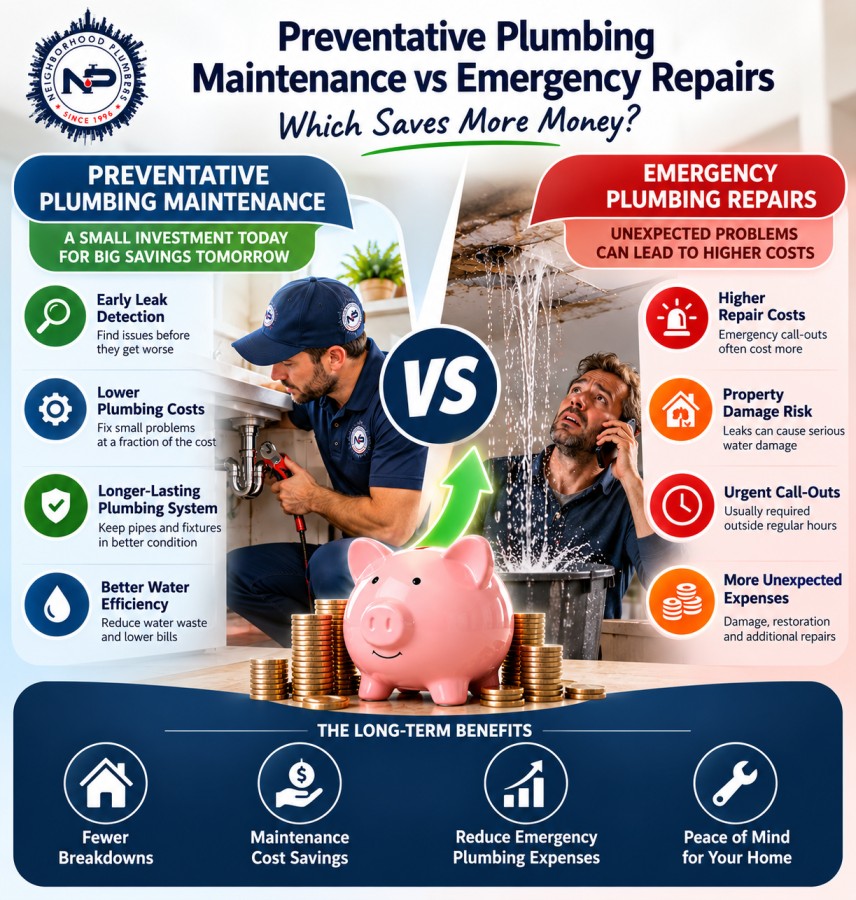
Consistent maintenance does not mean paying for frequent inspections without a clear purpose. The most effective approach is to match the level of attention to the property’s age, plumbing condition and history of problems.
There is no universal inspection interval for every residential plumbing system. Use the following as a practical starting point and adjust it according to the plumber’s findings.
These are suggested monitoring intervals, not mandatory Australian regulations. A new home with no known issues may need less intervention than an older property with recurring leaks.
Prioritise work that addresses a known risk or recurring symptom.
Repair dripping taps and leaking toilets. These faults can waste water and may indicate worn components that are relatively straightforward to replace.
Investigate recurring drainage issues. A drain that repeatedly blocks may need more than another round of cleaning. The cause could involve accumulated debris, pipe damage or root intrusion.
Check accessible appliance connections. Washing machines, dishwashers and other water-connected appliances can leak at hoses or connection points. Follow manufacturer guidance when checking or replacing components.
Monitor water pressure when symptoms appear. Unusually high pressure can place additional stress on plumbing components, while low pressure may indicate a leak, obstruction or another supply issue. A plumber can determine whether testing or corrective work is warranted.
Keep records of previous repairs. Recording the date, fault, repair and parts used helps identify recurring problems and supports better budgeting.
These steps encourage maintenance cost savings without turning routine care into unnecessary expenditure.
Even well-maintained plumbing can fail unexpectedly. The aim of reducing emergency plumbing expenses is to minimise the damage caused by a failure and avoid paying for preventable complications.
Use this practical sequence when a serious leak or plumbing failure develops.
In Victoria, plumbing work must be carried out by appropriately registered or licensed practitioners, subject to the applicable rules and supervision requirements. Check the practitioner’s credentials through the relevant regulator before engaging them.
A few simple preparations can reduce confusion and help a plumber respond efficiently.
Preparation will not eliminate emergency call-outs, but it can help you act quickly and make better decisions under pressure.
Some avoidable decisions can turn a manageable plumbing issue into a more complicated repair.
A slow drip may appear insignificant, but persistent leakage can waste water and affect cabinetry, flooring or wall materials. Investigate recurring moisture rather than relying on towels or containers indefinitely.
Repeated use of unsuitable products may damage certain plumbing materials, create handling hazards or fail to address the underlying cause of a blockage. Follow product instructions and seek professional advice if a drain keeps blocking.
A lower price does not necessarily include the same diagnostic work, replacement materials or follow-up. Compare written quotes on the work included, exclusions, labour, materials and applicable warranties.
Simple visual checks are useful, but work involving pressurised pipes, concealed services, sewer connections or regulated plumbing installations should be assessed by an appropriately qualified professional.
A faulty fixture may not be the root cause of a problem. Before replacing expensive equipment, confirm whether the issue originates from the fixture, its connections, the pipework or the wider plumbing system.
For Melbourne homeowners, the most practical strategy is to balance preventive spending against the risk of delayed repairs.
First, prioritise active leaks and safety concerns. A suspected leak causing property damage should not be postponed simply because a routine inspection is already planned.
Second, distinguish maintenance from upgrades. Replacing a worn seal is maintenance; installing a more water-efficient fixture is an upgrade. Both may have value, but the financial justification differs.
Third, assess the whole repair, not just the visible fault. If a plumber identifies repeated leaks, ask whether the cause is local deterioration, water pressure, movement or another underlying issue.
Fourth, plan larger work where urgency permits. Comparing quotes and scheduling a planned pipe replacement may provide better control over expenditure than waiting for a failure. Emergency situations, however, should be stabilised promptly.
Finally, judge maintenance by its purpose. A useful inspection should explain what was checked, what was found, which repairs are necessary and which items can be monitored. You should not feel pressured to approve unrelated upgrades without a clear explanation.
Preventative maintenance is generally the better financial strategy when it helps identify problems before they cause extensive damage. However, the right level of maintenance depends on the property, the condition of its plumbing and the risks identified during inspection.
For homeowners comparing Plumbing Maintenance Melbourne options, the goal should not be to spend money on unnecessary inspections or upgrades. It should be to address genuine problems early, maintain reliable plumbing fixtures and reduce the likelihood of avoidable emergencies.
Understanding Plumbing Maintenance Costs, monitoring warning signs and arranging timely Leak Detection or Pipe Repairs can help you make better decisions about household expenditure.
Neighborhood Plumbers encourages homeowners to take a practical approach: investigate unusual plumbing symptoms, understand the repair options and plan maintenance around the property’s actual needs. A small, timely repair can sometimes prevent a much larger problem later.
Plumbing Maintenance focuses on identifying developing problems and keeping plumbing systems in good working condition. It may include checking visible pipework, investigating minor leaks and addressing recurring drainage issues.
Emergency Plumbing responds to urgent failures, such as burst pipes, severe leaks and sewage backups. Preventative maintenance can reduce some emergency risks, but it cannot eliminate every unexpected failure.
Plumbing Maintenance Costs vary according to the work required, the property’s condition, the time of service, labour charges and replacement materials. A basic inspection is different from a detailed leak investigation or a major pipe repair.
To understand the likely cost, request a written quote that explains the inspection scope, labour, materials and any additional diagnostic charges. Compare quotes based on the same work rather than choosing solely by price.
Contact an emergency plumber when a plumbing fault presents an immediate risk of significant water damage, sewage exposure or loss of essential services. A burst pipe, uncontrolled leak or wastewater backing up into the property may require urgent attention.
If the problem is contained and there is no immediate danger, you may be able to arrange a planned repair. When uncertain, explain the symptoms to a qualified plumber and ask how urgently the issue needs attention.
Leak Detection helps identify the source of unexplained moisture, water loss or unusual water consumption. Early investigation may prevent a minor fault from causing extensive damage to walls, flooring or cabinetry.
Professional diagnostic methods can also help avoid unnecessary repairs by distinguishing between possible causes. The appropriate method depends on the location, symptoms and type of plumbing system involved.
Start by checking for dripping taps, running toilets, visible leaks, damp patches and unusual changes in water bills. Pay attention to recurring drain blockages and deteriorating appliance connections.
Arrange professional assessment when symptoms persist, when a concealed leak is suspected or when pipework shows signs of significant deterioration. Older properties and homes with a history of plumbing problems may benefit from a more tailored maintenance plan.