We are currently open! 12:34:21PM
Our Services



✖


A plumbing problem rarely starts with a dramatic burst pipe or a flooded bathroom. More often, it begins with a slow-draining sink, a small patch of moisture beneath a vanity, a toilet that occasionally runs or a hot water system that makes unusual noises. These signs are easy to ignore until they become expensive repairs.
Regular inspections can help homeowners identify these warning signs before they develop into more serious issues. Effective Plumbing Maintenance Melbourne homeowners can rely on involves more than fixing visible leaks. It includes checking water pressure, inspecting accessible pipes, testing fixtures, monitoring drainage and understanding how everyday habits affect a home’s plumbing system.
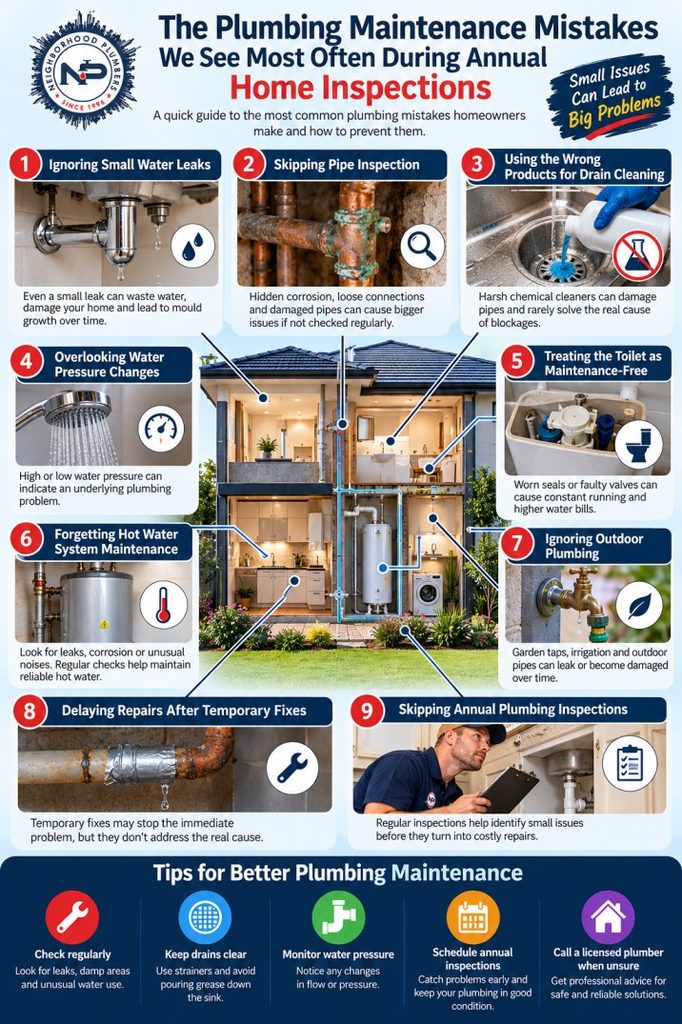
One of the most useful aspects of an annual inspection is discovering the small maintenance oversights that have gradually become bigger problems. Common Plumbing Maintenance Mistakes include ignoring minor leaks, using harsh drain cleaners too frequently, overlooking hidden moisture and assuming that plumbing fixtures do not need attention until something stops working.
This guide explains the mistakes worth looking for, why they matter, and how homeowners can reduce the risk of unexpected plumbing failures through practical, preventative care.
Melbourne homes have different plumbing needs depending on their age, construction, water supply arrangements and previous renovation work. An older property may have ageing pipework, worn tap washers or drainage issues, while a recently renovated home may have poorly adjusted fixtures or connections that need monitoring.
Seasonal changes, household water use and gradual wear can also affect plumbing performance. For example, a garden tap that is rarely used may develop a leak around its connection, while a kitchen drain may gradually collect grease and food residue until water begins draining slowly.
Home Plumbing Maintenance helps homeowners identify these issues early, understand the condition of accessible plumbing components and plan repairs before they become urgent.
An annual inspection is a useful starting point, although it is not a guarantee against every plumbing failure. Older systems, recurring blockages, previous leaks and heavily used fixtures may require more frequent checks.
A practical inspection should consider:
The aim is not to replace every component that shows ordinary wear. It is to distinguish between normal ageing, a developing fault and a problem that needs prompt professional attention.
One of the most common Plumbing Maintenance Mistakes is treating a minor leak as a cosmetic issue.
A dripping tap may appear harmless, particularly when the water collects neatly in the basin. However, a leak beneath a kitchen sink can damage cabinet panels, affect stored belongings and create damp conditions that encourage mould growth. A slow leak around a toilet connection may also go unnoticed because the water can collect behind the fixture.
Look for these warning signs during routine household checks:
For example, a homeowner might notice that cleaning products stored beneath the kitchen sink have become damp. Rather than simply drying the cabinet, check accessible connections for moisture and arrange a plumbing assessment if the source is unclear.
A small leak does not always mean a major repair is needed. The appropriate solution depends on the cause, which could be a worn seal, a loose connection, damaged pipework or another fault.
Expert tip: Do not tighten every connection you find. Excessive force can damage fittings, and some plumbing components require specialised tools or replacement parts. If a leak continues or the source is hidden, have it assessed by a licensed plumber.
Pipes are easy to forget because much of the plumbing system is concealed behind walls, under floors or within cupboards. However, accessible pipework can reveal useful information about the condition of the wider system.
Effective Pipe Inspection involves checking visible sections for corrosion, moisture, damaged insulation, loose supports and signs of previous repairs.
Pay attention to:
Not every stain indicates an active leak, and not every plumbing noise signals a serious fault. Nevertheless, recurring symptoms deserve investigation.
Consider an older Melbourne home where a visible pipe connection has developed corrosion. Painting over the affected section may improve its appearance, but it will not establish whether the pipe is still sound. A plumber can assess the material, condition and likely cause before recommending a repair.
A concealed leak may show up as a musty smell, bubbling paint, a damp patch or unexplained water use. These symptoms can also have other causes, including roof leaks or condensation.
Avoid cutting into walls or lifting flooring without establishing where the moisture originates. A qualified plumber can use appropriate diagnostic methods, including specialised leak detection equipment when needed, to narrow down the source.
Slow drains are frustrating, so it is understandable that homeowners want a quick solution. However, repeatedly pouring strong chemical products into a blocked drain can create additional problems.
Good Drain Cleaning starts with identifying what is causing the restriction. Hair and soap residue commonly accumulate in bathroom drains, while kitchen pipes may collect grease, food particles and other debris.
For example, if a kitchen sink drains slowly every few weeks, a chemical cleaner may temporarily improve the flow without removing the underlying buildup. If the blockage keeps returning, the problem may require a more thorough assessment.
Never mix drain-cleaning chemicals or combine them with other household cleaners. Some combinations can release hazardous gases or cause dangerous reactions. If a chemical product has already been used, tell the plumber before they work on the drain.
Repeated blockages, sewage smells and wastewater backing up into fixtures should not be treated as ordinary maintenance issues.
Water pressure affects everyday tasks such as showering, washing dishes and filling appliances. However, many homeowners assume that stronger pressure is always better.
Excessively high pressure can place additional stress on plumbing fittings, appliance hoses, tap connections and other components. Low pressure, meanwhile, can indicate a partially closed valve, a blockage, a supply issue or a problem within the plumbing system.
Watch for changes such as:
A single weak tap does not necessarily indicate a whole-house problem. The cause might be a blocked aerator or an issue affecting only that fixture. If several taps experience the same change, the underlying cause may be elsewhere in the system.
A plumber can measure pressure and investigate whether it is appropriate for the property’s plumbing and connected appliances. Where required, pressure-regulating equipment may need adjustment or replacement.
Expert tip: Do not try to increase water pressure by randomly adjusting valves. First establish whether the issue affects one fixture, the entire property or the incoming water supply. This avoids unnecessary adjustments that could make the problem worse.
Toilets often continue functioning even when internal components begin to wear. That makes them easy to overlook during routine household cleaning.
A faulty inlet valve, deteriorated seal or incorrectly adjusted float can allow water to run continuously or leak from the cistern. These problems may be difficult to notice because the water can move quietly into the toilet bowl.
Check whether:
One practical check is to listen carefully after the cistern has refilled. If you hear water running again without another flush, the inlet valve or flushing mechanism may need attention.
A toilet that rocks when someone sits on it also deserves investigation. Movement can affect seals and connections, while a leak around the base may indicate a failed seal or another underlying issue.
Avoid assuming that every damp toilet base is caused by the same fault. Condensation, a leaking connection and a failed seal can produce similar symptoms, so the source should be identified before repairs begin.
Hot water systems are essential household equipment, but many homeowners only think about them when the water turns cold.
An annual visual check can identify signs that deserve professional assessment, including corrosion, unusual noises, visible water leaks and deterioration around accessible connections.
The correct maintenance schedule depends on the type of system, its age, the manufacturer’s instructions and the components installed.
Some discharge from a relief valve can occur as part of normal operation, depending on the system. However, continuous discharge or a sudden change should be assessed rather than dismissed.
Never cap, block or disable a relief valve to stop water escaping. These devices are important safety components.
Hot water systems can involve electricity, gas, high temperatures and pressurised water. Internal servicing, safety-valve testing and repairs should be handled by appropriately qualified professionals.
For homeowners arranging preventative plumbing maintenance, checking the hot water system is an important part of understanding the property’s overall plumbing condition.
Outdoor plumbing often receives less attention than kitchen and bathroom fixtures. Yet garden taps, irrigation connections, exposed pipes and external drainage can develop faults over time.
A dripping garden tap may waste water, while a leaking irrigation connection can leave persistently wet soil near a building. Poor drainage can also contribute to water pooling around paths or foundations.
For example, a homeowner may notice a damp patch near an outdoor tap even when the garden has not been watered. The cause could be a leaking fitting or a damaged pipe, rather than rainwater alone.
It is also important to distinguish stormwater drainage from sewer drainage. These systems serve different purposes, and a problem affecting one should not automatically be treated as a problem with the other.
If water is pooling near the house, investigate whether the source is a plumbing leak, irrigation, surface runoff or a drainage issue. Where the cause is uncertain, a professional assessment can help prevent unnecessary excavation or repairs.
Temporary measures can be useful when they reduce immediate damage while a permanent repair is arranged. The mistake is treating them as a lasting solution.
Tape around a leaking pipe, a bucket beneath a connection or repeated resetting of a troublesome fixture may provide short-term relief. None of these measures establishes that the underlying problem has been resolved.
Arrange an assessment if:
If a pipe bursts or water is escaping rapidly, shut off the relevant water supply if it is safe to do so. If water is near electrical equipment, avoid the affected area and seek appropriate emergency assistance.
The priority is to limit damage without creating another hazard. Once the immediate problem is controlled, the permanent repair should address the underlying cause rather than merely covering its symptoms.
An inspection is useful because plumbing problems do not always appear in the location where their effects become visible.
A damp patch on a ceiling, for instance, could originate from plumbing above it, a roof leak or another source. Likewise, recurring drainage problems may involve more than the visible fixture.
Annual plumbing inspections provide an opportunity to review the condition of accessible components, investigate recurring symptoms and identify maintenance priorities.
Check accessible connections, pipe supports, corrosion, dampness and signs of earlier repairs.
Investigate unusual pressure changes, inconsistent flow and signs of water hammer.
Assess recurring blockages, slow drainage, toilet operation and unusual odours.
Look for visible deterioration, abnormal leakage and other warning signs requiring qualified servicing.
An inspection should be appropriate to the property’s age, plumbing configuration and known history. It does not automatically include opening walls, inspecting every concealed pipe or conducting a camera inspection of every drain.
Where a problem is suspected, additional testing may be recommended. Ask the plumber to explain what was inspected, what could not be accessed, which findings require attention and which repairs can reasonably be monitored.
This makes the inspection more useful than a simple checklist because it gives the homeowner a clear basis for prioritising work.
Some plumbing tasks are suitable for routine household care. Cleaning a tap aerator, removing hair from an accessible drain cover or checking beneath a sink for moisture may be reasonable when performed safely.
Other tasks require technical knowledge, specialised tools or regulatory compliance.
Homeowners can generally focus on:
Professional assistance is appropriate when work involves concealed pipework, persistent leaks, complex drainage faults, hot water system repairs or alterations to water supply and sanitary plumbing.
In Victoria, plumbing work that falls within regulated categories must be performed by appropriately licensed or registered practitioners. Requirements depend on the type of work, so homeowners should confirm the relevant credentials before engaging someone.
DIY repairs can become more expensive if they damage fittings, conceal an active leak or fail to address the original fault. When in doubt, identifying the problem safely is more valuable than attempting an unfamiliar repair.
A simple schedule helps homeowners notice changes without turning maintenance into a complicated task. The following routine can be adapted to the age and condition of the property.
| Frequency | Recommended checks |
|---|---|
| Monthly | Look for dripping taps, running toilets, dampness beneath sinks and unusual water-use changes. |
| Every three months | Check accessible tap aerators, drain strainers, garden taps and visible plumbing connections. |
| Every six months | Review recurring drainage issues, outdoor plumbing and signs of deterioration around accessible pipework. |
| Annually | Arrange a risk-based plumbing inspection, review the hot water system and discuss unresolved or recurring faults. |
| When symptoms appear | Investigate sudden pressure changes, persistent leaks, sewage odours or repeated blockages promptly. |
This is a practical household guide, not a universal servicing requirement. Manufacturer instructions and the condition of individual components may call for different intervals.
For older homes, properties with a history of leaks and households experiencing repeated blockages, a more frequent inspection schedule may be appropriate.
Neighborhood Plumbers provides reliable plumbing services in Melbourne, including emergency plumbing, leak detection, blocked drain clearing, and pipe repairs. Our experienced team delivers prompt, professional solutions to keep your plumbing system running smoothly.
Good maintenance is not about spending money on every possible upgrade. It is about identifying genuine risks, understanding the condition of the plumbing system and acting at the right time.
These practical habits can make inspections more productive.
If a drain blocks every few months or a tap repeatedly leaks after being repaired, record when the issue occurs and what was done previously.
This information helps a plumber determine whether the problem is isolated or recurring. It can also prevent homeowners from repeatedly paying for temporary fixes without understanding the underlying cause.
Compare water meter readings over a suitable period when household water use is stable and no water is being used during the test. Unexpected movement may indicate a leak, but irrigation systems, appliances and other water uses must be considered before drawing conclusions.
If consumption appears unusually high, investigate rather than assuming a hidden leak is definitely present.
Not every defect needs immediate replacement. A minor cosmetic issue may be monitored, while an active leak, suspected sewage escape or damaged pressurised connection may require urgent attention.
Ask for clear explanations of the likely consequences of delaying a repair. This helps you make informed decisions instead of authorising unnecessary work or ignoring an important fault.
A useful inspection should explain:
This approach makes residential plumbing care easier to manage over the long term. It also gives homeowners a practical record to refer to during future inspections.
Several misconceptions can lead homeowners to overlook developing problems.
Even a slow leak can damage surrounding materials over time. Its importance depends on the location, duration and amount of water escaping, but it should not be ignored.
These products cannot reliably resolve every obstruction, particularly recurring or deeper drainage problems. Repeated use may also create safety risks.
Newer properties can still develop loose connections, fixture problems or installation defects. Maintenance should reflect the system’s condition rather than the home’s age alone.
High pressure is not automatically beneficial. Appropriate pressure depends on the plumbing system, connected equipment and applicable requirements.
An inspection can identify certain risks, but concealed failures, sudden damage and unexpected equipment faults can still occur. Regular checks reduce avoidable risks; they do not eliminate them.
The biggest plumbing problems often begin with small warning signs that are easy to overlook. A dripping tap, slow drain, running toilet or damp patch may seem insignificant, but identifying the cause early can help limit damage and avoid unnecessary disruption.
For Melbourne homeowners, effective Plumbing Maintenance Melbourne practices start with understanding the condition of the property’s plumbing, checking accessible fixtures regularly and arranging professional assessments when symptoms appear. Combining these habits with appropriate Home Plumbing Maintenance and annual inspections creates a practical approach to protecting the home’s plumbing system.
The most important lesson is simple: do not wait for a plumbing emergency before paying attention to your pipes, drains and fixtures. By recognising Plumbing Maintenance Mistakes, prioritising genuine risks and addressing recurring problems properly, homeowners can make better maintenance decisions and manage their plumbing systems with greater confidence.
An annual inspection is a reasonable starting point for many homes, particularly when the plumbing system has no known recurring problems. However, the appropriate frequency depends on the property’s age, pipe materials, water use, previous leaks and the condition of its fixtures.
A home with older pipework or repeated drainage problems may need more frequent assessment. Newer properties also benefit from routine checks because connections and fixtures can develop faults over time.
Between professional inspections, homeowners should monitor visible pipework, taps, toilets and accessible drainage points. Do not wait for the next scheduled inspection if a significant leak, sewage backup or sudden change in water pressure occurs.
The most common mistakes include ignoring small leaks, overlooking toilet cistern faults, using drain-cleaning chemicals repeatedly, neglecting outdoor plumbing and delaying repairs after temporary fixes.
Another mistake is focusing only on visible fixtures while ignoring warning signs such as damp cupboards, unexplained water consumption and recurring odours.
The best response is to identify patterns rather than treating every symptom as an isolated problem. If the same fault returns after a repair, ask for the underlying cause to be investigated.
Yes, it can reduce the likelihood of some avoidable repairs by identifying developing faults before they cause additional damage. For example, repairing a leaking connection early may prevent moisture from damaging a cabinet or adjacent building materials.
However, the savings are not guaranteed. An inspection may identify a problem that already requires substantial work, and some failures occur without obvious warning signs.
The value of preventative plumbing maintenance comes from informed decisions, early detection where possible and appropriate repairs—not from assuming every inspection will prevent a major expense.
Look for signs such as unexplained dampness, musty odours, water stains, peeling paint or an unexpected increase in water consumption.
If it is safe and practical, stop using water throughout the property temporarily and check whether the water meter continues moving. Make sure appliances, irrigation and other water uses are accounted for. Meter movement can indicate water use or leakage, but it does not identify the exact source.
If you suspect an active leak, arrange a plumbing assessment. A professional may use suitable leak detection methods to investigate without unnecessary damage to walls or flooring.
If water is escaping rapidly, isolate the water supply if safe to do so. Keep away from wet electrical equipment and seek urgent assistance where there is an immediate hazard.
Not necessarily. A standard inspection generally focuses on accessible plumbing components, visible warning signs, fixtures and reported problems. Concealed pipework cannot always be assessed visually, and a camera inspection or specialised leak detection may be required when symptoms indicate a hidden fault.
The inspection’s scope depends on the property and the service agreed upon. A home with recurring blockages may need additional drainage investigation, while a property showing signs of concealed moisture may need targeted leak detection.
Before the inspection, explain any previous leaks, repeated blockages, unusual noises or changes in water pressure. Ask what the plumber will check, which areas will remain inaccessible and whether any additional testing is recommended.