We are currently open! 12:34:21PM
Our Services



✖


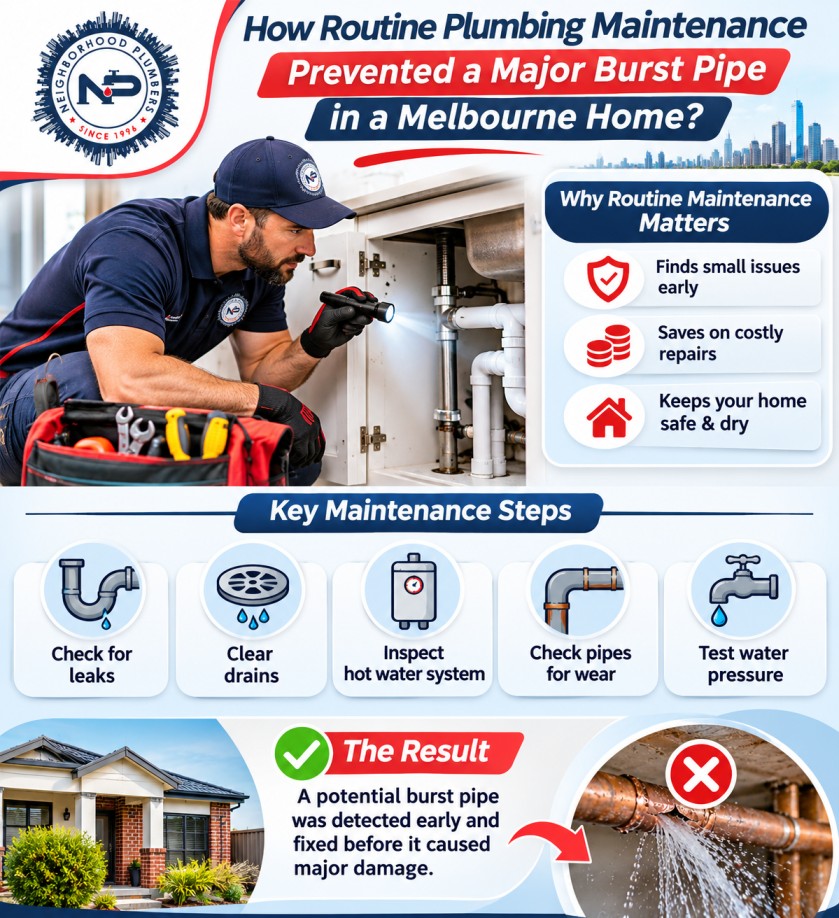
A burst pipe rarely gives you a warning. It usually fails at night, inside a wall or under a floor, while the house sleeps. By morning, carpets are soaked, plaster is sagging and the repair bill keeps growing. That is why regular Plumbing Maintenance Melbourne checks matter far more than most homeowners think.
This Plumbing Maintenance Case Study follows a 1970s brick veneer home in Bentleigh East. A routine yearly inspection found a corroded copper joint and dangerously high water pressure. The plumber fixed both issues in under three hours. Without that visit, the joint would most likely have split within weeks.
Below, you will see exactly what the plumber found, why it mattered and what it cost. You will also learn simple Burst Pipe Prevention steps that any Melbourne household can follow this week.
Melbourne homes face a mix of risks that many other cities do not. Australian Standard AS/NZS 3500 sets 500 kPa as the maximum water pressure at outlets inside a home. Yet mains pressure in some Melbourne suburbs sits well above that. Without a pressure limiting valve, every pipe and joint in the house carries that extra load all day, every day.
Here are the four causes we see most often:
Priya and Tom own a three-bedroom home in Bentleigh East. They book a plumbing service every May, before winter. They had no visible problems this year. Tom only mentioned “a faint bang in the wall when the washing machine stops.” Most people would ignore that sound. Our plumber did not.
The plumber first fitted a pressure gauge to the front garden tap. It read 870 kPa, which is almost double the safe limit. Next, he scanned the laundry wall with a thermal camera. A cool patch showed up behind the washing machine taps. A moisture meter then confirmed damp framing.
He cut a small access panel and found the real issue. A copper elbow had green corrosion and a pinhole weep. The pipe also had no clips, so it jumped every time the machine valve closed. The framing was damp but not yet rotten. That combination of high pressure, a weak joint and constant movement is a textbook burst waiting to happen.
The plumber completed four repairs on the same day:
Here is how the numbers compared:
| Item | Routine Maintenance Visit | Likely Burst Pipe Outcome |
|---|---|---|
| Total cost | About $780 | $8,000 to $15,000+ |
| Time to fix | Under 3 hours | 2 to 6 weeks of drying and repairs |
| Damage to home | One small wall panel | Wet framing, plaster, flooring and carpet |
| Insurance claim | Not needed | Excess paid, possible claim dispute |
| Disruption | Water off for 90 minutes | Laundry and nearby rooms unusable |
The Bentleigh East job shows the real value of scheduled maintenance benefits. A small fee caught a problem the owners could not see or hear clearly. At Neighborhood Plumbers, we find that most serious failures give small signs for months before they break. A trained eye simply spots them sooner.
Booking Plumbing Maintenance Melbourne services once a year brings several clear gains:
Preventative plumbing success is not luck. It comes from a set routine that checks the same weak points every year. A proper service should test pressure, inspect visible pipes, check the hot water relief valve and scan high-risk walls for moisture.
Good Burst Pipe Prevention also means writing everything down. Our plumbers note the pressure reading, pipe materials and any wear each year. Over time, that record shows trends. A joint that looked fine last year but shows staining now gets fixed before it fails.
| Task | How Often | Who Should Do It |
|---|---|---|
| Check under sinks for drips or stains | Monthly | Homeowner |
| Water meter leak test | Every 3 months | Homeowner |
| Water pressure test | Yearly | Licensed plumber |
| Hot water relief valve check | Yearly | Licensed plumber |
| Thermal and moisture scan of wet areas | Yearly | Licensed plumber |
| Inspect exposed and outdoor pipes | Before winter | Homeowner or plumber |
You do not need tools for most of these checks. You just need ten minutes and a little attention.
Most water damage we see comes from habits, not bad luck. Avoid these four common mistakes:
After years of service calls, these are the tips we give every client who asks about professional plumbing care:
This Plumbing Maintenance Case Study proves a simple point. A three-hour visit and about $780 stopped a failure that could have cost more than ten times that amount. The owners kept their home dry, their insurance untouched and their winter stress-free.
Smart Burst Pipe Prevention starts with checks you can do yourself, such as meter tests and listening for knocking pipes. A yearly professional inspection then covers the risks you cannot see.
If you have not booked Plumbing Maintenance Melbourne services in the last 12 months, now is a good time to start. The team at Neighborhood Plumbers is always happy to answer questions and check your water pressure, so your home stays dry all year.
Most Melbourne homes need one full service each year. We suggest April or May, before winter brings colder nights and heavier rain. Older homes with galvanised steel or early copper pipes may need checks every six months, because corrosion moves faster in those materials. Homes on reactive clay soil also benefit from more frequent visits, since ground movement can stress pipes between services. Ask your plumber to set a schedule based on your home’s age and pipe type.
Watch for knocking or banging when taps or appliances shut off. Also look for bubbling paint, damp patches, musty smells or swollen skirting boards near wet areas. Lower water pressure at one tap can point to a leak in that line. A sudden rise in your water bill is another strong clue. If you notice any of these, run a meter leak test straight away and call a licensed plumber before the problem grows.
Australian Standard AS/NZS 3500 sets 500 kPa as the maximum pressure at outlets inside a home. Most plumbers aim for 350 to 450 kPa, which gives good flow without stressing pipes. Some Melbourne suburbs receive mains pressure far higher than this. A pressure limiting valve fitted after the meter fixes the problem for good. A plumber can test your pressure in about five minutes using a simple gauge on an outside tap.
Many policies cover sudden and accidental bursts, but most exclude damage from slow leaks, wear and tear or poor upkeep. Insurers often ask how long a leak existed and whether you maintained the plumbing. Yearly service reports help you answer those questions with confidence. Policies differ widely, so read your product disclosure statement carefully. If anything is unclear, call your insurer and ask how they treat gradual leaks before you ever need to claim.
A full visit usually takes one to two hours. The plumber tests water pressure, checks the hot water relief valve and inspects visible pipes under sinks, in the laundry and outside. Many also use thermal cameras and moisture meters to scan walls near wet areas. They then check taps, toilets and stopcocks for wear. Finally, you should receive a written report with photos, a list of any issues and clear repair priorities.