We are currently open! 12:34:21PM
Our Services



✖


Plumbing problems rarely start with a major burst pipe or a flooded bathroom. More often, they begin with a dripping tap, a slow-draining sink, a small damp patch, or a toilet that keeps running after flushing. These warning signs may seem minor, but ignoring them can lead to water damage, higher water bills, and expensive repairs.
Following a regular Annual Plumbing Checklist helps homeowners identify these issues before they become serious. For properties in Melbourne, seasonal weather changes, ageing pipes, tree roots, and everyday water usage can all affect plumbing performance.
Whether you live in an older home, a modern townhouse, or an investment property, routine Plumbing Maintenance Melbourne homeowners can carry out safely can help protect their property and maintain a reliable water supply.
This guide explains what to inspect throughout the year, which warning signs deserve attention, and when professional assistance is the sensible choice. You will also learn how simple preventative home maintenance can support the long-term health of your plumbing system.
Your plumbing system operates every day, often without receiving much attention until something goes wrong. Water enters through supply pipes, passes through taps and appliances, and leaves through drainage and sewer systems. A problem in any part of this network can affect other areas of the property.
Regular maintenance helps identify developing faults while they are still manageable.
For example, a homeowner might notice a slight drop in water pressure in the kitchen. The cause could be a blocked tap aerator, a partially closed valve, a faulty pressure regulator, or a problem with the water supply. Checking the issue early can prevent unnecessary replacements and help identify whether a plumber is needed.
Melbourne properties also have different plumbing challenges depending on their age and location. Older homes may have deteriorating pipework, while properties with established gardens can experience tree-root intrusion into underground drains. Homes with poorly ventilated wet areas may develop dampness around plumbing fixtures that requires further investigation.
The main benefits of annual maintenance include:
Annual maintenance cannot prevent every plumbing emergency. However, it gives homeowners a practical way to monitor changes and make informed repair decisions.
A useful Annual Plumbing Checklist covers water supply pipes, taps, toilets, drainage, hot water equipment, outdoor plumbing, and visible signs of water damage.
You do not need specialised equipment to complete basic visual checks. A torch, a notebook, and access to your water meter can be enough for many observations.
The important point is to record what you find and compare it with previous inspections.
Start by examining accessible pipework beneath kitchen sinks, bathroom vanities, laundry tubs, and other areas where water connections are visible.
Look for:
A small amount of moisture can sometimes come from condensation, but persistent dampness should not be dismissed without checking its source.
For example, a kitchen cupboard may appear dry during the day but develop a damp smell after the dishwasher runs. This pattern may indicate a leak that occurs only when the appliance drains or fills.
Avoid tightening unfamiliar fittings aggressively. Excessive force can damage threads or worsen a weakened connection. If you find active leaking, isolate the relevant water supply if it is safe to do so and arrange an appropriate repair.
Taps and toilets are among the most frequently used plumbing fixtures in a home. Their small faults can waste water over time.
Turn each tap on and off, checking for unusual noises, inconsistent flow, loose handles, and persistent dripping. Examine showerheads for uneven spray patterns or mineral deposits that may restrict flow.
Toilets deserve particular attention. A cistern that continually refills may have a worn inlet valve, a faulty flush valve, or a deteriorated seal.
To check for a possible toilet leak, place a few drops of food colouring in the cistern without flushing. If the colour appears in the bowl before you flush, water is likely passing through the flush mechanism. Clean the bowl normally after the test.
Do not assume that a toilet is working properly simply because there is no visible water on the floor. Internal leaks can continue unnoticed for weeks.
Your hot water system should provide a reasonably consistent supply at the temperature and flow expected for your household.
Check for visible corrosion, unusual noises, water around the base, or changes in hot water availability. For storage systems, inspect the surrounding area for dampness and any obvious deterioration.
Some discharge from a temperature and pressure relief valve may occur during normal operation, depending on the system. However, continuous discharge, substantial leakage, or repeated changes in performance should be assessed by a qualified professional.
Never cap or obstruct a relief valve, and do not dismantle gas, electrical, or pressurised hot water equipment yourself.
If hot water becomes rusty, unusually cloudy, or inconsistent, record the changes and seek professional advice. The cause could involve the system itself, the supply, or other plumbing components.
Pipe Inspection is an important part of preventative home maintenance because pipes can deteriorate or develop leaks in places that are difficult to see.
Visible pipework can be checked during your annual review, but concealed pipes and underground drains may require professional testing or specialised inspection equipment.
Inspect accessible pipes in cupboards, garages, utility areas, and beneath sinks. Pay attention to corrosion, damaged insulation, loose supports, staining, and moisture around joints.
Outside, look for unexplained wet patches, unusually lush vegetation in one area, or ground that remains damp during dry weather. These signs do not automatically prove that a pipe is leaking, but they can justify further investigation.
If your property has a history of recurring leaks, pipe blockages, or unexplained water loss, ask whether a more detailed inspection would be appropriate.
A plumber may recommend a closer examination when:
Depending on the suspected problem, a professional may use pressure testing, moisture detection, a drain camera, or other diagnostic methods.
These methods are not interchangeable. A drain camera, for example, helps examine accessible internal drain surfaces, but it does not locate every leak in a pressurised water supply pipe.
The best inspection method depends on the symptoms and the plumbing system involved.
Water Pressure affects the performance of showers, taps, appliances, and other fixtures. Changes in pressure can be an early indication of a developing plumbing issue, although they can also result from changes in the water supply.
Turn on several taps individually and observe whether the flow appears consistent with normal household performance. Then check whether operating one fixture noticeably affects another.
A weak shower with otherwise normal tap flow may have a restricted showerhead or a local valve issue. Low flow throughout the house may point to a broader supply problem, a faulty pressure-control component, or a leak.
Very high pressure can also be harmful. It may place additional stress on fittings, appliance hoses, and valves, potentially contributing to premature wear.
Water pressure describes the force driving water through the system. Water flow describes the volume of water delivered over a period of time.
A tap can have adequate static pressure but poor flow because of a blockage, restricted pipe, or partially closed valve.
If you notice a significant change, compare several fixtures and note whether the issue is isolated or widespread. A plumber can measure pressure and investigate the underlying cause rather than replacing fixtures unnecessarily.
Do not adjust pressure-control equipment without understanding its function. Incorrect adjustments may create additional problems or affect other fixtures.
Leak Detection is not just about finding water dripping from a pipe. Some leaks occur behind walls, beneath floors, around concealed connections, or underground.
Water can travel along building materials before becoming visible, meaning the damp patch you see may not be directly beneath the source.
Watch for these warning signs:
You can perform a basic water meter check if your property has an accessible meter. Turn off taps and water-using appliances, make sure toilets have finished refilling, and check whether the meter continues to register water use.
If it does, repeat the check after confirming that no automatic appliances or irrigation systems are operating. A moving meter can indicate water use or a leak, but it does not establish the location or cause.
If you suspect a leak, avoid opening walls or floors without a clear plan. Targeted professional testing can help reduce unnecessary damage during investigation.
For a minor leak, stop using the affected fixture if necessary and isolate the local supply where safe. If water is spreading rapidly, locate the main water isolation valve if it is accessible and safe to operate.
Keep water away from electrical equipment. If there is a risk of electrical contact, do not enter the affected area; seek appropriate emergency assistance.
Photograph the affected area and note when the problem occurs. These details can help a plumber distinguish between a constant leak and one associated with a particular appliance or fixture.
For homeowners seeking reliable maintenance support, Neighborhood Plumbers can be considered as part of the process of arranging an assessment when a plumbing issue requires professional attention.
Blocked drains often develop gradually. Grease, soap residue, hair, food particles, and other debris can accumulate inside pipes, reducing the space available for wastewater to flow.
Tree roots can also enter damaged underground drainage pipes, particularly where existing joints or sections have deteriorated.
Check for:
A single slow bathroom basin may have a local blockage. However, several fixtures draining poorly at the same time can indicate a larger drainage problem.
Remove visible hair and debris from accessible drain strainers, and clean removable components according to the manufacturer’s instructions.
Avoid pouring cooking grease into kitchen sinks. Allow it to cool and dispose of it appropriately rather than washing it into the drainage system.
Do not routinely use harsh chemical drain cleaners as a substitute for maintenance. Some products can damage certain materials, create hazardous splashes, or pose risks if mixed with other cleaning chemicals.
If a blockage keeps returning, a plumber may need to identify the underlying cause using mechanical clearing, a drain camera, or another suitable method.
Important: Never mix drain-cleaning products with bleach, acids, or other chemicals. Follow product labels and keep chemicals away from children and pets.
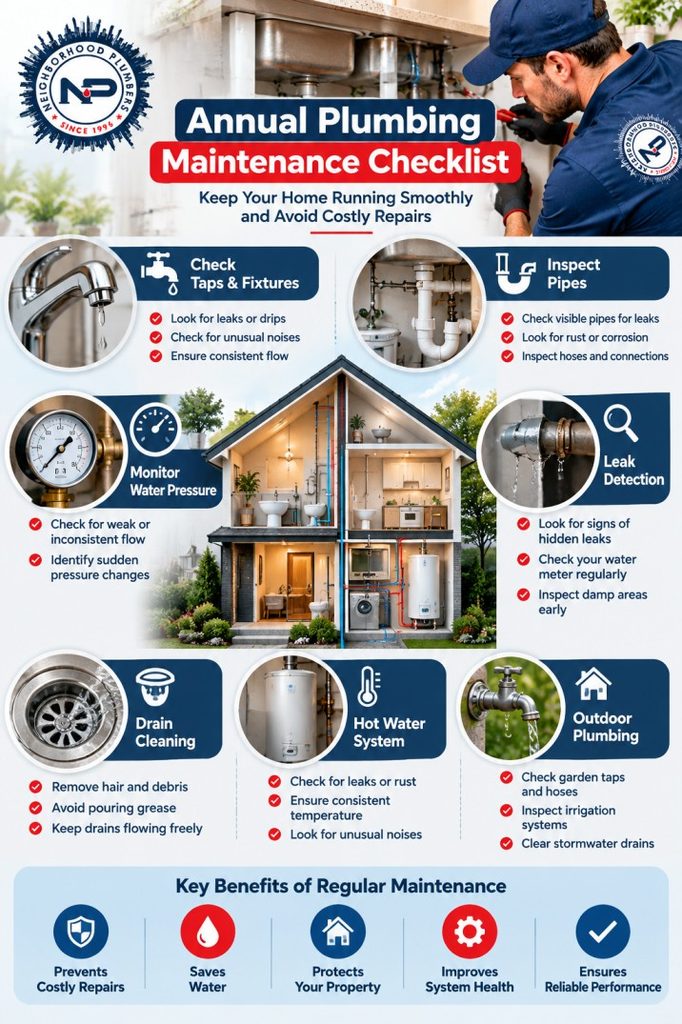
Outdoor plumbing is easy to overlook because it is not used as visibly as indoor fixtures. However, garden taps, irrigation connections, external pipes, and stormwater drainage can all affect your property’s water management.
Walk around the property and inspect accessible outdoor taps for dripping, damaged handles, loose connections, and moisture around the wall penetration.
Check garden hoses and irrigation systems for leaks or damaged fittings. If your irrigation system operates automatically, review it while running so you can identify broken sprinklers or water escaping where it should not.
Clear leaves and loose debris from accessible stormwater grates. Keep drainage openings unobstructed, particularly before periods of heavy rain.
However, do not assume that a stormwater drain and a sewer drain serve the same purpose. They are separate systems in many properties, and the appropriate maintenance method depends on the type of drainage involved.
If water repeatedly pools near the house, enters a garage, or flows towards the building rather than away from it, investigate the cause before the next major rainfall.
Never enter a stormwater pit, sewer chamber, or confined drainage space. These areas can contain dangerous gases, unstable structures, and other hazards.
A yearly inspection is a useful starting point, but some checks should happen more frequently. The following schedule helps distribute maintenance tasks across the year.
Before periods of heavy rain, clear accessible outdoor drainage grates and inspect areas where water collects.
Before colder weather, check exposed pipework for damage and review any manufacturer-recommended precautions for outdoor plumbing.
During warmer months, inspect irrigation systems and garden taps for leaks. After storms or unusual weather, look for new damp patches or drainage problems.
Once a year, review the entire property using your Annual Plumbing Checklist.
Include visible pipework, taps, toilets, hot water equipment, outdoor plumbing, drainage, and previous repair records. If the property has a history of leaks or blockages, consider whether more frequent professional inspections are justified.
The frequency of professional maintenance depends on the system, the age and condition of the property, manufacturer recommendations, and previous problems. An annual visual review does not mean every home requires the same professional service each year.
Even well-intentioned homeowners can make small mistakes that complicate plumbing repairs.
A dripping tap may appear insignificant, but persistent water loss adds up over time. A leak beneath a sink can also damage cabinetry before it becomes obvious.
Address the cause rather than repeatedly placing a container beneath the leak.
Chemical cleaners may not remove the underlying cause of a recurring blockage. They can also create risks for anyone who later opens the drain or works on the pipe.
Identify whether the issue is local or affects multiple fixtures before choosing a response.
Poor flow can result from a restricted aerator, faulty valve, supply issue, or pressure-control problem. Replacing pipework without proper diagnosis may waste money.
Compare multiple fixtures and explain the symptoms to a qualified plumber.
Washing machines, dishwashers, and refrigerators with water connections can develop leaks at hoses, valves, or fittings. These leaks may go unnoticed when appliances are pushed against walls.
Inspect accessible connections and follow the appliance manufacturer’s replacement and maintenance instructions.
Gas connections, electrical components, pressurised systems, and concealed plumbing faults may require specialist skills and equipment.
Know when to stop. A basic inspection is useful, but attempting a repair beyond your experience can increase the cost and risk.
A few consistent habits can make your maintenance routine more effective.
Keep a plumbing maintenance record. Record the date, location, symptoms, repairs, and any parts replaced. If a problem returns, this history can help identify a pattern.
Know where the main water shut-off valve is located. Make sure household members know how to find it and understand when it may be necessary to use it.
Investigate recurring problems rather than repeatedly treating symptoms. If the same drain blocks every few weeks, determine why. If a tap repeatedly loses pressure, look for the cause rather than replacing components at random.
Check after plumbing work. Following an authorised repair or appliance installation, observe the affected area for signs of leakage and follow the professional’s instructions.
Use qualified professionals for higher-risk work. In Victoria, the licensing and registration requirements for plumbing work depend on the type of work involved. Check the relevant Victorian Building Authority requirements and use an appropriately qualified plumber for regulated work.
Prioritise problems by risk. An active leak, sewage backup, suspected gas leak, or water near electrical equipment requires more urgent attention than a cosmetic tap issue. Do not delay action when safety or property damage is at stake.
These habits support preventative home maintenance without turning every minor observation into an expensive repair.
Some issues can be monitored during routine checks, while others require prompt assessment.
Arrange professional assistance when you notice persistent leaks, recurring drain blockages, unexplained water loss, significant pressure changes, hot water system faults, or dampness that cannot be traced to an obvious source.
Seek urgent help for a burst pipe, sewage backing up into the home, rapidly spreading water damage, or another condition that threatens people or property.
If you suspect a gas leak, avoid operating electrical switches or creating flames. Leave the affected area and contact the appropriate gas emergency service from a safe location.
A professional Plumbing Inspection Melbourne homeowners arrange should be based on the property’s condition and the symptoms identified. Depending on the situation, the assessment may include visible pipework, water supply connections, drainage, fixtures, and other relevant components.
Ask what will be inspected, what testing is necessary, which problems require immediate attention, and which repairs can reasonably be planned for later. A clear explanation helps you understand the evidence behind each recommendation.
A reliable plumbing system depends on more than repairing problems after they occur. Checking visible pipework, monitoring water pressure, investigating leaks, maintaining drains, and reviewing outdoor plumbing can help homeowners recognise early warning signs.
Use your Annual Plumbing Checklist to create a consistent maintenance routine, keep records of previous repairs, and address recurring problems instead of treating symptoms repeatedly. Remember that a visual check is only a starting point; concealed leaks, damaged underground drains, and other complex faults may require professional testing.
For homeowners who need help assessing a plumbing concern, Neighborhood Plumbers can be considered when arranging appropriate professional assistance. The most effective approach is to understand the problem, confirm the necessary work, and prioritise repairs according to their urgency.
Consistent Plumbing Maintenance Melbourne homeowners carry out throughout the year can support better plumbing system health, reduce avoidable water waste, and help protect the home from preventable damage. A little attention today can make it easier to plan repairs before they become disruptive emergencies.
A basic visual review should happen regularly, with a more complete Annual Plumbing Checklist completed at least once a year as a practical starting point.
Check taps, toilets, accessible pipework, and visible appliance connections monthly. Review outdoor drainage seasonally and arrange additional inspections if you notice recurring faults.
Older properties, homes with a history of leaks, and buildings with problematic underground drains may need more frequent professional assessment. The appropriate schedule depends on the actual condition of the plumbing system.
Common early warning signs include dripping taps, slow drains, gurgling sounds, unexplained increases in water usage, damp cupboards, and changes in water pressure.
No single sign confirms a particular fault. For example, a slow drain may have a local obstruction, while several slow drains could indicate a broader problem.
Record when the symptom occurs and whether it affects one fixture or several. This information helps a plumber investigate the cause more efficiently.
Routine maintenance can reduce the likelihood that some minor faults will go unnoticed until they cause substantial damage. For instance, identifying a leaking washing machine hose early may prevent water from damaging nearby flooring or cabinetry.
However, maintenance cannot eliminate every failure, especially where pipes are concealed or components fail unexpectedly.
The practical goal is to identify warning signs early, correct known problems, and maintain the system according to its condition and manufacturer’s recommendations.
The scope depends on the property and the reason for the inspection. A plumber may examine accessible pipes, taps, toilets, water connections, drainage symptoms, hot water equipment, and evidence of leakage.
Additional testing, such as drain-camera inspection or specialised leak detection, may be recommended if the initial findings justify it.
Ask for a clear explanation of the inspection scope and any limitations. A visual inspection alone cannot confirm that every concealed pipe is free from defects.
Burst pipes, uncontrolled leaks, sewage backups, and water entering areas with electrical equipment can present immediate risks. Isolate the water supply if it is safe, keep clear of electrical hazards, and seek urgent professional assistance.
A suspected gas leak requires a different response: leave the area, avoid flames and electrical switches, and contact the appropriate emergency service from a safe location.
Slow drains, minor drips, and cosmetic fixture issues may be less urgent, but they should still be assessed if they persist or worsen.