We are currently open! 12:34:21PM
Our Services



✖


When a plumbing problem appears at home, most homeowners want the same three things: a quick solution, reliable workmanship, and a reasonable price. However, when several plumbers provide different estimates for the same job, choosing the cheapest option can seem like the smartest financial decision.
But what happens when a low quote does not include everything needed to fix the problem properly? A repair that initially looks affordable can become expensive if the underlying fault remains, unsuitable materials are installed, or another plumber has to redo the work.
This is why comparing Plumbing Services Melbourne homeowners receive should involve more than looking at the final amount. The scope of work, quality of materials, experience of the tradesperson and clarity of the quote can make a significant difference to the outcome.
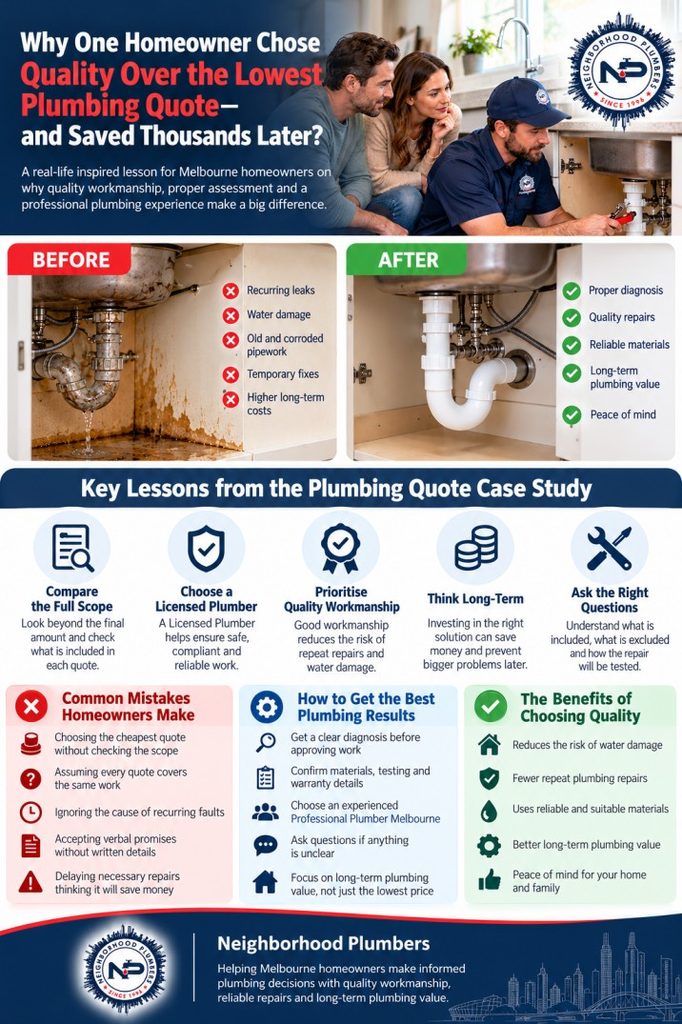
Consider a homeowner who receives three quotes to address recurring water leaks and ageing pipework. One estimate is noticeably cheaper, another sits in the middle, and the third offers a more detailed explanation of the proposed repairs. The homeowner initially considers the cheapest option but decides to investigate what each quote actually includes.
That decision becomes the focus of this Plumbing Quote Case Study. It illustrates how informed decision-making, rather than simply choosing the highest-priced service, can help prevent avoidable expenses and protect a property over time.
The central lesson is straightforward: quality does not automatically mean expensive, and a low price does not automatically mean poor workmanship. The goal is to understand what you are paying for and whether the proposed solution addresses the real problem.
Recurring plumbing faults can be difficult to assess from the surface. A damp patch on a wall, reduced water pressure or a small leak beneath a sink may be the visible symptom of a larger issue.
In this illustrative case, the homeowner notices three warning signs:
Initially, the homeowner assumes that replacing one faulty connection will resolve the problem. However, a closer assessment suggests that the visible leak may not be the only issue requiring attention.
This distinction matters. A plumber who treats only the immediate symptom may provide a lower estimate because less work is included. A plumber who investigates the likely cause may recommend additional testing, replacement of a damaged section, or inspection of nearby connections.
The more extensive recommendation is not automatically necessary in every situation. It should be supported by inspection findings and a clear explanation of why the additional work is justified.
A leaking fitting can sometimes be repaired quickly and inexpensively. However, repeated leaks in the same area may indicate excessive pressure, deteriorated seals, corrosion, movement in the pipework or an unsuitable previous repair.
Ignoring these warning signs can allow water to damage cabinetry, flooring, plasterboard and other building materials. Moisture that remains trapped can also encourage mould growth.
A sensible assessment considers both the immediate fault and the conditions that caused it. That approach helps homeowners decide whether a straightforward repair is sufficient or whether a more comprehensive solution is warranted.
Instead of accepting the first estimate, the homeowner asks each plumber to explain the proposed work. The comparison reveals that the quotes do not cover the same things.
The cheapest estimate focuses on repairing the visible leak. The middle estimate includes replacing the affected section of pipework and checking nearby connections. The most detailed estimate explains the investigation process, the recommended repair, the materials involved, and the conditions that could affect the final scope.
The homeowner realises that comparing the totals alone would create a misleading picture.
The lowest quote offered an attractive initial saving. However, its description left several questions unanswered:
These omissions do not prove that the plumber would have delivered poor work. They simply mean the homeowner needed more information before making a fair comparison.
A low quote can be entirely reasonable when the job is genuinely simple and clearly defined. The risk arises when important tasks are excluded without the homeowner understanding the consequences.
The homeowner prefers the proposal that clearly explains the fault, recommended repair, and verification process. Before accepting it, they confirm the scope, ask about possible additional costs, and check the plumber’s relevant licensing and insurance arrangements.
The decision is based on evidence rather than price alone.
This is an important principle when choosing a Professional Plumber Melbourne residents can rely on. Professionalism is not demonstrated solely by an expensive estimate or polished presentation. It is demonstrated through competent assessment, transparent communication, suitable materials, and work that meets applicable requirements.
After reviewing the proposals, the homeowner proceeds with the more clearly defined repair plan. The plumber investigates the affected pipework, identifies the immediate fault, and checks the surrounding connections before completing the agreed work.
During the process, the homeowner receives an explanation of the findings and understands which repairs are necessary now and which concerns may require monitoring later.
The repair is completed, the affected system is tested as appropriate, and the homeowner receives information about the work carried out.
The important outcome is not that the homeowner selected the most expensive quote. It is that they selected a solution supported by a clearer scope, a better understanding of the fault, and a plan for checking the result.
Imagine two possible outcomes.
In the first, only the visible leak is repaired. If the underlying cause remains, the same area may leak again, requiring another call-out and potentially causing further damage.
In the second, the plumber identifies the cause, completes the agreed corrective work, and checks the repair. This does not guarantee that no future plumbing problem will occur, but it reduces the risk of paying repeatedly for the same unresolved fault.
The homeowner may also avoid expenses associated with:
These are potential avoided costs, not guaranteed savings. Without documented invoices and a confirmed repair history, it would be misleading to claim a precise dollar amount.
The lesson from this Plumbing Quote Case Study is that a repair should be judged by its total cost over time, not merely the amount charged on the first day.
The cheapest repair can be good value when it solves a simple problem correctly. The difficulty arises when a temporary fix is used for a fault that needs a more complete solution.
Long-term plumbing value considers the cost of the work, its expected service life, maintenance requirements, and the likelihood of repeat problems.
A straightforward repair may be appropriate when:
For example, a worn washer in an otherwise serviceable tap may not justify replacing the entire fixture. A competent plumber should explain when a targeted repair is sufficient rather than recommending unnecessary work.
A wider investigation may be appropriate when leaks keep returning, pipes show signs of corrosion, water pressure changes unexpectedly, or multiple fixtures develop related problems.
Depending on the property and findings, the plumber may recommend pressure testing, leak detection, inspection of accessible pipework, or replacement of a damaged section.
Homeowners should ask what evidence supports the recommendation. Replacing an entire plumbing system is a substantial decision and should not be justified by vague statements about the age of the property alone.
The objective is to match the solution to the actual fault. That is how long-term plumbing value is created without paying for work that is not needed.
Quality workmanship involves more than making a leak disappear. The repair should be suitable for the plumbing system, completed safely, and checked before the job is considered finished.
A well-executed repair may involve selecting compatible fittings, preparing pipe surfaces correctly, securing connections, following manufacturer instructions, and testing the completed work.
The exact process depends on the material and type of plumbing system. Copper, PVC, PEX, and other pipe materials have different installation requirements and cannot always be joined or repaired using the same methods.
A homeowner can look for several practical signs:
A professional does not need to promise that a plumbing system will never fail again. Pipes and fittings age, and new faults can develop independently of the completed repair.
Instead, a trustworthy tradesperson explains what the repair is designed to achieve and identifies any remaining concerns.
Price alone does not determine whether a material is suitable. A less expensive component may perform perfectly well when it meets the required specifications and is installed correctly.
Problems arise when a component is incompatible, unsuitable for the operating conditions, or used contrary to manufacturer instructions.
For example, a fitting designed for one pipe system may not be appropriate for another. An unsuitable seal or incorrectly installed connection can create problems even if the rest of the work appears neat.
Ask the plumber to explain the proposed materials and whether they meet the applicable requirements. You do not need to specify every component yourself, but you should understand why the recommended option is appropriate.
Choosing a Licensed Plumber is an important part of managing plumbing risk in Victoria. Licensing requirements depend on the type of work, and some plumbing activities require a registered or licensed practitioner with the appropriate class of registration.
Homeowners should verify that the person or business undertaking the work holds the credentials required for the particular job.
A licence does not guarantee that every repair will be perfect. However, checking relevant credentials helps establish that the practitioner is authorised to carry out the regulated work.
Before approving a quote, consider the following:
For regulated plumbing work in Victoria, homeowners can consult the Victorian Building Authority or its current successor regulator for applicable registration and compliance information.
A qualified professional should also be willing to explain when a repair falls outside the original scope and why additional work may be necessary.
Comparing Plumbing Services Melbourne homeowners receive becomes easier when every quote is assessed against the same requirements.
Instead of asking only, “How much does it cost?”, ask, “What work will be completed, why is it needed, and how will I know the problem has been resolved?”
What is causing the problem?
Ask the plumber to explain the likely cause and identify any uncertainty. If the cause cannot be confirmed before testing or opening an area, that limitation should be made clear.
What exactly is included?
Check labour, materials, access requirements, removal of damaged components, testing, and cleanup. Confirm whether any permits, compliance documentation, or other charges apply where relevant.
What is excluded?
A quote may exclude concealed damage, restoration work, after-hours attendance, or repairs to unrelated faults. Knowing this in advance makes it easier to budget for possible variations.
What happens if the scope changes?
Ask how additional work will be quoted and approved. A clear variation process helps prevent unexpected costs and misunderstandings.
How will the repair be checked?
The appropriate test depends on the job. A repaired water connection, a drainage issue, and a hot-water installation require different checks. Ask what verification is included for your particular repair.
What support is available afterwards?
Clarify the applicable workmanship warranty, product warranty, and process for reporting a defect. Obtain the relevant terms in writing.
If three plumbers quote for the same problem, give each one the same information and ask for comparable scopes.
A lower estimate may reflect a simpler solution, fewer included tasks, or a more efficient business model. A higher estimate may include additional work that is unnecessary. Neither conclusion should be assumed without examining the details.
When the proposals differ substantially, ask each plumber to explain the difference. This is often more useful than negotiating a discount before understanding what the job requires.
A plumbing emergency creates pressure to make quick decisions. A burst pipe, overflowing toilet or sudden leak can cause immediate disruption, and homeowners may feel they have little time to compare quotes.
In these circumstances, the priority is to reduce immediate risk and arrange appropriate repairs. However, urgency should not remove the need for clear communication about the proposed work.
If water is escaping inside your property:
Never touch electrical equipment or enter a flooded area where electrical hazards may be present. Contact emergency services or the relevant electricity provider when there is an immediate electrical danger.
During an emergency, obtaining several detailed estimates may not be practical. Ask the plumber to explain the immediate work required to control the problem and distinguish it from any permanent repairs that can be assessed later.
For example, stopping a burst-pipe leak may be urgent, while replacing additional ageing pipework may require a separate inspection and written estimate.
A clear breakdown helps you understand what must happen immediately and what decisions can reasonably wait.
Choosing a Professional Plumber Melbourne homeowners can contact in urgent situations means looking for appropriate qualifications, transparent pricing and a clear explanation of the proposed work, even when time is limited.
Water damage can cost more than the plumbing repair itself. Depending on the location and severity of a leak, moisture may affect flooring, cabinetry, wall linings, insulation, and other building materials.
Early action can reduce the extent of damage, although the result depends on how long the water has been present and how far it has spread.
Look out for:
These signs do not always indicate a plumbing leak. Condensation, roof leaks and drainage problems can produce similar symptoms. Proper investigation helps identify the source before repairs begin.
Practical maintenance does not require homeowners to dismantle plumbing fixtures or attempt regulated work themselves.
Instead, inspect accessible areas periodically, check visible connections for moisture and monitor unusual changes in water pressure or consumption. Address dripping taps and running toilets rather than allowing them to continue indefinitely.
Know where the main water shut-off valve is located and ensure household members know how to use it safely.
For older properties, consider a plumbing assessment if several faults occur close together. An assessment can help prioritise urgent repairs and distinguish immediate risks from improvements that can be planned over time.
Preventive maintenance cannot eliminate every plumbing failure, but it can help homeowners identify warning signs earlier.
Even careful homeowners can make decisions that lead to unnecessary expenses. Understanding these mistakes can help you approach your next plumbing job with greater confidence.
Two estimates may use similar descriptions while including different materials, labour, or testing. Read the scope carefully and ask for clarification before comparing totals.
A high price is not proof of superior workmanship. The estimate should be supported by a reasonable scope, suitable materials, relevant experience and transparent terms.
Repeatedly replacing the same component may provide temporary relief without addressing the underlying issue. Ask whether further investigation is needed and what evidence supports the recommendation.
Important information about the scope, variations, payment arrangements, and warranty conditions should be documented. Written confirmation reduces the chance of disagreement later.
Postponing a minor fault can sometimes allow it to become more serious. A slow leak may damage nearby materials, while a drainage problem may worsen with continued use.
If a plumber recommends urgent action, ask why the work is time-sensitive and what the consequences of waiting could be. A clear explanation helps you make an informed decision without relying on pressure or fear.
The most useful lesson from this case is that a successful plumbing decision balances immediate cost, technical suitability, and future risk.
Before choosing a plumber, consider these practical strategies.
Ask for a diagnosis before agreeing to extensive work. The recommendation should be connected to identifiable symptoms or inspection findings. Where further testing is needed, understand what the test will establish.
Prioritise necessary repairs. Ask which items are essential to restore safe operation and which are optional improvements. This helps you manage your budget without overlooking important faults.
Keep records of completed work. Save quotes, invoices, photographs, relevant certificates and warranty information. These records can assist with future maintenance and help another plumber understand previous repairs.
Consider the whole repair process. A useful estimate explains the proposed solution, relevant materials, testing, and the process for handling unexpected findings.
Value communication as well as technical ability. A plumber who explains the problem clearly makes it easier for you to understand your options and approve work with confidence.
Look for evidence of professional plumbing experience. Clear scheduling, respectful treatment of your property, realistic explanations, and documented agreements are practical signs of a well-managed job.
These steps support quality workmanship and help homeowners focus on outcomes rather than price assumptions.
The homeowner’s decision demonstrates why a quote should be evaluated in context. The cheapest option may be appropriate for a simple, clearly defined repair, while a more comprehensive proposal may offer better value when it addresses an established underlying fault.
The right choice depends on the condition of the plumbing system, the nature of the problem and the work genuinely required.
For homeowners comparing Plumbing Services Melbourne providers, the most reliable approach is to understand the diagnosis, compare equivalent scopes, verify relevant credentials and clarify what happens if the work uncovers additional issues.
A well-planned repair cannot guarantee that another fault will never develop. However, informed decisions can reduce avoidable repeat work, help protect the property and make maintenance costs easier to manage.
Choosing a plumber should not be a race to find the smallest number on a quote. It should be a process of understanding the problem, assessing suitable solutions and selecting a practitioner who can explain the work clearly.
This Plumbing Quote Case Study highlights an important principle: genuine value comes from solving the right problem with suitable materials, competent workmanship and transparent communication.
If you are planning plumbing repairs at home, take time to compare the scope of work and ask questions before approving the job. Neighborhood Plumbers encourages Melbourne homeowners to make informed decisions that prioritise reliable repairs, property protection and long-term plumbing value.
The lowest quote may offer excellent value, but it may also cover fewer tasks than competing estimates. If the underlying fault, necessary materials, or testing are excluded, you could face additional expenses later.
Compare the diagnosis, scope, materials, labour, exclusions, and warranty conditions before deciding. Ask each plumber to explain any significant difference between their proposal and the alternatives.
The aim is not to pay more automatically. It is to choose a solution that adequately addresses the problem at a reasonable total cost.
A reasonable quote should describe the work clearly enough for you to understand what you are purchasing. It should explain the proposed repair, relevant materials, labour arrangements, exclusions, and how unexpected work will be handled.
For more complex jobs, the plumber should explain the findings supporting the recommendation and whether further investigation is necessary.
You can compare multiple quotes for the same scope and ask questions about major price differences. Remember that access difficulties, specialised equipment, after-hours attendance and the condition of existing pipework can affect the final estimate.
No. Appropriate licensing or registration helps establish that a practitioner is authorised to perform the relevant regulated work, but it does not guarantee that a particular repair will never fail.
Durability also depends on the existing system, material compatibility, operating conditions, installation quality, and maintenance.
Check the credentials relevant to your job, ask how the repair will be tested, and obtain applicable warranty terms in writing. A competent plumber should also explain any limitations or unresolved concerns.
Replacement may be worth considering when pipework is extensively deteriorated, leaks recur in several locations, components are no longer suitable, or a repair would not adequately address the underlying fault.
However, age alone does not mean every pipe must be replaced. A targeted repair may be appropriate when the problem is isolated, and the surrounding system remains serviceable.
Ask the plumber to explain the condition of the existing pipework, the risks of continued use and the advantages and disadvantages of each option. For extensive replacement work, a second opinion can help confirm whether the proposed scope is justified.
Start by monitoring accessible pipes, taps, toilets and appliance connections for leaks or unusual changes. Investigate unexplained water consumption, recurring dampness and persistent pressure changes rather than repeatedly treating the symptoms.
Know where the main water shut-off valve is located, keep records of repairs, and arrange a professional assessment when multiple problems appear.
When work is required, compare quotes based on equivalent scopes and clarify exclusions, testing, and warranty conditions. These steps cannot prevent every plumbing emergency, but they can help you identify problems earlier and make better-informed maintenance decisions.