We are currently open! 12:34:21PM
Our Services



✖


A dripping tap seems harmless. A toilet that keeps running feels like a small annoyance. Yet both waste water every hour of every day, and both usually get worse. Knowing when taps and toilet repairs can fix the problem, and when a part has reached the end of its life, saves you stress and repeat call-outs.
This guide explains how plumbers decide between fixing and replacing. It also shows you what good toilet repair and tap replacement services should include, so you know what to expect before anyone opens a cistern or pulls a tap apart.
We will start with the most common household job of all. Leaking tap repairs make up a large share of everyday plumbing calls, and most of them come down to a few worn parts.
Then we will move to the bathroom. Quality toilet plumbing services cover far more than a quick jiggle of the flush button, and the details matter.
Every tap and toilet has moving parts. Washers, seals, and valves open and close thousands of times a year. Rubber hardens, ceramic wears, and metal corrodes. Melbourne’s water also carries fine sediment that builds up inside valves and stops them from sealing properly.
High water pressure speeds up this wear. Australian Standard AS/NZS 3500 sets 500 kPa as the maximum pressure at outlets inside a home. Many homes sit above that, which pushes harder on every washer and seal. In our experience, homes with high pressure often need tap and toilet work far more often than homes with a pressure limiting valve.
Successful leaking tap repairs depend on the type of tap you have. Most Australian homes have one of two designs.
For compression taps, dripping tap repair and washer replacement is the standard fix. The plumber turns off the water, removes the tap handle and headwork, and fits a new washer and jumper valve. They also check the O-ring that stops water leaking around the spindle.
The step many people skip is checking the seat. If the brass seat is pitted or worn, a new washer cannot seal against it. A plumber will reface the seat with a reseating tool so the new washer sits flat. Without that step, the drip often returns within weeks.
Mixer taps rarely use washers. When a mixer drips, the cartridge is usually the problem. A plumber removes the lever, unscrews the cartridge, and fits an exact match for that brand and model.
Here is a real example. A homeowner in Coburg spent two weekends trying to fix a dripping kitchen mixer. He bought a pack of tap washers, but the tap had none. A plumber replaced the worn ceramic cartridge in under 30 minutes, and the drip stopped for good. Knowing your tap type before you start saves a lot of frustration.
Most toilet faults come from the cistern, the tank that holds water for each flush. At Neighborhood Plumbers, we see the same handful of problems in Melbourne homes every week.
Toilet cistern repair and replacement depends on what has failed. Inlet valves, outlet valves, seals, and buttons are all replaceable parts. In most cases, a plumber can fix the cistern on the same visit.
Replacement makes more sense when the cistern is cracked, when parts are no longer made for that model, or when the toilet is an old single-flush unit. Older single-flush toilets can use up to 11 litres per flush. Modern dual-flush toilets with a good WELS star rating use far less. That makes an upgrade worth considering for both water use and reliability.
A family in Footscray called us for toilet plumbing services after their toilet “hissed all night.” Their inlet valve was failing to close, so water kept running into the overflow. The plumber replaced the valve and the outlet seal together, since both were the same age. Their next water bill showed a clear drop in usage.
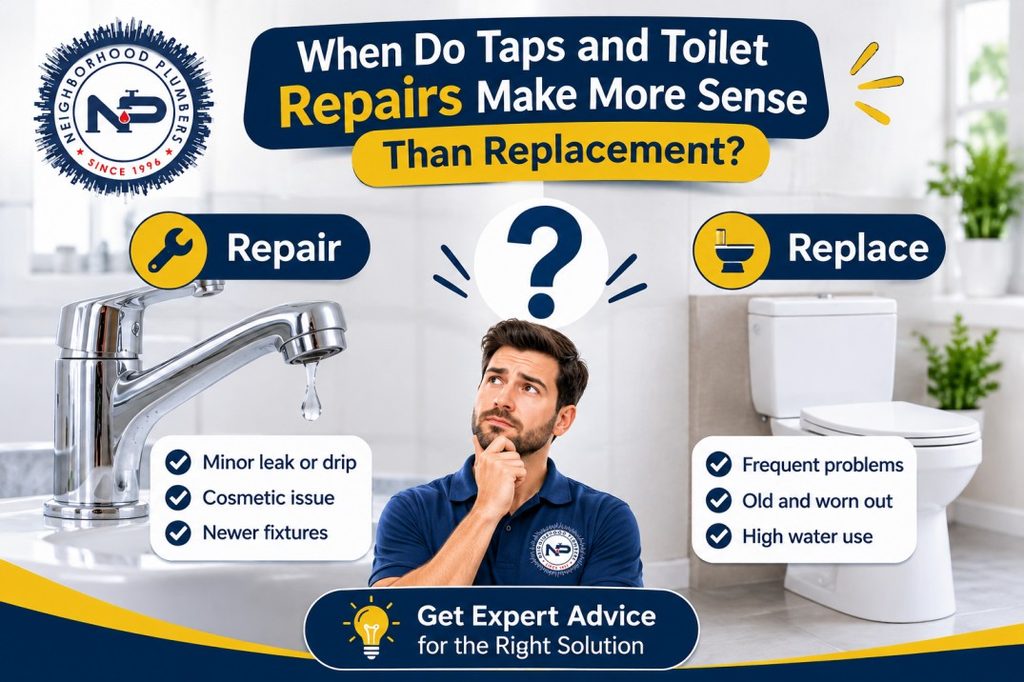
This is the question most homeowners ask about taps and toilet repairs. Here is how an experienced plumber thinks about it:
Leaking tap and toilet repairs are simpler when you catch the issue early. Try these quick checks at home:
These mistakes often turn a simple job into a bigger one:
These tips come from years of fixing taps and toilets across Melbourne:
Most taps and toilet repairs come down to a few worn parts. Washers, cartridges, seals, and valves wear out, and replacing them early prevents waste and damage. Replacement only makes sense when the body is damaged, parts are unavailable, or the same fault keeps returning.
Good toilet repair and tap replacement services start with the right diagnosis, not a guess. When a plumber explains the cause and your options, you can choose the fix that lasts.
If a tap is dripping or a toilet will not stop running, do not wait. Early toilet plumbing services and tap fixes stop small faults from growing. The team at Neighborhood Plumbers is always happy to inspect the problem, explain what has failed, and help you decide between a repair and a replacement.
Most leaking tap repairs take between 20 and 45 minutes. A simple washer change on a compression tap is quick, especially if the seat is in good shape. If the seat needs refacing, allow extra time. Mixer taps need the correct cartridge, so the plumber may need to identify the brand and model first. In most cases, the water only needs to be off for a short time, and you can use the tap again straight after.
A running toilet usually has a worn outlet valve seal or a faulty inlet valve. The outlet seal lets water leak from the cistern into the pan. The inlet valve may also fail to shut off, so water flows into the overflow pipe. Try the food colouring test to check the outlet seal. If you hear constant hissing, the inlet valve is the likely cause. A plumber can test both and replace the faulty parts in one visit.
Many homeowners can change a washer on a simple compression tap. You need to turn off the water, remove the handle and headwork, and fit the correct washer. The challenge is getting the size right and checking the seat for wear. If the seat is pitted, a new washer will not seal. Mixer taps, cartridges, and anything that changes the plumbing are best left to a licensed plumber. A poor job can cause a bigger leak.
Consider replacing your toilet if the pan or cistern is cracked, if spare parts are no longer available, or if it is an old single-flush model. Older single-flush toilets can use up to 11 litres per flush, while modern dual-flush models use much less. Repeated faults are another sign. If you call for toilet plumbing services several times a year, a new toilet with a good WELS rating may give better reliability and lower water use.
Good toilet repair and tap replacement services start with a clear diagnosis. The plumber should explain what has failed and why, then outline repair and replacement options. They should use parts that match your fittings, test the work, and check for related issues such as high water pressure. In Victoria, they must hold the right licence or registration. For larger jobs, they should also provide a compliance certificate. Ask for photos of worn parts if you want to see the problem.