We are currently open! 12:34:21PM
Our Services



✖


A dripping tap, a slow-draining sink or a small damp patch on the wall may not seem like a serious problem. It is tempting to put off repairs when everything still appears to be working. However, minor plumbing issues can gradually become expensive problems when they are left unattended.
For Melbourne homeowners, Plumbing Maintenance Melbourne is about more than fixing leaks. It involves identifying early warning signs, maintaining pipes and fixtures, monitoring water pressure, and addressing small faults before they disrupt daily life. Regular maintenance can also help reduce water waste and limit damage to floors, walls, cabinetry and other parts of a property.
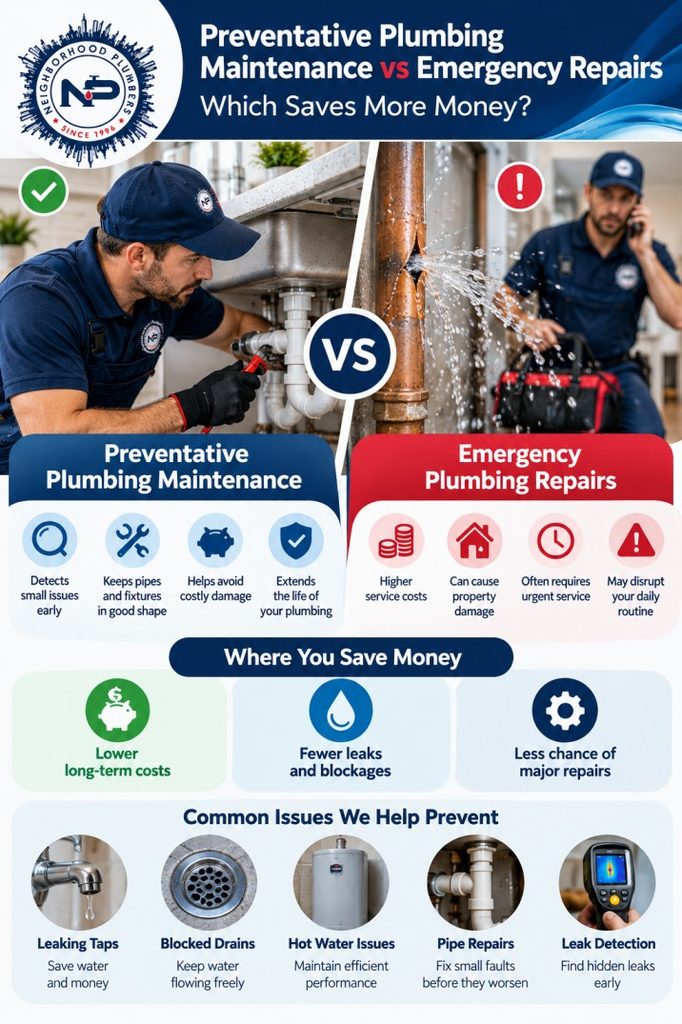
Emergency repairs are sometimes unavoidable. A burst pipe, overflowing toilet or sudden loss of water requires prompt attention. The challenge is that these situations can involve urgent labour, additional repair work and damage that extends beyond the plumbing system itself.
So, which approach saves more money: preventative maintenance or emergency repairs? In most cases, a sensible maintenance routine costs less over time than repeatedly waiting for something to fail. However, the actual savings depend on the property’s age, plumbing condition, usage patterns and the type of problem involved.
This guide explains the differences, examines common household scenarios, discusses Plumbing Maintenance Costs, and shares practical ways Melbourne homeowners can protect their plumbing systems without spending unnecessarily.
Preventative plumbing maintenance means checking, cleaning and servicing plumbing components before a major fault develops. Instead of waiting for a leak or blockage to become disruptive, homeowners address early signs of wear while the repair is still manageable.
A maintenance check may cover:
The right inspection depends on the property’s condition. A modern townhouse with recently installed plumbing may need less attention than an older Melbourne home with ageing pipes and a history of recurring blockages.
Why does this matter? A small fault is often easier to investigate when there is no active flooding, damaged cabinetry or urgent need to restore water. Early attention also gives homeowners more time to compare quotes and plan suitable repairs.
Preventative maintenance does not mean replacing every ageing component or paying for unnecessary inspections. It means identifying genuine risks and dealing with them at the appropriate time.
Both approaches have a place in responsible property care. The difference lies in timing, urgency and the potential cost of damage.
Preventative plumbing maintenance
Planned work
Emergency plumbing repairs
Urgent work
Imagine a homeowner notices a small damp patch beneath a bathroom vanity. The water seems to appear only occasionally, so the homeowner places a towel underneath and leaves it for several weeks.
Eventually, a connection fails or the leak becomes more severe. Water spreads into the cabinet base, damages nearby materials and creates a need for more extensive drying and repairs.
The original plumbing fault may have been relatively simple. The final bill can be much larger because the repair now involves additional damage.
This is an illustrative scenario, not a claim that every small leak will cause major damage. The key lesson is that the total cost of a plumbing failure includes more than the plumber’s invoice.
Not every plumbing emergency can be prevented. Sudden pipe failures, accidental damage, unexpected component breakdowns and severe blockages can occur even when a property is maintained properly.
If water is escaping rapidly, a drain is overflowing with sewage or a hot water system develops a serious leak, delaying action to wait for a routine appointment can make matters worse.
In these circumstances, contact an appropriately licensed plumber and follow safe isolation instructions where possible. Maintenance is designed to reduce avoidable failures, not eliminate every possibility of an emergency.
The financial benefit of maintenance comes from managing small problems before they create larger expenses. The strongest savings usually come from preventing secondary damage, identifying faults early and avoiding repeated repairs to the same underlying issue.
Consider these common situations.
A dripping tap may result from a worn washer, damaged seal or faulty cartridge. If the underlying problem is straightforward, repairing it early may require relatively little work.
Leaving it unresolved wastes water and allows the fault to continue. If the fitting deteriorates further, replacement parts or a more extensive repair may become necessary.
Practical tip: If a tap continues dripping after being turned off firmly, do not keep tightening it. Excessive force can damage the fitting. Arrange an assessment if a simple, appropriate adjustment does not solve the problem.
A slow kitchen or bathroom drain may be caused by accumulated grease, hair, soap residue or a deeper drainage issue.
A minor, accessible blockage may be relatively simple to clear. However, repeated blockages can indicate a problem further along the drainage system, including damaged pipes or tree-root intrusion.
Practical tip: Avoid pouring cooking grease down kitchen drains. Use suitable drain strainers, and seek professional advice when a blockage keeps returning. Repeatedly using harsh chemical cleaners may damage some plumbing materials and does not address every underlying cause.
A hot water system that produces inconsistent temperatures, makes unusual noises or shows signs of leakage deserves attention.
A timely assessment may identify a repairable component before the system fails completely. However, maintenance cannot guarantee that an ageing unit will not need replacement.
Practical tip: Never remove covers from gas or electrical equipment, tamper with pressure-relief devices or attempt internal repairs yourself. Have qualified professionals assess the system.
Corrosion, loose connections and hidden leaks can develop gradually. Warning signs include unexplained dampness, peeling paint, discoloured walls, persistent musty smells and an unexpected increase in water consumption.
Professional Leak Detection can help locate the source of a suspected leak without unnecessary exploratory work. The appropriate method depends on the pipework, building materials and location of the suspected fault.
Early identification may limit the amount of flooring, plaster or cabinetry that needs to be removed for access.
The cost of maintenance varies according to the type of inspection, the property’s size and age, the accessibility of the plumbing and whether repairs are required.
For Melbourne homeowners, published 2026 pricing guides provide useful budgeting benchmarks. One Melbourne guide lists standard plumbing labour at approximately $84–$210 per hour and common leaking-tap repairs at $84–$275, while an after-hours emergency visit may range from $260–$735. These are indicative market estimates, not guaranteed prices.
A useful distinction is that an inspection, a repair and a major replacement are three different expenses.
| Expense | What affects the price? |
|---|---|
| Routine inspection | Number of fixtures, inspection scope and accessibility |
| Minor repairs | Fault type, replacement parts and labour |
| Drain investigation | Blockage severity, access and diagnostic equipment |
| Leak detection | Leak location, building materials and detection method |
| Pipe repairs | Pipe material, damage extent and access requirements |
| Emergency attendance | Time of day, urgency, travel and work required |
Several factors can change a plumbing quote:
Before approving work, ask for a written quote or clear estimate that explains labour, parts, call-out fees, GST where applicable, and any likely additional charges.
Do not choose a plumber solely because the initial price is the lowest. A clear explanation of the fault and the proposed solution can help you judge whether the work addresses the actual problem.
A preventative plumbing investment makes the most financial sense when the expected cost of inspection and necessary maintenance is reasonable compared with the likely cost of a failure.
However, not every property requires the same maintenance schedule. Spending money on unnecessary replacements can be just as unhelpful as ignoring genuine warning signs.
A practical approach is to prioritise maintenance according to risk.
These are practical priority categories, not a substitute for professional assessment. Any sign of active flooding, sewage overflow or another serious failure should be addressed urgently.
For older homes, consider the plumbing system’s history rather than relying only on its age. Previous repairs, pipe materials, drainage issues and water-pressure problems can help determine where inspection effort is most valuable.
A property with a history of repeated leaks may benefit from more targeted inspections than a newer home with no known problems.
Some problems can wait for a planned appointment. Others need immediate attention. Knowing the difference helps homeowners avoid unnecessary emergency call-outs without taking risks with their property.
Contact an Emergency Plumbing Melbourne when the problem poses an immediate risk to people, property or essential plumbing services.
Examples include:
If a leak occurs, turn off the relevant water supply if it is safe to do so. If you cannot identify the correct isolation valve, contact your plumber or water provider for guidance.
If water is near electrical outlets, appliances or a switchboard, do not enter the affected area or touch electrical equipment. Keep clear and seek appropriate emergency assistance.
For a suspected gas leak, avoid flames and electrical switches, leave the affected area and contact the appropriate gas emergency service from a safe location.
A minor dripping tap, a slow drain that is not overflowing or a loose external tap may be suitable for a planned appointment, provided there is no immediate safety or damage risk.
However, a small visible symptom can sometimes indicate a more serious hidden problem. A damp patch that keeps returning, for example, deserves investigation even if the water flow is not obvious.
The aim is not to delay repairs. It is to match the response to the level of risk.
Water leaks can be difficult to identify because the visible damage does not always appear close to the source.
A leak beneath a bathroom floor may cause moisture to appear in a nearby room. A pipe concealed inside a wall may leave a stain several centimetres away from the actual fault.
Look out for these warning signs:
A water meter test can provide useful clues, but it cannot identify every leak. Meter arrangements, storage systems and automatic appliances can complicate the results. Follow the water provider’s instructions and ask a plumber to investigate unexplained usage.
A proper repair should address the cause of the leak rather than simply conceal its symptoms.
For example, replacing a damaged section of pipe may be more appropriate than repeatedly tightening a connection if the underlying material is corroded. Similarly, clearing a drain may provide temporary relief if the real issue is damaged pipework or root intrusion.
A professional assessment helps determine whether a repair, replacement or further diagnostic testing is justified.
Where practical, ask the plumber to explain:
These questions make it easier to understand the work and avoid paying repeatedly for incomplete solutions.
You do not need specialist tools or complicated maintenance plans to reduce everyday plumbing risks. A few consistent habits can make a difference.
Monthly: Check visible plumbing
Look beneath sinks, around toilet connections and near the hot water system for moisture, rust marks or unexplained puddles. Do not dismantle equipment to inspect it.
Every few weeks: Keep drains clear
Remove visible hair and debris from accessible strainers. Keep grease, wipes and unsuitable waste out of household drains.
Know where to isolate the water
Learn the location of your property’s main water shut-off valve. Make sure household members know where it is and how to operate it safely.
Periodically: Review system condition
Follow manufacturer guidance for hot water equipment and arrange professional inspections when the system’s age, condition or history makes them appropriate.
A basic plumbing record can help you make better maintenance decisions. Note when a leak appears, whether a drain blocks repeatedly, what repairs have already been completed and whether the same fault returns.
For rental properties or multi-occupant homes, encourage residents to report small leaks promptly rather than waiting until a scheduled inspection.
This information can help a plumber identify recurring patterns and determine whether a component needs replacement instead of another temporary fix.
Even well-intentioned homeowners can make choices that increase repair costs.
A small leak may seem harmless when it produces only a few drops. But persistent moisture can damage surrounding materials, and the source may be more serious than it first appears.
Better approach: Investigate recurring moisture promptly, especially when it appears near walls, ceilings, floors or cabinetry.
Chemical cleaners are not a universal solution for blocked drains. Some products can be hazardous, may be unsuitable for particular plumbing materials and can leave dangerous residues when used incorrectly.
Better approach: Follow product instructions carefully, avoid mixing cleaning chemicals and seek professional advice for recurring blockages.
Incorrect fittings, excessive force or unsuitable sealants can turn a minor fault into a larger repair. Gas-related plumbing and many other regulated plumbing tasks require appropriately licensed professionals in Victoria.
Better approach: Limit DIY activity to simple tasks that are lawful and safe, such as cleaning accessible strainers or replacing suitable tap washers where permitted. Leave complex pipework, concealed leaks and regulated work to qualified tradespeople.
Putting off a repair can sometimes mean the fault becomes urgent outside normal business hours. That can increase the cost of attendance.
Better approach: If a problem is worsening or recurring, arrange an assessment before it becomes an emergency. Never delay urgent repairs simply to avoid an after-hours charge.
Two quotes may appear different because they include different materials, diagnostic work, warranties or restoration requirements.
Better approach: Compare the actual work proposed, not just the total price. Ask what happens if the initial investigation reveals a more extensive fault.
A useful way to compare maintenance with emergency repairs is to examine the expected total cost rather than focusing on the first invoice.
Consider a hypothetical example involving a minor pipe leak.
Option A is likely to be cheaper if the early repair prevents substantial additional damage. However, the exact saving cannot be calculated without knowing the fault, labour, materials and extent of any later damage.
A simple decision framework can help:
| Question | What it tells you |
|---|---|
| Is there active leakage or a safety risk? | Whether immediate action is needed |
| Has the same problem returned? | Whether the underlying cause remains unresolved |
| Is the plumbing system ageing or damaged? | Whether targeted inspection may be worthwhile |
| What does the quote include? | Whether the proposed cost is comparable with alternatives |
| Could waiting damage other parts of the home? | Whether postponement creates a larger financial risk |
Set aside a reasonable amount for routine property maintenance, including plumbing. The appropriate budget depends on the home’s age, the number of bathrooms, the condition of its pipes and your previous repair history.
There is no universal percentage or fixed annual amount that suits every property.
Prioritise known faults first, then plan inspections and upgrades based on evidence. If your home has recurring leaks or drainage issues, spending money on a proper diagnosis may be more valuable than repeatedly paying for the same short-term repair.
The goal is reducing emergency plumbing expenses, not eliminating every maintenance expense. A sensible plan spends money where it has the greatest potential to prevent damage or improve reliability.
The choice between preventative maintenance and emergency repairs is not simply about paying a small bill today versus a large bill tomorrow. It is about understanding the condition of your plumbing system, responding to warning signs and avoiding damage that could have been prevented.
For most Melbourne homeowners, planned inspections and timely repairs are a sensible way to manage plumbing risks. Fixing a leaking tap, investigating a recurring blockage or identifying a concealed leak early may prevent more extensive work later. At the same time, maintenance should be proportionate to the property’s actual needs rather than a reason to replace components unnecessarily.
If you are reviewing your home’s plumbing condition, start with visible warning signs, previous repair records and any unexplained changes in water usage. Obtain clear advice and compare quotes before approving non-urgent work.
Neighborhood Plumbers can be a starting point for homeowners looking to take a more proactive approach to plumbing care. The most valuable investment is not necessarily the most expensive maintenance plan; it is the right repair, completed at the right time, before a manageable fault becomes a costly disruption.
In many cases, yes. Routine maintenance can identify worn seals, leaking connections and developing blockages before they cause more extensive damage. Emergency repairs may involve higher attendance charges, urgent replacement parts and damage to floors, walls or cabinetry.
However, preventative maintenance does not guarantee savings on every property. The financial benefit depends on whether a genuine fault is identified and whether early action prevents a more expensive problem.
There is no single schedule that suits every home. Newer properties with no known plumbing issues may need occasional checks and maintenance according to manufacturer guidance. Older properties, homes with recurring leaks and houses with ageing drainage systems may benefit from more targeted inspections.
Check visible plumbing regularly, respond to warning signs promptly and ask a licensed plumber to recommend an inspection schedule based on your property’s condition and repair history.
Common warning signs include dripping taps, slow drains, running toilets, unexplained increases in water consumption, damp walls, musty smells and inconsistent water pressure.
A single symptom does not always identify the underlying cause. For example, a slow drain may result from a simple obstruction or a more serious drainage fault. If the problem keeps returning, professional assessment can help prevent repeated spending on temporary fixes.
Costs depend on the work required, access to the plumbing, materials and the time of the appointment. Published Melbourne estimates for 2026 place standard plumbing labour at roughly $84–$210 per hour, while a leaking-tap repair may cost approximately $84–$275. After-hours emergency visits can cost substantially more.
These figures are indicative only, not a fixed price list. A routine inspection may have a different fee structure from a repair visit. Ask for an itemised quote or a clear explanation of call-out fees, labour, parts and any additional work before approving non-urgent repairs.
No. Preventative maintenance reduces some avoidable risks, but pipes can fail suddenly, fixtures can be damaged and equipment can break down unexpectedly.
Its main value is identifying developing faults, keeping plumbing components in suitable condition and reducing the likelihood that a manageable issue will become a major problem. Homeowners should still know how to isolate their water supply and how to obtain urgent assistance when a serious failure occurs.