We are currently open! 12:34:21PM
Our Services



✖


Most plumbing problems start small. A tap drips, a drain slows down, or a toilet keeps running after you flush. You can fix some of these yourself in ten minutes. Others hide a deeper fault that only trained eyes and proper tools will find. Knowing the difference is the heart of smart Plumbing Maintenance Melbourne homeowners can rely on.
Good DIY Plumbing Maintenance saves you time and catches small issues early. But it has clear limits. Push past those limits and a simple job can turn into a flooded laundry or an unsafe hot water system.
This guide draws a clear line between the two. You will learn which jobs belong to you, which need a Professional Plumbing Inspection, and how to spot the warning signs that tell you to stop and call for help.
Melbourne homes are a mix of old and new. Weatherboard cottages in Northcote still run galvanised steel pipes. Newer townhouses in Point Cook use plastic PEX lines and push-fit joints. Each system ages in its own way, and each fails in its own way.
Victoria also has firm rules. Almost all plumbing work connected to the water supply, sewer, stormwater or gas must be done by a registered or licensed plumber. Homeowners can handle simple upkeep, such as cleaning aerators, swapping a showerhead or clearing a sink trap. Anything beyond that is not just risky. In many cases, it is against the law and can void your home insurance.
So the real question is not “Can I do this?” It is “Should I, and is it safe?”
Some homeowner plumbing tasks are simple, safe, and genuinely useful. Doing them every month or season keeps your system healthy between visits.
The water meter test is the best leak check any homeowner can do. Turn off every tap, appliance, and irrigation system. Write down the meter reading, then wait two hours without using any water. If the reading has moved, water is escaping somewhere on the property.
This test does not tell you where the leak is. It simply tells you that one exists. That is your signal to book a professional, not to start cutting into walls.
Here is where many homeowners go wrong. Online videos make DIY Plumbing Maintenance look easy, even for complex jobs. They rarely show the risks or the rules.
Jesse, a homeowner in Reservoir, learned this the hard way. His hot water system’s relief valve kept dripping, so he watched a video and tightened it with a wrench. The drip stopped. Two weeks later, the system began making loud rumbling noises. Our plumber found the valve had been forced shut. That valve exists to release dangerous pressure. Blocking it put the whole tank at risk of rupture.
Leave these jobs to a licensed plumber, always:
A yearly Professional Plumbing Inspection covers the parts of your system you cannot see or safely test. At Neighborhood Plumbers, we often find issues the owners never noticed, because they sit behind walls or inside tanks.
A proper visit includes:
Professional plumbing servicing works because plumbers see the same faults every week. They know that a faint knock in a laundry wall often means water hammer. They know that green crust on a copper joint means corrosion has started. These patterns are easy to miss when you only look at your own home once a year.
The best approach blends both sides. You handle the regular, simple checks. A professional handles the annual deep review. Together, they give you safe plumbing maintenance all year round.
A simple Plumbing Maintenance Melbourne routine looks like this:
Write down what you check and when. A simple note on your phone works well. That record helps your plumber spot changes over time.
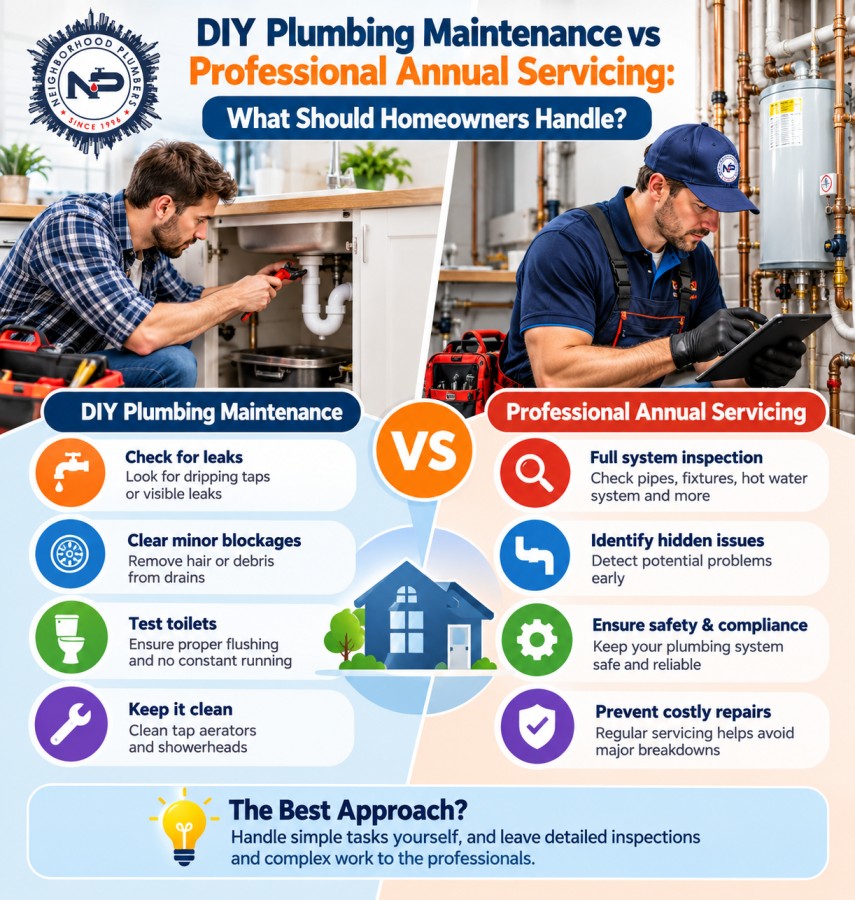
After years of call-outs, we see the same mistakes again and again:
These tips come straight from our time on the tools across Melbourne homes:
DIY Plumbing Maintenance is about watching, cleaning, and testing. It is not about repairing pipes, valves, or gas lines. Keep your own jobs simple, and stop the moment a task needs tools, cutting, or a new part on the supply line.
A yearly Professional Plumbing Inspection covers everything you cannot see, test, or legally fix. That balance gives you a safer home and fewer surprises.
If you have not had a full Plumbing Maintenance Melbourne check in the past year, now is the right time to book one. The team at Neighborhood Plumbers is always happy to walk you through your system and show you which checks you can safely do yourself.
Victorian homeowners can usually handle simple upkeep that does not change the plumbing system itself. This includes cleaning tap aerators, swapping a screw-on showerhead, clearing hair from drains, emptying a basin trap, and testing for leaks. Anything that connects to the water supply, sewer, stormwater, or gas generally needs a registered or licensed plumber. If you are unsure, check with a licensed plumber first. Unlicensed work can create safety risks and may affect your insurance cover.
Most Melbourne homes benefit from one full inspection each year, ideally in April or May before winter. Older homes with galvanised steel, early copper or clay sewer pipes may need checks every six months. Homes with large trees near the sewer line also benefit from regular drain camera checks. Your plumber can suggest a schedule based on your home’s age, pipe materials and past issues. A written report each year helps track changes over time.
Hot water systems store water under heat and pressure. The relief valve releases excess pressure, and the tempering valve keeps bathroom water at a safe temperature. If either valve is blocked, adjusted, or fitted wrongly, the tank can fail or deliver scalding water. Many systems also run on gas, which is strictly licensed work in Victoria. A dripping relief valve is often normal, so never tighten or block it. Call a licensed plumber to test it instead.
Call a plumber if your water meter moves when no water is in use. Other signs include damp patches on walls or ceilings, lifting floor tiles, musty smells, mould near wet areas, or a sudden drop in water pressure. Warm spots on a concrete floor can point to a leaking hot water line under the slab. Professionals use thermal cameras, moisture meters and pressure tests to find the exact spot without tearing out large sections of wall.
No, but they make professional servicing far more effective. Your monthly checks catch visible issues early, such as drips, slow drains, and running toilets. A professional inspection covers hidden risks like high water pressure, corroded joints, hot water valve faults, and sewer problems. The two work best together. Keep a simple log of your own checks and share it with your plumber. It helps them focus on the areas that matter most in your home.