We are currently open! 12:34:21PM
Our Services



✖


Melbourne is famous for four seasons in one day. Your pipes feel every one of them. Hot north winds dry out the ground in summer. Cold snaps chill exposed pipes in winter. Spring storms test every gutter and drain. That is why smart Plumbing Maintenance Melbourne homeowners plan around the weather, not around emergencies.
A simple Plumbing Maintenance Calendar turns that idea into a habit. Instead of waiting for a burst pipe or a blocked sewer, you check the right things at the right time. Each task takes minutes, yet together they protect your home all year.
This guide walks you through each season, starting with spring, since we are in it now. You will learn which jobs matter most, why they matter in Melbourne, and how Seasonal Plumbing Maintenance stops small problems from growing.
Melbourne’s climate puts unusual stress on home plumbing. Large parts of the north and west sit on reactive clay soil. That clay shrinks when it dries in summer and swells when it soaks in winter. The ground moves, and buried pipes move with it.
Weather also changes how you use water. Summer brings garden watering, pool top-ups and long showers after the beach. Winter brings heavy hot water demand and long, cold nights. Each shift places a different load on your pipes, drains and hot water system.
Year-round plumbing maintenance works because it matches the task to the risk. You clear gutters before storms, protect pipes before frost and check hot water before peak demand. Timing is what makes each job effective.
Spring, from September to November, is a season of growth and storms. Both affect your plumbing in ways most people never think about.
Summer, from December to February, brings heat, holidays and higher water use. Your system works hard, and weak points tend to show.
Summer is when water pressure problems often appear. Heavy garden watering, guests and extra laundry all increase demand. Australian Standard AS/NZS 3500 sets 500 kPa as the maximum pressure at outlets inside a home. Some Melbourne suburbs receive mains pressure well above that.
If your pipes bang when taps shut off, that is water hammer. It is a sign that pressure is too high or pipes are loose. A plumber can test your pressure in minutes and fit a pressure limiting valve if needed.
Last summer, a family in Glen Waverley called us on Boxing Day. Their sewer had backed up into the shower. Tree roots had entered a clay joint months earlier, and holiday guests pushed it over the edge. A spring sewer check would have found those roots well before the big day.
Autumn, from March to May, is the most important season in any Plumbing Maintenance Calendar. It sets up your home for the cold, wet months ahead.
Falling leaves fill gutters, downpipes and stormwater drains. Once winter rain arrives, those blockages force water back up and into places it should not go. Autumn is the right time to clear every outside drain.
Inside the house, autumn is also a good time for drain cleaning. Pull hair from shower drains, clean basin traps and flush kitchen drains with hot water. If a drain still runs slowly after that, book a professional. High-pressure jetting clears build-up that plungers cannot reach.
Autumn is the ideal time for a full professional service. At Neighborhood Plumbers, we suggest booking in April or May. Pipes are under little stress, and you have time to fix any issues before winter.
A professional visit should include a water pressure test, a hot water system check, thermal scanning for hidden leaks and a drain review. You should also receive a written report with photos. That record becomes part of your Plumbing Maintenance Melbourne history and helps track changes year to year.
Winter, from June to August, is when plumbing systems face their heaviest load. Cold weather and high hot water use expose any weakness.
Your hot water system works hardest in winter. Longer, hotter showers and more washing all increase demand. Watch for these warning signs:
Never adjust or block the relief valve yourself. It exists to release dangerous pressure. Hot water and gas work in Victoria must always be done by a licensed plumber.
Outer suburbs such as the Dandenongs, Macedon Ranges and parts of the Yarra Valley can drop below freezing on clear nights. Water in exposed pipes can freeze, expand and crack the pipe. The leak then starts when the ice thaws.
Wrap outdoor pipes, under-house pipes and pipes in unheated garages with foam lagging. It is cheap, easy to fit and lasts for years. Also disconnect garden hoses so water cannot freeze back into the tap.
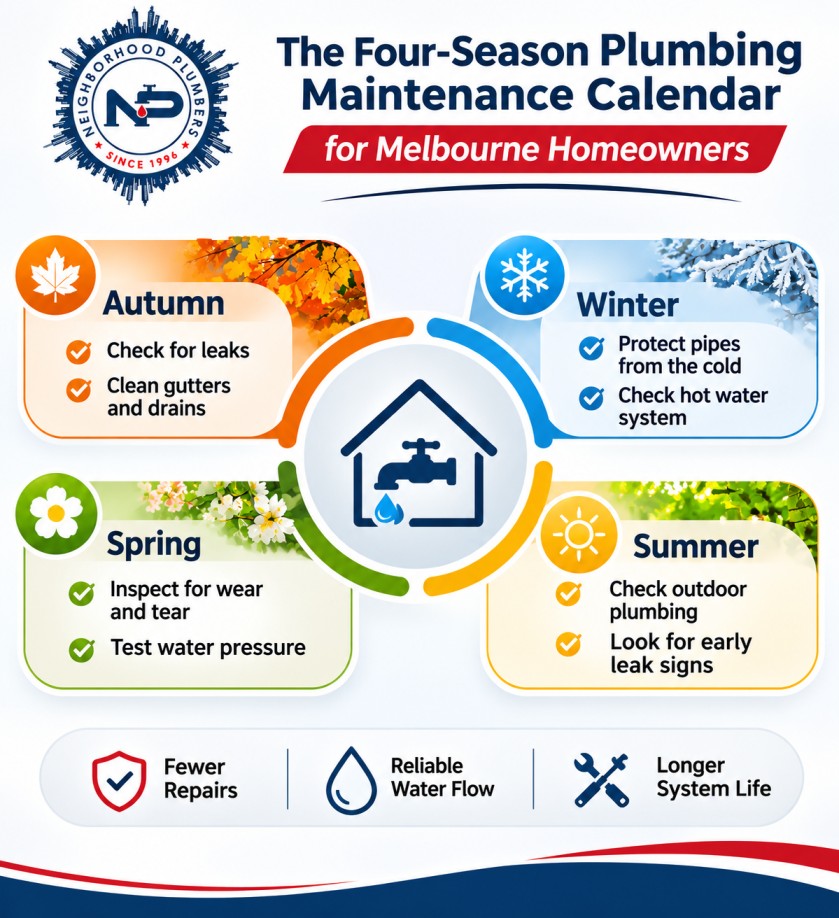
A seasonal plumbing checklist only works if you avoid these common traps:
These tips come from years of working in Melbourne homes of every age:
A Plumbing Maintenance Calendar works because it matches each job to the season that needs it most. Spring covers roots and storms. Summer covers pressure and holidays. Autumn covers drains and inspections. Winter covers hot water and frost.
Follow this Seasonal Plumbing Maintenance routine and you will spot most problems while they are still small and simple to fix. You also gain a clear record of your home’s plumbing health.
If you would like help building a Plumbing Maintenance Melbourne routine for your own home, start with a full autumn or spring inspection. The team at Neighborhood Plumbers is always happy to walk you through your system and explain which seasonal checks matter most for your property.
Autumn, especially April or May, is the best time for most Melbourne homes. Pipes are under little stress, and you have time to fix issues before winter brings cold nights and heavy hot water use. A second check in spring suits older homes, homes with clay sewer pipes or properties with large trees nearby. Spring checks catch winter damage and early root growth before the busy summer period arrives.
Common signs include gurgling toilets, slow drains across several fixtures and sewage smells near outdoor gully traps. You may also notice lush, green patches of grass above the sewer line. Roots grow fastest in spring and summer, so symptoms often appear then. A plumber can confirm the problem with a CCTV drain camera. They can then clear the roots with a high-pressure jetter and suggest a longer-term repair if needed.
Your hot water system works much harder in winter. Incoming cold water is colder, so the system needs more energy to heat it. People also take longer, hotter showers. If the tank holds sediment, it has less usable space for hot water. A faulty thermostat or heating element can also cut output. If the problem continues, ask a licensed plumber to test the system and check the tank and anode.
Australian Standard AS/NZS 3500 sets 500 kPa as the maximum pressure at outlets inside a home. Most plumbers aim for 350 to 450 kPa, which gives good flow without stressing pipes and appliances. Some Melbourne suburbs receive mains pressure much higher than this. A pressure limiting valve fitted after the meter solves the issue. A plumber can test your pressure in about five minutes using a gauge on an outside tap.
Homeowners can safely clear gutters, clean drain traps, remove hair from shower drains and clean tap aerators. You can also test your stopcock, lag exposed pipes, check under sinks for leaks and run a water meter test. These tasks need no special tools or licence. Anything involving hot water systems, gas, sewer lines or pipe repairs should go to a licensed plumber. In Victoria, that rule protects both your safety and your insurance.