We are currently open! 12:34:21PM
Our Services



✖


Your home’s plumbing pipes work every day to deliver clean water, remove wastewater and keep your household running smoothly. However, many homeowners only think about their pipes when a leak appears, the water pressure drops or a blocked drain disrupts their routine. By then, a small plumbing issue may have already caused damage to walls, floors or cupboards.
Following a practical Pipe Maintenance Melbourne routine can help homeowners identify early warning signs, reduce unnecessary plumbing expenses and keep their water systems working reliably. Melbourne homes have different plumbing needs depending on their age, pipe materials, water usage and exposure to changing weather conditions.
The good news is that you do not need to understand every technical detail of your plumbing system to look after it properly. A few sensible habits, regular checks and timely professional assessments can make a meaningful difference.
This Pipe Maintenance Guide explains how to care for your home’s plumbing pipes, recognise developing problems, maintain suitable water pressure and understand when professional attention is necessary. It also covers practical ways to extend pipe life and avoid preventable repair costs.
Plumbing pipes gradually experience wear from regular water flow, pressure changes, corrosion, movement and everyday use. The speed of deterioration depends on the materials used, installation quality, water conditions and the environment surrounding the pipes.
Older Melbourne properties may contain ageing metal pipes, deteriorating joints or sections that have been modified during previous renovations. Newer homes can also experience problems caused by poor installation, damaged fittings, excessive pressure or tree roots entering underground drainage pipes.
Regular Pipe Maintenance helps homeowners identify these issues before they become major disruptions.
For example, a small leak beneath a kitchen sink might initially appear harmless. However, if the leak continues for several weeks, moisture can damage cabinetry, encourage mould growth and affect nearby flooring. Repairing the original connection is usually simpler than dealing with the additional damage.
Routine maintenance can help you:
Maintenance cannot prevent every plumbing failure, but it can improve the chances of detecting problems early and managing repair costs.
Preventative pipe maintenance involves checking the condition of your plumbing system, managing avoidable risks and addressing small faults before they develop into larger problems.
The most effective approach combines simple household observations with professional inspections when needed.
Start with the plumbing that is easy to see. Look beneath kitchen and bathroom sinks, around laundry connections, near hot-water systems and along accessible sections of pipework.
Pay attention to:
Not every sign of moisture indicates a leak. Cold-water pipes can develop condensation in humid conditions, while some surface discolouration may be old staining. However, persistent dampness deserves investigation.
Practical example: If you notice a cupboard base becoming damp even when the sink has not been used, dry the area and inspect the accessible connections. Check again after normal use. If the moisture returns, arrange a plumbing assessment rather than repeatedly wiping it away.
Never dismantle pressurised pipework or attempt to repair a damaged hot-water connection without appropriate knowledge and equipment.
Your water meter can help identify a possible leak that is not immediately visible.
To perform a basic check:
A moving meter does not automatically prove a leak in a pipe. A toilet cistern, an appliance or another connected system may be using water.
If the meter continues to register water consumption when everything should be off, a licensed plumber or your water provider may help identify the source.
This simple check is particularly useful when you receive an unexpectedly high water bill or notice dampness without an obvious explanation.
Exposed pipes can be damaged by renovation work, heavy storage items, accidental impacts and poorly positioned equipment.
Avoid hanging heavy objects from plumbing pipes or using them as supports. When drilling into walls, check for plumbing and electrical services before starting work. Use reliable service plans or suitable detection equipment rather than assuming pipes follow a particular route.
Where pipes pass through cupboards, garages or utility areas, keep access clear so leaks and corrosion can be spotted.
Pipe insulation can also be useful in suitable locations, particularly around hot-water pipework where it reduces heat loss. Insulation must be appropriate for the pipe material, operating temperature and environment. It should not conceal existing leaks or trap moisture against vulnerable surfaces.
Water Pressure affects how your plumbing system operates. Excessively high pressure can place additional stress on valves, flexible hoses, joints, taps and appliances. Very low pressure, meanwhile, can indicate a supply restriction, faulty fitting, leak or other plumbing problem.
Neither high nor low pressure should automatically be blamed on ageing pipes without further investigation.
Possible warning signs include:
Water hammer can also result from loose pipe supports, fast-closing valves or appliance operation, so its cause should be assessed rather than assumed.
A suitable pressure gauge can provide a more reliable reading than judging flow by eye. A plumber can measure static pressure and assess whether the system needs a pressure-limiting device or another adjustment.
In Victoria, plumbing work must comply with applicable requirements, including the relevant Plumbing Code of Australia provisions and Victorian regulations. A licensed plumber should determine the correct solution for the particular property.
Do not adjust pressure-control equipment without understanding its function. Excessive pressure reduction can also affect the performance of showers, appliances and other fixtures.
Expert tip: If several taps suddenly have weaker flow, investigate whether the problem affects the whole property or only one fixture. A single affected tap may have a blocked aerator or faulty cartridge. A property-wide change may point to a supply issue, pressure-control fault or leak.
Leak Detection is an important part of maintaining a healthy plumbing system because not every leak produces a visible puddle.
Water can escape behind walls, beneath floors, inside ceiling cavities or through underground pipes. The longer a concealed leak remains unnoticed, the greater the potential for damage to building materials and surrounding areas.
Look for recurring symptoms such as:
Some of these symptoms can have alternative causes, including roof leaks, poor ventilation or groundwater. Proper diagnosis matters because repairing the wrong component wastes time and money.
Depending on the suspected location and pipe material, a qualified plumber may use:
No single method works in every situation. For example, thermal imaging can reveal unusual temperature patterns but does not independently prove that a pipe is leaking. Results must be interpreted alongside other observations.
If a concealed leak is suspected, early professional assessment can help limit unnecessary wall or floor removal.
Your home’s drainage system carries wastewater away from sinks, showers, toilets and appliances. Although drainage pipes do not always experience the same conditions as pressurised water supply pipes, they still require sensible care.
Avoid treating sinks and toilets as general waste disposal systems.
Keep the following materials out of drains wherever possible:
Grease can cool and accumulate inside pipes, trapping other waste and gradually restricting flow. Hair and soap residue can build up around bathroom drain fittings, while wipes may contribute to blockages even when labelled flushable.
Use sink strainers and shower hair catchers, and clean them regularly. Scrape excess food into the bin before washing dishes.
Avoid repeatedly pouring strong chemical drain cleaners into a blocked pipe. These products may damage some materials, create hazardous splashes or complicate subsequent repairs. Persistent blockages are better assessed to identify the actual cause.
Tree roots can enter drainage pipes through existing cracks, damaged joints or openings. Once inside, they may collect debris and progressively restrict wastewater flow.
Warning signs include recurring toilet or drain blockages, slow drainage across several fixtures, gurgling sounds and persistent sewage odours.
A plumber may recommend a drainage camera inspection when root intrusion or pipe damage is suspected. The appropriate repair depends on the condition and location of the affected section.
Removing the immediate obstruction may restore flow, but damaged pipework can allow the problem to return. Addressing the underlying defect is often essential for a lasting result.
A Plumbing Inspection helps assess the condition of accessible pipework, connections, fixtures and relevant plumbing components. It may also identify issues that are difficult for a homeowner to evaluate safely.
There is no single inspection interval that suits every property. A newer home with no plumbing symptoms may need a different maintenance schedule from an older property with a history of leaks or repeated drainage problems.
Consider arranging an inspection when:
An inspection can also be useful before renovating a bathroom or kitchen. Checking accessible pipework before new cabinets, tiles or flooring are installed may help identify problems while access is still straightforward.
A standard inspection is not necessarily a guarantee that every concealed defect will be found. Ask the plumber what areas will be examined, whether testing is included and which limitations apply.
The goal of maintenance is not to eliminate every repair. Pipes and fittings eventually wear out, and some failures occur without much warning. The aim is to reduce preventable damage and make repairs more manageable.
For homeowners considering Pipe Repairs Melbourne, the right solution depends on the source of the problem, the pipe’s material, its accessibility and the extent of deterioration.
Small drips from an accessible tap connection may be manageable for a short period while you arrange a repair, provided the area remains safe and dry. However, active leaks inside walls, burst pipes, sewage backflow and major water discharge need urgent attention.
If a pipe bursts:
If you cannot locate the source of a leak, avoid opening walls or digging underground without professional advice.
Depending on the fault, a plumber may recommend:
Relining is not appropriate for every damaged drain, and a localised repair may not be economical when extensive sections are failing. Ask for an explanation of the defect, the proposed repair and any alternatives.
In the middle of your maintenance planning, Neighborhood Plumbers can be considered as a local service option when professional advice is needed. Whichever provider you choose, look for appropriate Victorian licensing, clear communication, an itemised quote where practical and an explanation of the work’s scope.
Extending pipe lifespan starts with understanding that different pipe materials age in different ways. Copper, galvanised steel, PVC, and other approved plastic piping systems have different installation requirements and vulnerabilities.
Copper pipes may develop corrosion under certain conditions. Galvanised steel can corrode internally and gradually restrict water flow. Plastic pipework may be affected by unsuitable temperatures, physical damage, incompatible fittings or incorrect installation.
The material alone does not determine how long a pipe will last. Water chemistry, workmanship, operating conditions and maintenance history also matter.
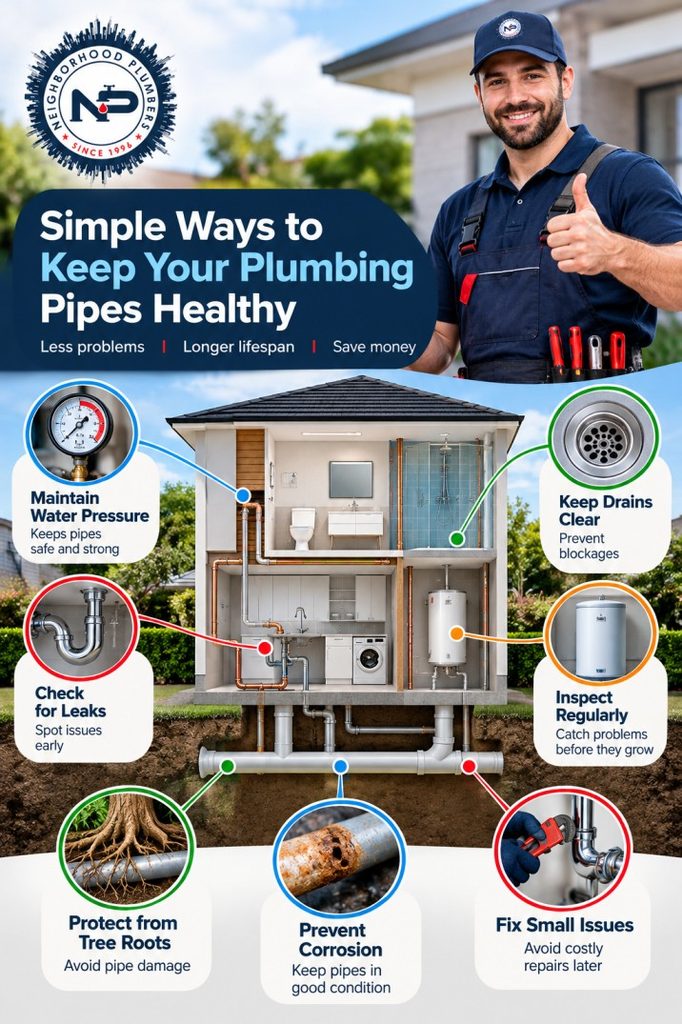
If your home is older, do not assume every pipe needs immediate replacement simply because of its age. Equally, do not assume that visible sections represent the condition of concealed pipework.
A qualified plumber can assess accessible areas, identify known materials where possible and recommend further investigation when symptoms justify it.
Where the existing system has widespread corrosion, repeated leaks or persistent restrictions, replacing selected sections may only provide a temporary solution. A broader replacement plan could be more practical, particularly when major renovations are already planned.
Hot-water pipes experience different operating temperatures from cold-water lines. Insulation can help reduce heat loss in suitable locations, while secure supports and correctly installed fittings help protect the system.
Keep access around the hot-water unit clear and watch for visible leaks, corrosion or changes in operation. Never adjust temperature controls, safety valves or pressure-relief components without understanding the manufacturer’s instructions and applicable requirements.
If a hot-water system is leaking, producing unusual discharge or showing signs of damage, seek professional assessment rather than attempting to seal a safety-related component.
Consistent residential plumbing care does not need to be complicated. The following schedule provides a useful starting point, but adjust it to the age, condition and history of your home.
| Frequency | Maintenance task | What to look for |
|---|---|---|
| Monthly | Check accessible sink and laundry connections | Drips, moisture and damaged hoses |
| Monthly | Observe taps, showers and toilets | Changes in flow, slow drainage or continuous refilling |
| Every few months | Clean strainers and hair catchers | Hair, food residue and soap accumulation |
| Every few months | Review the water bill or meter readings | Unexplained increases in water consumption |
| Annually | Review visible plumbing and previous issues | Corrosion, recurring leaks and ageing fittings |
| As needed | Arrange professional assessment | Hidden leaks, persistent blockages or unexplained pressure changes |
This is a practical observation schedule, not a mandatory inspection standard. Homes with a history of plumbing failures may need more frequent checks.
Keep a simple record of repairs, dates, replaced fittings and recurring symptoms. This history can help a plumber identify patterns and recommend whether a local repair or a broader upgrade makes more sense.
Some well-intentioned habits can make plumbing problems worse.
A slow drip can seem unimportant, especially if it occurs inside a cupboard. However, ongoing moisture can damage surfaces and conceal a more serious connection problem.
Better approach: Investigate recurring moisture promptly, even when the amount of water appears small.
Low flow may result from a blocked aerator, faulty mixer, partially closed valve, supply interruption or pressure-control issue.
Better approach: Compare several fixtures and note whether the change is sudden or gradual before deciding what needs repair.
Repeated chemical treatment may fail to remove the cause of a blockage and can introduce additional safety risks.
Better approach: Remove accessible debris safely and arrange professional assessment for persistent or recurring obstructions.
Incorrect sealants, incompatible fittings and poorly tightened connections can create new leaks. Work on certain plumbing systems also requires a licensed professional.
Better approach: Restrict household maintenance to safe, accessible observations and straightforward cleaning. Use appropriately qualified tradespeople for repairs and regulated work.
A damaged section may reflect a local fitting problem, but repeated failures can also indicate a wider issue involving corrosion, pressure or installation.
Better approach: Ask what caused the failure and whether the proposed repair addresses the underlying problem.
A few additional habits can make your maintenance routine more effective.
Know where your main water shut-off is located. Every adult in the household should know how to find it and operate it safely. In an emergency, this can reduce the amount of water escaping before assistance arrives.
Pay attention to changes rather than isolated events. One slow drain may be a local blockage. Several slow drains appearing together may indicate a shared drainage problem. A pattern of recurring symptoms is often more informative than a single observation.
Keep renovation records. Save invoices, inspection reports and details of replaced pipes or fittings. These records can help future tradespeople understand the system and avoid unnecessary investigative work.
Request a clear explanation before approving major work. Ask which component has failed, how the diagnosis was reached, whether the proposed repair is localised or system-wide, and what limitations remain after the work.
Do not postpone urgent problems to fit a routine schedule. Active leaks, burst pipes, sewage overflow and water near electrical hazards require prompt action. Routine maintenance is intended to reduce risk, not replace emergency responses.
A practical Pipe Maintenance Guide gives homeowners a repeatable way to notice early warning signs, manage avoidable risks and make informed decisions about repairs. Regular observations, sensible water-use habits, safe drainage practices and professional inspections when warranted can all contribute to a more reliable plumbing system.
The key is to act on changes rather than wait for a small defect to become an expensive emergency. Keep track of unusual water bills, recurring dampness, pressure changes and drainage issues. Where the cause is uncertain, a qualified assessment is generally more useful than repeated guesswork.
For Melbourne homeowners, Pipe Maintenance Melbourne should be approached as an ongoing part of property care, with maintenance decisions based on the home’s pipe materials, age, condition and actual symptoms. When a problem needs professional attention, Neighborhood Plumbers is a name to consider while comparing appropriately qualified local providers. A clear diagnosis and suitable repair plan can help protect your property and support the long-term performance of your plumbing system.
Check visible pipes and accessible connections monthly for leaks, dampness, corrosion and other changes. Review water usage and drainage performance regularly, and consider a professional inspection when the property is older, has a history of failures or develops recurring symptoms.
There is no universal rule requiring every home to receive a full plumbing inspection annually. The appropriate frequency depends on the condition of the system, the materials used and any known problems. An inspection after purchasing an older property or before a major renovation may be particularly useful.
Common warning signs include unexplained water bills, damp cupboards, water stains, corrosion, recurring leaks, reduced flow and persistent drainage problems. You may also hear unusual banging or notice water meter movement when the property should not be using water.
None of these signs identifies the exact cause on its own. For example, low flow may come from a blocked tap aerator rather than a damaged supply pipe. Compare symptoms across different fixtures and arrange an assessment when the cause remains unclear.
Yes. Excessive pressure can place additional stress on joints, valves, flexible hoses, taps and connected appliances. Over time, this may contribute to leaks or premature component failure, particularly where fittings are already worn or incorrectly installed.
A pressure gauge can help establish the actual pressure, while a licensed plumber can assess whether pressure regulation is appropriate. Avoid making adjustments based only on how forcefully water comes from a tap, because flow rate and water pressure are not the same thing.
Arrange professional assistance when you have persistent leaks, suspected concealed pipe damage, repeated drain blockages, unexplained water use or significant pressure changes. Burst pipes, sewage overflow and active leaks that threaten electrical equipment require urgent attention.
If water is escaping rapidly, isolate the supply if it is safe and accessible. Stay away from wet electrical areas and seek appropriate assistance. For less urgent faults, explain the symptoms, when they began and whether they affect one fixture or the entire property. This information can help the plumber assess the likely cause.
The best option depends on the pipe material, the extent of deterioration, the frequency of previous failures and the cost of accessing the affected section. A localised defect in otherwise sound pipework may be suitable for a targeted repair.
However, widespread corrosion, repeated leaks or extensive internal restrictions may make broader replacement more practical. A qualified plumber should explain the evidence supporting the recommendation, the expected benefits, any disruption involved and the limitations of each option. Age alone is not enough to determine whether all pipes need replacing.