Category Archives: Blog

How We Restored Hot Water to a Family Home Within Hours After a System Failure?

Losing hot water is frustrating at any time, but when a family wakes up to a cold shower, a leaking hot water system, or completely cold taps, the problem quickly becomes urgent. For households with children, older family members, or people working from home, a failed hot water system can disrupt the entire day.

This is where Emergency Hot Water Repairs Melbourne become more than a routine plumbing job. The priority is not simply to replace a faulty component. A professional needs to identify what failed, determine whether the system can be safely repaired, prevent further property damage, and restore reliable hot water as quickly as practical.

In this Emergency Hot Water Repair Case Study, we look at a realistic family-home scenario and explain how an experienced plumber can approach a sudden hot water failure from the first phone call through to final testing.

The purpose is not to suggest that every hot water problem can be fixed within a few hours. Different systems, faults, access conditions, replacement parts, and safety requirements can change the timeframe. Instead, this case shows what a well-managed emergency response looks like and why proper diagnosis matters.

What Happened When the Family Lost Hot Water?

The family lived in a Melbourne suburban home with four occupants. Their hot water system had been working normally the previous evening.

The next morning, the household noticed two problems.

First, the shower remained cold even after several minutes. Then they discovered water around the base of the hot water unit.

At first, the family assumed the system simply needed time to heat the water. However, the combination of no hot water and visible water leakage suggested something more serious.

This is an important point for homeowners.

A lack of hot water does not always mean the heating element or burner has failed. The underlying issue could involve:

  • A leaking tank
  • A failed tempering valve
  • A faulty thermostat
  • An electrical component
  • A gas ignition problem
  • A pressure-related issue
  • A failed relief valve
  • A damaged pipe or connection
  • A control fault
  • Internal tank corrosion
  • A combination of faults

Trying to identify the exact problem without proper testing can lead to the wrong repair.

Why Was This an Emergency Plumbing Situation?

Not every loss of hot water requires an emergency callout. However, the situation becomes more urgent when a hot water failure is accompanied by active leakage, electrical concerns, gas-related symptoms, or the possibility of property damage.

In this case, the leaking water was the biggest immediate concern.

A hot water system can hold a substantial volume of water. If a tank or connection continues leaking, the issue can move beyond inconvenience and become a property-maintenance problem.

Water can affect:

  • Flooring
  • Wall materials
  • Cabinets
  • Stored belongings
  • Electrical equipment
  • Timber structures
  • Nearby appliances

This is why experienced Hot Water Repairs begin with safety and containment rather than immediately replacing parts.

The first objective is to make the area safe and stop the situation from becoming worse.

How Did the Emergency Hot Water Repair Case Study Begin?

The response started with a few basic questions.

What type of hot water system was installed?

The plumber needed to establish whether the property had an electric storage system, gas storage system, continuous-flow system, heat pump, or another configuration.

Different systems have completely different components and failure points.

Where was the water coming from?

A leak from a pipe connection is very different from water escaping through the tank itself.

If the leak is from a replaceable valve or connection, repair may be straightforward. If the storage cylinder has developed an internal leak, replacement may be the more appropriate solution.

Was the system still operating?

The family reported that there was no hot water. The plumber also needed to determine whether the unit was attempting to operate and whether there were any unusual sounds, smells, electrical symptoms, or warning indicators.

When did the problem start?

The timing can provide useful diagnostic information.

A system that suddenly stops heating after years of normal operation may have a failed electrical or gas component. A system that has been gradually producing less hot water may point toward a different problem.

These questions help an emergency plumber arrive prepared instead of treating every call as the same fault.

What Happens During the Initial Inspection?

When the plumber arrived, the first step was a visual inspection.

This included checking:

  • The condition of the tank
  • Pipework and connections
  • Isolation valves
  • Pressure relief components
  • Electrical connections where applicable
  • Signs of corrosion
  • Water around the unit
  • Manufacturer information
  • Installation configuration
  • Evidence of previous repairs

The system was then isolated as required to reduce the immediate risk.

This is one of the most important aspects of Emergency Plumbing. A rushed repair without understanding the condition of the entire system can create another failure shortly after the original problem.

The goal is to establish the cause before deciding on the solution.

What Was the Actual Fault?

In this case, inspection identified a failed component associated with the hot water system, along with a leaking connection.

The tank itself was still serviceable.

That distinction mattered.

A less careful approach could have resulted in the family being told that the entire system needed replacement. However, if the storage tank and major components are structurally sound, replacing the failed component and repairing the leak may provide a reliable and more cost-effective outcome.

This is where professional diagnosis creates real value.

A qualified plumber should explain:

  1. What has failed
  2. Why it has failed
  3. Whether the system can be repaired
  4. Whether replacement is recommended
  5. What risks exist if the problem is left unresolved
  6. What the expected repair process involves

The homeowner should not have to make a major decision without understanding these points.

How Were the Hot Water Repairs Carried Out?

Once the fault was confirmed, the repair was approached in stages.

Step 1: Make the system safe

The affected services were isolated according to the system configuration and safety requirements.

The purpose was to prevent further water leakage and avoid exposing the household or plumber to unnecessary risks.

Step 2: Confirm the replacement component

The replacement part needed to be compatible with the existing system.

This is something homeowners often overlook.

A component that appears physically similar may not necessarily be suitable for a particular hot water system. Compatibility, specifications, pressure ratings, manufacturer requirements, and installation standards all matter.

Step 3: Repair the leaking connection

The leaking connection was addressed before restoring normal operation.

A repair is not complete simply because the system starts heating again. The plumber must also check that water is not escaping under operating conditions.

Step 4: Restore the system

After the repair, the system was returned to service in accordance with the appropriate operating procedure.

The plumber then allowed the system to begin its normal heating cycle.

Step 5: Test the system

Testing is one of the most valuable stages of any professional plumbing repair.

The plumber checked for:

  • Continued leakage
  • Correct water flow
  • Appropriate operation
  • Abnormal pressure behaviour
  • Heating performance
  • Unusual sounds
  • Fault indicators
  • Secure connections

Only after the system passed these checks could the repair be considered complete.

Why Does Rapid Hot Water Restoration Matter to Families?

For a household, hot water is not a luxury reserved for showers.

It is used throughout the day for:

  • Bathing
  • Washing dishes
  • Cleaning
  • Laundry
  • Preparing certain foods
  • Caring for young children
  • General household hygiene

A failed system can therefore affect several people simultaneously.

The objective of rapid hot water restoration is not simply speed for its own sake. The better goal is to restore safe and dependable hot water without cutting corners.

There is a major difference between a fast repair and a rushed repair.

A fast repair involves efficient diagnosis, suitable parts, proper tools, and an organised process.

A rushed repair may involve guessing, skipping checks, or installing an unsuitable component simply to get the system running temporarily.

Professional work should prioritise the first approach.

What Makes a Good Emergency Plumbing Response?

A strong emergency plumbing response usually has several characteristics.

Clear communication

The plumber should explain what they are investigating and why.

Homeowners are often stressed during a plumbing emergency. Clear communication helps them understand what is happening and what decisions may be required.

Proper diagnosis

The visible symptom is not always the root cause.

For example, cold water could result from an electrical fault, a control issue, a failed heating component, or another system problem.

Safety-first procedures

Hot water systems can involve electricity, gas, pressure, and very hot water.

These are not suitable areas for trial-and-error repairs by an unqualified person.

Appropriate parts

Using compatible components helps protect system performance and reliability.

Final testing

A repair should be checked under operating conditions before the job is considered finished.

These practices help distinguish professional Plumbing Repairs from temporary fixes.

How Quickly Can Hot Water Be Restored?

There is no honest universal answer.

Some faults can be repaired during the initial visit. Others require specialist parts, additional equipment, manufacturer-specific components, or complete system replacement.

The timeframe can depend on:

  • Type of hot water system
  • Age of the system
  • Nature of the fault
  • Availability of replacement parts
  • Accessibility of the installation
  • Extent of water damage
  • Safety requirements
  • Whether the system is repairable
  • Whether replacement is necessary

In the family scenario described here, the fault could be addressed without replacing the complete system, allowing hot water to be restored within hours.

However, homeowners should be cautious of any service provider who promises a fixed repair timeframe before inspecting the system.

Good plumbing advice is based on evidence, not guesswork.

What Is the Role of a Hot Water Plumber Melbourne Homeowners Can Trust?

A reliable Hot Water Plumber Melbourne homeowners call during an emergency should be able to do more than replace obvious parts.

They should understand how different hot water systems operate and how individual components interact.

For example, a failed component may sometimes be the result of an underlying issue rather than an isolated event.

A professional assessment should therefore consider the condition of the wider system.

This is particularly important for older units.

If a system has experienced repeated failures, corrosion, poor performance, or multiple previous repairs, simply replacing another component may not be the best long-term decision.

The homeowner should be given a clear explanation of the available options.

How Does Residential Plumbing Expertise Improve Emergency Repairs?

Experience matters because emergency plumbing rarely happens under ideal conditions.

The plumber may arrive at a property where:

  • The system is installed in a tight space
  • Previous modifications have been made
  • Pipework is difficult to access
  • The installation is older
  • Components are heavily corroded
  • The homeowner is unsure of the system’s history
  • Water has already reached surrounding areas

Strong residential plumbing expertise helps a plumber adapt to these conditions while maintaining a structured diagnostic process.

An experienced professional does not simply look for the quickest visible fix. They consider how the repair will perform after the plumber leaves.

That long-term perspective is particularly important with hot water systems.

What Are the Most Common Mistakes Homeowners Make?

Ignoring a small leak

A slow drip can appear harmless, but it may indicate a failing valve, connection, or component.

If the leak is increasing, do not assume it will stop by itself.

Repeatedly resetting the system

Resetting an appliance may temporarily restore operation in some situations, but repeated resets can hide an underlying fault.

If the system repeatedly trips or stops working, it should be professionally assessed.

Attempting electrical repairs

Electric hot water systems contain electrical components that can present a serious hazard.

Homeowners should not remove covers or attempt electrical diagnosis themselves.

Assuming cold water means the tank needs replacement

This is one of the most expensive assumptions a homeowner can make.

A failed component does not automatically mean the entire system has reached the end of its useful life.

Waiting until the leak becomes severe

Emergency repairs are often easier when the problem is addressed early.

A small plumbing fault can become a larger repair when water damage, corrosion, or additional component failure develops.

What Should You Do Before the Plumber Arrives?

If your hot water system suddenly fails, there are several sensible steps you can take.

First, stay away from damaged electrical equipment or exposed wiring.

If there is significant water leakage, use the appropriate isolation valve if you can safely identify it and operate it without entering an unsafe area.

If you smell gas, do not attempt to investigate the gas appliance yourself. Move to a safe location and seek appropriate professional assistance.

You can also:

  • Take a photograph of the system
  • Note the brand and model if visible
  • Record when the problem started
  • Check whether other taps have hot water
  • Note any unusual sounds
  • Tell the plumber whether the system has leaked
  • Keep the area accessible for inspection

These details can help the plumber understand the problem before arriving.

When Should You Repair and When Should You Replace a Water Heater?

This is one of the most important decisions following a major failure.

Repair may make sense when:

  • The tank is structurally sound
  • The system is relatively reliable
  • The failed component is replaceable
  • The repair cost is reasonable
  • The system still meets the household’s needs

Replacement may be more appropriate when:

  • The tank is leaking internally
  • There is extensive corrosion
  • The system has frequent failures
  • Major components are reaching the end of their service life
  • Repair costs approach replacement costs
  • The system no longer provides sufficient hot water
  • The installation is inefficient or unsuitable for the household

There is no single answer for every property.

A good plumber should explain the condition of the Water Heater and allow the homeowner to make an informed decision.

What Did the Family Learn From This Emergency Hot Water Repair Case Study?

The most important lesson was that the visible problem was not necessarily the complete problem.

The family initially thought they had simply lost hot water.

The inspection revealed both a heating-related fault and a leaking connection. Because the system itself remained serviceable, a targeted repair could restore operation without automatically replacing the entire unit.

The case also demonstrated why professional diagnosis matters.

The household regained hot water within hours, but the real success was not simply the speed of the repair. It was the combination of:

  • Correct fault identification
  • Safe isolation
  • Appropriate component selection
  • Proper repair
  • Leak checking
  • Operational testing
  • Clear homeowner communication

That is what a reliable emergency repair should achieve.

How Can You Reduce the Risk of a Future Hot Water Failure?

No hot water system lasts forever, but homeowners can reduce avoidable problems by paying attention to early warning signs.

Watch for:

  • Rust or corrosion
  • Water around the base of the unit
  • Unusual noises
  • Fluctuating water temperature
  • Reduced hot water capacity
  • Repeated circuit breaker trips
  • Pressure problems
  • Visible valve leakage
  • Unusual gas appliance behaviour
  • Increasing frequency of repairs

Do not wait for complete failure if your system has started behaving differently.

Early professional inspection can sometimes identify a component that is deteriorating before it causes a major household disruption.

What Are an Expert’s Best Tips for Emergency Hot Water Problems?

From a practical plumbing perspective, five habits make a significant difference.

1. Know where your isolation points are

Understanding how to isolate water and relevant services can help reduce damage during an emergency.

2. Do not diagnose based only on the symptom

Cold water does not automatically mean a failed tank.

3. Treat unexplained water as a warning

A leak around a hot water system deserves attention, particularly if the source is unclear.

4. Ask what actually failed

Before approving a major replacement, ask the plumber to explain the diagnosed fault and whether the existing system remains serviceable.

5. Consider the condition of the complete system

A repair should solve today’s problem while also considering whether another major failure is likely in the near future.

Why Is Same-Day Service Not Always the Same as Same-Day Repair?

The phrase Same-Day Service can sometimes create unrealistic expectations.

A plumber may attend the property on the same day, diagnose the problem, and determine that a particular part needs to be sourced.

That does not necessarily mean the system can be fully repaired immediately.

For this reason, homeowners should distinguish between:

  • Same-day attendance
  • Same-day diagnosis
  • Same-day temporary restoration
  • Same-day complete repair

A professional should explain which outcome is realistic after assessing the system.

Transparency is particularly important during an emergency because homeowners may be under pressure to make quick decisions.

Conclusion: What Can Homeowners Take Away From This Case?

A hot water failure can turn an ordinary morning into a major household disruption, particularly when a leak is involved.

The experience described in this Emergency Hot Water Repair Case Study shows why effective emergency plumbing is about much more than arriving quickly. The plumber needs to diagnose the actual fault, make the system safe, determine whether repair or replacement is appropriate, use compatible components, and test the system properly before considering the job complete.

For Melbourne households, Emergency Hot Water Repairs Melbourne should always focus on safety, accurate diagnosis, dependable restoration, and clear communication.

If your hot water system fails, do not assume that a complete replacement is automatically necessary. At the same time, do not ignore leaks or potentially dangerous symptoms simply because the system is still producing some hot water.

The most useful first step is a professional assessment that identifies what has actually gone wrong and explains the practical options available. That approach can help restore hot water efficiently while avoiding unnecessary repairs and unexpected problems later. 

When hot water suddenly fails, Neighborhood Plumbers provides reliable Emergency Hot Water Repairs Melbourne with practical diagnosis, prompt response, and professional solutions to help restore hot water safely and efficiently.

Frequently Asked Questions

What should I do if my hot water system suddenly stops working?

Start by checking whether the problem affects the entire property or only one tap. Look for visible leaks, unusual sounds, warning lights, or other changes around the system. Do not remove electrical covers or attempt gas-related repairs yourself. If there is active leaking, electrical risk, or another safety concern, arrange professional assistance promptly.

Why is my hot water system leaking from the bottom?

Water at the bottom of a hot water system can come from several places, including pipe connections, valves, fittings, or the tank itself. The location where water collects is not always the exact location where the leak originates. A plumber needs to inspect the system to identify the source. If the tank itself has failed, replacing an external fitting will not solve the underlying problem.

Can a hot water system be repaired instead of replaced?

Yes, depending on the fault and condition of the system. Components such as valves, thermostats, heating elements, and certain connections may be replaceable. However, an internally leaking or heavily corroded tank may make replacement a more sensible option. The decision should consider system age, condition, repair cost, reliability, and household hot water requirements.

How long does an emergency hot water repair take?

There is no fixed timeframe. A straightforward component failure may be repaired during the initial visit, while complex faults or systems requiring special-order parts can take longer. The best approach is to have the system diagnosed first. In the case described in this Emergency Hot Water Repair Case Study, the fault was identified, and the family’s hot water was restored within hours because the main system remained serviceable and the required repair could be completed promptly.

How can I prevent another hot water emergency?

Pay attention to early warning signs such as leaking valves, rust, unusual noises, inconsistent temperatures, reduced hot water capacity, or repeated system shutdowns. Arrange a professional inspection when these symptoms appear rather than waiting for complete failure. Keeping the installation accessible and understanding basic isolation procedures can also make future emergencies easier to manage.
Copper vs PEX vs PVC: Which Pipe Material Is Best for Repairs and Renovations?

Choosing a pipe material sounds straightforward until you open a wall and discover an ageing copper line, a previous PVC repair, or several different materials connected together. At that point, the question is no longer simply about fixing a leak. You need to consider the condition of the existing pipework, water pressure, temperature, accessibility, installation method, expected lifespan, and the type of renovation being carried out.

For homeowners comparing Pipe Repairs Melbourne options, understanding the differences between copper, PEX and PVC can prevent an unsuitable repair from becoming a more expensive problem later. The same applies when planning a bathroom, kitchen or laundry renovation where new pipework needs to work reliably with an existing plumbing system.

This Pipe Material Comparison looks at the practical strengths and limitations of Copper Pipes, PEX Pipes and PVC Pipes. Rather than suggesting that one material is always the winner, the goal is to explain where each material makes sense and what an experienced plumber would consider before making a decision.

Why Does Pipe Material Matter During Repairs and Renovations?

A pipe is not just a tube that carries water from one point to another. Its material affects how the system behaves over many years.

Different plumbing materials respond differently to:

  • Hot and cold water
  • Pressure fluctuations
  • Physical movement
  • Heat
  • Corrosion
  • Chemical exposure
  • UV exposure
  • Building movement
  • Installation conditions
  • Connection methods

A material that performs extremely well in one application may be unnecessary or unsuitable in another.

For example, replacing an easily accessible damaged section may require a different approach from completely replumbing a bathroom during renovation. Similarly, a hot-water line has different requirements from a waste pipe.

This is why good renovation plumbing advice starts with the entire plumbing system rather than simply choosing the cheapest pipe available.

What Should You Check Before Choosing a Pipe?

Before deciding between Copper Pipes, PEX Pipes and PVC Pipes, an experienced professional will normally assess several factors.

What Is the Existing Pipe Material?

Identifying the existing material is important because the repair method depends partly on what is already installed.

An older Melbourne property may contain copper pipework, while a newer renovation may use modern polymer-based materials. It is also possible to find mixed systems following previous repairs or extensions.

Where Is the Pipe Located?

Accessibility can completely change the repair decision.

A damaged pipe under an accessible vanity is relatively straightforward to reach. A pipe concealed behind tiled walls, beneath flooring or inside a concrete area may require considerably more planning.

What Is the Pipe Used For?

A drinking-water supply, hot-water line and drainage pipe do not necessarily use the same material.

The intended application should always be checked before selecting replacement pipework.

How Long Do You Expect the Repair to Last?

A temporary-looking repair may not make sense if you are already renovating the room.

If walls and flooring are open, it can be an opportunity to replace questionable sections rather than closing everything up and discovering another problem later.

Copper Pipes: A Traditional Choice With Proven Strength

Copper Pipes have been used extensively in residential plumbing for decades. Their established track record is one reason they remain familiar to plumbers and homeowners.

Copper offers several useful characteristics:

  • Good resistance to heat
  • Strong mechanical properties
  • Long service potential when correctly installed
  • Relatively compact external dimensions
  • Familiar installation techniques
  • Resistance to UV exposure when installed appropriately

Copper is particularly relevant when dealing with hot-water applications where temperature performance matters.

When Are Copper Pipes a Practical Choice?

Copper can make sense when repairing or extending an existing copper system, particularly where the existing pipework is generally sound.

For example, imagine a Melbourne homeowner discovers a small leak beneath a kitchen sink. The surrounding copper pipe is in good condition, and the damaged section is easily accessible. Replacing the affected section with a compatible copper repair can be a sensible approach.

The situation changes if inspection reveals widespread corrosion, repeated failures, or ageing throughout the system.

In that case, repeatedly repairing isolated points may not be the most economical long-term strategy.

What Are the Disadvantages of Copper?

Copper is not automatically the best material for every modern renovation.

Material cost can be higher than some plastic alternatives, and installation can require more labour depending on the design. Copper also transfers heat readily, which may matter in certain hot-water and energy-efficiency considerations.

Another practical consideration is that copper installation involves joining techniques that require appropriate skill and equipment. Poor workmanship can create problems regardless of how good the underlying material is.

PEX Pipes: Flexible Plumbing for Modern Renovations

PEX Pipes have become increasingly popular in modern residential plumbing because of their flexibility and relatively straightforward installation.

PEX is a cross-linked polyethylene material designed for plumbing applications. Unlike rigid copper, it can bend around obstacles and often requires fewer connections for a particular route.

That flexibility can be particularly useful during renovations.

Why Are PEX Pipes Popular in Renovation Work?

Consider a bathroom renovation where the new shower, basin and vanity are being moved several metres from their original locations.

With rigid pipework, creating the new route may require several carefully positioned bends and connections. Flexible PEX can sometimes simplify the route.

Potential practical advantages include:

  • Flexible installation
  • Fewer joints in some layouts
  • Easier routing through suitable spaces
  • Reduced need for extensive cutting and joining
  • Useful for renovation and retrofit applications

This is one reason PEX often appears in discussions about modern plumbing materials.

Are PEX Pipes Suitable for Hot Water?

Certain PEX products are manufactured and certified for hot-water applications, but the specific product and installation requirements matter.

It is not enough to assume that every plastic pipe can be used anywhere in a plumbing system. Temperature ratings, certification, fittings, and local installation requirements need to be considered.

A professional should select a product specifically suitable for the intended application.

What Should Homeowners Know About PEX?

PEX is flexible, but that does not mean it can simply be installed anywhere.

Exposure to sunlight, excessive heat, physical damage, and incorrect support can create problems. Installation also needs to follow the manufacturer’s requirements.

Good material selection cannot compensate for poor installation.

PVC Pipes: Practical for Many Drainage Applications

PVC Pipes are widely associated with drainage and wastewater systems. They are lightweight, corrosion-resistant, and relatively easy to work with.

For many drainage applications, PVC provides a practical combination of durability, cost-effectiveness and ease of installation.

Where Do PVC Pipes Make the Most Sense?

PVC is commonly used for applications such as:

  • Drainage
  • Wastewater pipework
  • Sewer-related applications
  • Certain cold-water applications where the specific product is approved
  • Ventilation components within plumbing systems

The important point is that PVC is not a single universal solution for every plumbing situation.

Different PVC products are manufactured for different purposes, so the pipe specification must match the application.

What Are the Limitations of PVC?

Standard PVC should not be treated as a universal hot-water pipe.

High temperatures can affect materials differently, and the correct product must be selected for the intended service conditions.

PVC also has different mechanical characteristics from copper. It is rigid, so planning the route and connections is important.

Pipe Material Comparison: Copper vs PEX vs PVC

A useful Pipe Material Comparison should look beyond purchase price.

FactorCopperPEXPVC
FlexibilityLowHighLow
Corrosion resistanceGood, depending on conditionsGoodVery good
Hot-water suitabilityStrongProduct-specificGenerally unsuitable for standard hot-water supply
Typical renovation useRepairs and extensionsSupply lines and retrofit workDrainage and waste applications
InstallationSkilled joining requiredFlexible and relatively efficientStraightforward for suitable applications
Physical strengthHighGood but requires protection/supportGood but rigid
UV considerationsGenerally favourableNeeds protection from prolonged UV exposureProduct/application dependent
Best strengthProven durability and heat performanceFlexibilityDrainage practicality

This table is a starting point, not a substitute for assessing the actual plumbing system.

How Does Pipe Durability Compare?

A pipe durability comparison can become misleading when it ranks materials from “best” to “worst” without considering the installation environment.

The service life of a pipe depends on more than the material name printed on it.

Important factors include:

  • Water chemistry
  • Operating temperature
  • Pressure
  • Installation quality
  • Mechanical stress
  • Exposure conditions
  • Correct fittings
  • Support and protection
  • Compliance with applicable plumbing requirements

A high-quality pipe that is poorly installed can fail earlier than a less expensive material installed correctly.

This is one of the most important lessons when assessing Pipe Repairs Melbourne requirements: installation quality and suitability matter as much as material selection.

When Is Pipe Replacement Better Than Pipe Repair?

Not every leaking pipe needs complete replacement.

A localised defect in otherwise healthy pipework can often be repaired. But there are situations where repeated repairs are simply postponing a larger problem.

Signs You May Need Pipe Replacement Melbourne

Consider a broader replacement strategy when you notice:

  • Multiple leaks in different locations
  • Extensive corrosion
  • Repeated emergency repairs
  • Widespread deterioration
  • Poor-quality previous modifications
  • Significant renovation requiring relocation of pipework
  • Pipework that no longer suits the property’s requirements

For example, imagine a 30-year-old bathroom with several previous patch repairs. One connection starts leaking shortly before the planned renovation.

Replacing only that connection may restore service temporarily. However, if the surrounding pipework is also deteriorating and the walls are already being opened, replacing accessible sections during the renovation may be more logical.

This is where professional assessment becomes valuable.

What Is the Best Pipe Material for a Bathroom Renovation?

There is no universal answer.

A bathroom renovation can involve several different plumbing functions, meaning one material may be appropriate for one part of the system and another material for a different application.

For example:

  • Supply lines may use an approved copper or PEX system.
  • Waste lines may use an appropriate PVC system.
  • Existing sound copper may sometimes remain in place.
  • Damaged or inaccessible sections may require a redesigned route.

The right solution depends on the building, layout, existing plumbing, and applicable requirements.

Neighborhood Plumbers provides reliable pipe repair services with experienced plumbers, quality workmanship, and practical solutions for leaking, damaged, or broken pipes. Trust Neighborhood Plumbers for prompt and professional plumbing support.

What About Kitchen Renovations?

Kitchen renovations present similar considerations.

Moving a sink, dishwasher, or other fixture can require changes to both water supply and drainage.

The best approach is to plan pipe routes before cabinetry, flooring, and wall finishes are installed. This reduces the risk of having to reopen completed work.

What Are the Most Common Pipe Repair Mistakes?

Choosing a Pipe Based Only on Price

The cheapest pipe is not necessarily the cheapest solution over its complete service life.

A low upfront cost can become expensive if the material is inappropriate or the installation requires frequent repairs.

Mixing Materials Without Proper Compatibility

Different pipe materials can sometimes be connected, but the connection needs to use the correct transition fitting and installation method.

Simply forcing two different materials together is not a professional repair.

Replacing Only the Visible Leak

A visible leak is not always the only defect.

If inspection reveals deterioration around the surrounding pipework, repairing one small section may leave the underlying problem untouched.

Ignoring Water Pressure

Pressure matters.

Excessive or unstable pressure can place additional stress on plumbing components. When repeated failures occur, investigating system conditions can be more useful than replacing the same fitting repeatedly.

Closing Walls Before Testing

This is a particularly frustrating renovation mistake.

Pipework should be appropriately inspected and tested before walls, ceilings, cabinets or flooring permanently conceal it.

What Should You Ask a Plumber Before a Repair?

Good questions can help homeowners understand why a particular material has been recommended.

Ask:

  1. What caused the pipe to fail?
  2. Is the problem isolated or part of a larger issue?
  3. What material is currently installed?
  4. Why is the proposed replacement material suitable?
  5. Is the existing pipework worth retaining?
  6. Are the new fittings compatible with the existing system?
  7. Will the repair be accessible for future maintenance?
  8. Does the proposed installation meet applicable plumbing requirements?

A professional explanation should connect the recommendation to the actual property rather than simply saying that one material is “better.”

Expert Tips for Better Pipe Repairs and Renovations

Take Photos Before Closing Up Walls

If pipework is going behind a wall or cabinet, photograph the layout before the surface is finished.

Keep the images with your renovation records. They can be surprisingly useful years later when installing shelves, cabinetry or fixtures.

Plan Fixture Locations Before Plumbing

Changing the location of a shower, toilet, basin or sink after plumbing has been installed can create unnecessary work.

Finalise the fixture layout early.

Avoid Unnecessary Pipe Joints

Every connection is another component that must be installed correctly.

A well-planned route can reduce unnecessary joints and make future troubleshooting easier.

Consider Future Access

A pipe that can be inspected or accessed without major demolition is easier to maintain.

This is particularly relevant around under-sink plumbing, isolation points and service areas.

Do Not Assume Old Plumbing Must All Be Replaced

Renovation does not automatically mean replacing every existing pipe.

If an existing section is correctly installed, accessible where appropriate, and in good condition, retaining it may be reasonable.

The decision should be based on condition and future requirements.

What Does an Experienced Plumber Look For?

An experienced professional usually looks beyond the immediate symptom.

If a homeowner reports a leaking pipe, the inspection may consider:

  • Where the leak originated
  • Whether the pipe has moved
  • Condition of nearby fittings
  • Signs of corrosion
  • Previous repair marks
  • Water pressure
  • Pipe support
  • Temperature exposure
  • Accessibility
  • The age and condition of surrounding pipework

This broader assessment can make the difference between a repair that lasts and one that becomes another call-out a few months later.

How Should You Choose Between Copper, PEX and PVC?

The simplest way to approach the decision is to match the material to the job.

Choose copper when:
You need a robust, proven material and the application, existing system and installation conditions make copper appropriate.

Consider PEX when:
Flexibility and efficient routing are valuable, particularly in suitable modern supply installations and renovations.

Consider PVC when:
You are dealing with suitable drainage, waste or other approved applications where its corrosion resistance and practicality are beneficial.

The best choice is therefore not necessarily the newest or cheapest material. It is the material that is appropriate for the application, compatible with the system, and correctly installed.

Final Takeaway

Choosing between Copper Pipes, PEX Pipes and PVC Pipes is less about finding one universal winner and more about matching the material to the job.

Copper remains a proven option for many plumbing applications, particularly where its strength and heat performance are valuable. PEX offers flexibility that can be highly practical for modern renovation work. PVC provides a dependable and practical option for many drainage and waste applications.

The most useful Pipe Material Comparison is therefore the one that considers the whole system: existing pipework, application, water conditions, accessibility, installation quality and plans.

If you are considering Pipe Repairs Melbourne, do not focus only on stopping today’s leak. Ask what caused the failure, whether nearby pipework shows similar problems, and whether the repair will still make sense after your renovation is complete.

In some homes, a targeted repair is the sensible answer. In others, Pipe Replacement Melbourne may provide a more reliable long-term solution. The right decision comes from assessing the actual plumbing system rather than choosing a material based on popularity alone.

Frequently Asked Questions

What is the best pipe material for residential plumbing?

There is no single best material for every residential plumbing application. Copper, PEX, and PVC each have different strengths. Copper is well established and performs well in many hot-water and supply applications. PEX offers flexibility and is useful in many modern supply installations. PVC is widely suited to drainage and waste applications. The correct choice depends on the specific plumbing function, product certification, installation environment, and existing system.

Why are PEX Pipes becoming popular in renovations?

PEX Pipes are attractive for many renovation projects because their flexibility can make routing easier. They can often be guided through suitable spaces with fewer joints than a rigid pipe layout. This can be particularly useful when fixtures are being relocated. However, the specific PEX product, fittings, temperature rating, and support and protection requirements still need to be appropriate for the installation.

Which is more durable, copper or PEX?

Both can provide long service when correctly selected and installed, but they behave differently. Copper is rigid and mechanically robust, while PEX is flexible and can accommodate some movement. Durability depends on water chemistry, temperature, pressure, installation quality, physical exposure, and other conditions. A meaningful pipe durability comparison therefore needs to consider the environment rather than assuming one material always lasts longer.

When should I choose Pipe Replacement Melbourne instead of repairing a leaking section?

Replacement becomes more worth considering when pipework has multiple leaks, extensive corrosion, repeated failures, or significant deterioration. It can also make sense during a renovation if walls or floors are already open and the existing system needs to be relocated or substantially upgraded. A single isolated failure in otherwise healthy pipework may not justify replacing an entire system.

How can I choose the right material for Pipe Repairs Melbourne?

Start by identifying the pipe’s purpose, existing material, location, condition, temperature and pressure requirements. Then consider compatibility, installation method, accessibility, and applicable plumbing requirements. Avoid choosing solely on price. A professional assessment can determine whether a local repair is sufficient or whether broader replacement is more sensible.

The Annual Leak Inspection Checklist Every Melbourne Homeowner Should Follow

A small water stain on the ceiling, a tap that never seems to stop dripping, or an unusually high water bill can be easy to ignore. The problem is that plumbing leaks rarely become serious overnight. Many begin quietly behind walls, beneath floors, under sinks, or around ageing pipe connections and continue causing damage long before a homeowner notices them.

This is why Leak Detection Melbourne should not only be considered when water is already pouring into your home. Regular inspections can help identify small plumbing problems before they become expensive repairs, structural damage, mould growth, or major water wastage.

For Melbourne homeowners, an annual inspection provides a practical opportunity to look at the condition of residential plumbing, check areas that commonly develop leaks, and address early warning signs. It is also a useful time to review your Leak Prevention Checklist and make sure routine plumbing maintenance has not been overlooked.

This guide explains what homeowners should inspect each year, which warning signs deserve attention, when professional testing is worthwhile, and how simple Plumbing Leak Prevention habits can help protect your property.

Why Is an Annual Leak Inspection Important?

Plumbing systems are designed to operate for years, but they are not maintenance-free. Pipes, valves, seals, fixtures, flexible hoses and connections can deteriorate gradually.

A leak may initially be so small that there is no visible puddle. Instead, you might notice:

  • A musty smell in a bathroom or cupboard
  • Peeling paint or bubbling plaster
  • A damp patch that repeatedly returns
  • Mould around a fixture
  • A toilet that runs intermittently
  • Water stains on ceilings
  • Unexplained increases in water usage
  • Soft or swollen cabinetry
  • Dampness around outdoor taps
  • A faint sound of running water when everything is switched off

These clues are particularly important because hidden leaks can continue for weeks or months.

An annual inspection is not about assuming that something will go wrong. It is about finding small problems while they are still manageable.

What Does an Annual Leak Inspection Involve?

A sensible annual inspection should cover both visible plumbing fixtures and areas where hidden leaks are possible.

A homeowner can perform basic visual checks, while a licensed plumbing professional can investigate problems that require specialised equipment or access.

A typical inspection can include:

  1. Checking visible pipes and fittings
  2. Inspecting taps, toilets and shower connections
  3. Looking underneath sinks and vanities
  4. Checking hot-water plumbing connections
  5. Inspecting outdoor taps and irrigation connections
  6. Reviewing water meter behaviour
  7. Looking for signs of moisture or mould
  8. Checking flexible hoses and isolation valves
  9. Investigating unexplained water consumption
  10. Assessing older or vulnerable pipework

The objective is simple: find abnormal moisture or plumbing behaviour before it becomes significant property damage.

Leak Detection: What Should Melbourne Homeowners Check First?

The first stage of annual Leak Detection Melbourne checks should focus on areas that are easy to access.

You do not need specialised equipment to identify every possible problem. In many cases, careful observation can reveal early warning signs.

1. Check Under Every Sink

Open the cabinets beneath kitchen, laundry and bathroom sinks.

Look for:

  • Moisture around pipe joints
  • Corrosion
  • Water marks
  • Swollen cabinetry
  • Damp smells
  • Drips after using the tap
  • Loose connections

Run the tap for a minute and observe the pipework underneath. A connection that looks dry when the fixture is unused may begin leaking when water is flowing.

2. Inspect Taps and Shower Fixtures

Check whether taps continue dripping after they are fully closed.

A dripping tap may appear insignificant, but persistent leakage wastes water and can indicate worn washers, cartridges or seals.

Pay particular attention to the base of bathroom taps and shower fittings. Water can sometimes travel along surfaces and enter areas that are not immediately visible.

3. Examine Toilets Carefully

Toilet leaks are often overlooked because much of the plumbing is concealed.

Listen for:

  • Intermittent running
  • Hissing sounds
  • Refilling when the toilet has not been used
  • Water movement inside the bowl
  • Moisture around the base

A toilet that repeatedly refills without being flushed may have an internal leak.

4. Inspect Flexible Hoses

Flexible hoses are common connection points beneath sinks, toilets and other fixtures.

Check for:

  • Bulging
  • Cracking
  • Rust or corrosion
  • Kinks
  • Dampness
  • Damaged fittings

A deteriorated hose deserves attention because a failure can release a significant amount of water quickly.

What Water Leaks Should You Look for Around the Home?

Different parts of a Melbourne property present different leak risks.

A useful annual inspection should move room by room rather than relying only on obvious signs.

Kitchen

Inspect:

  • Sink plumbing
  • Dishwasher connections
  • Mixer tap connections
  • Water filtration systems
  • Cabinet interiors
  • Nearby walls and flooring

Pay attention to swollen cabinetry. If the bottom of a cabinet has become soft or discoloured, investigate the cause rather than simply replacing the damaged material.

Bathroom

Bathrooms deserve particular attention because they contain multiple water sources in a relatively small space.

Check:

  • Shower fittings
  • Basin connections
  • Toilet plumbing
  • Bath connections
  • Flexible hoses
  • Vanity cabinets
  • Visible pipework
  • Areas around the floor and walls

A recurring damp smell does not automatically mean a major leak, but it should not be dismissed.

Laundry

The laundry contains several potential leak points.

Inspect washing-machine hoses, taps, drainage connections and nearby pipework.

Look behind the washing machine where practical and safe. Hoses can deteriorate without producing obvious signs from the front.

Outdoor Areas

Outdoor plumbing is often forgotten during indoor inspections.

Check:

  • Garden taps
  • Hose connections
  • Irrigation systems
  • Exposed pipework
  • External valves
  • Areas around outdoor plumbing fixtures

A slow outdoor leak may remain unnoticed because water disappears into soil rather than forming an obvious puddle.

Plumbing Maintenance: What Should Be Checked Every Year?

Annual Plumbing Maintenance should go beyond fixing obvious leaks.

The goal is to understand the condition of the entire plumbing system and identify components that may become problematic.

Review Water Usage

Your water bill can provide useful information.

If household occupancy and normal water habits have remained fairly consistent but consumption has increased noticeably, investigate the reason.

An increase does not automatically prove a leak. Seasonal gardening, changes in household routines or other factors can affect consumption. However, unexplained changes deserve attention.

Test Visible Isolation Valves

Know where the main water shut-off valve is located.

Homeowners should also know the location of isolation valves serving individual fixtures where applicable.

Being able to shut off water quickly can reduce damage if a hose or fitting suddenly fails.

Check Exposed Pipework

Look for:

  • Corrosion
  • Discolouration
  • Mineral deposits
  • Damp patches
  • Cracks
  • Damaged insulation
  • Unusual staining

Older properties deserve particular attention because pipe materials and plumbing configurations vary considerably between homes and construction periods.

Inspect Hot-Water Connections

Check around the hot-water system for signs of leakage or moisture.

Never attempt to dismantle a hot-water system yourself. If you see unusual discharge, corrosion, persistent moisture or other concerning signs, have the system assessed by an appropriately qualified professional.

When Should You Arrange Professional Leak Detection?

A visual inspection has limitations.

You cannot see every pipe inside a wall, beneath a slab or under flooring. This is where professional Leak Detection Melbourne services can become valuable.

Professional investigation may be appropriate when:

  • Water usage suddenly increases without an obvious reason
  • Dampness keeps returning after drying
  • A wall or ceiling develops unexplained staining
  • There is a persistent musty smell
  • You hear water running when fixtures are not being used
  • Flooring becomes unusually damp or soft
  • A suspected underground leak cannot be located
  • Previous repairs have not resolved the problem
  • There are signs of moisture behind walls or beneath floors

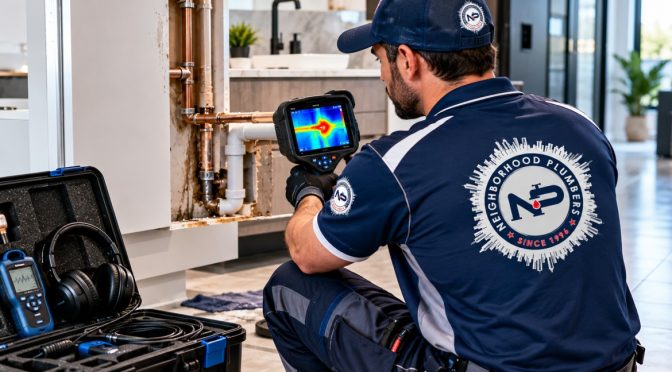
Depending on the situation, professionals may use techniques such as acoustic detection, pressure testing, thermal imaging or specialised inspection equipment.

The important point is that equipment should be selected according to the suspected problem. There is no single detection method that is appropriate for every leak.

Pipe Inspection: Which Areas Deserve Extra Attention?

Some parts of a plumbing system deserve closer examination because they are more difficult to access or more vulnerable to deterioration.

Hidden Pipework

Leaks behind walls can remain unnoticed until damage becomes visible.

Warning signs include:

  • Localised wall discolouration
  • Paint bubbling
  • Damp plaster
  • Mould
  • Persistent odours
  • Unexpected temperature changes around a wall

Avoid cutting into walls simply because you suspect a leak. Professional diagnostic testing can often help narrow down the location before invasive work is considered.

Underground Pipes

Underground leaks can be particularly difficult to identify.

Possible symptoms include:

  • Unexpected wet areas
  • Unusually green vegetation in one location
  • Ground movement
  • Persistent dampness
  • Water loss without an obvious internal leak

Professional assessment may be necessary when the suspected pipework is inaccessible.

Older Plumbing

Older homes may contain plumbing materials or configurations that require closer monitoring.

Age alone does not mean a plumbing system is failing. However, older pipework combined with repeated repairs, corrosion or unexplained moisture should prompt a more careful assessment.

Home Plumbing: How Can You Build a Leak Prevention Routine?

Good Home Plumbing care is not about checking everything every week. A simple routine is easier to maintain and more likely to be followed.

A practical schedule could look like this:

Monthly

Perform a quick visual check of:

  • Under-sink cabinets
  • Toilets
  • Taps
  • Laundry hoses
  • Outdoor taps

Every Six Months

Review:

  • Water consumption
  • Flexible hoses
  • Isolation valves
  • Visible pipework
  • Signs of corrosion or moisture

Annually

Complete a more detailed Leak Prevention Checklist covering the whole property.

This is also a sensible time to consider professional preventative leak inspections, particularly for older properties, homes with previous plumbing problems, or properties where unusual water usage has been noticed.

What Should Be on Your Leak Prevention Checklist?

A useful Leak Prevention Checklist should be simple enough that a homeowner can actually use it.

Indoor Plumbing

  • Check all visible pipes for moisture
  • Inspect under kitchen and bathroom sinks
  • Check toilet bases and internal running
  • Test taps for persistent dripping
  • Inspect shower connections
  • Check washing-machine hoses
  • Look for damp smells
  • Look for mould or unexplained staining

Outdoor Plumbing

  • Inspect garden taps
  • Check irrigation connections
  • Examine exposed outdoor pipework
  • Look for unexplained wet ground
  • Check areas around external plumbing fixtures

Water Usage

  • Review recent water bills
  • Compare unusual changes in consumption
  • Check for water movement when fixtures are not operating
  • Investigate unexplained increases

Safety and Preparedness

  • Locate the main water shut-off valve
  • Identify fixture isolation valves
  • Make sure household members know how to shut off water
  • Keep plumbing service information accessible
  • Record previous plumbing repairs and recurring issues

This checklist can be saved on your phone or printed and used once a year.

How Does Plumbing Leak Prevention Save Homeowners Money?

The financial benefit of prevention is not limited to saving water.

A small leak can affect cabinets, plasterboard, flooring, insulation and other building materials. If moisture remains present for an extended period, secondary problems can develop.

For example, imagine a homeowner notices a small brown mark on a bathroom ceiling. The mark disappears after several dry days, so it is ignored.

Months later, the ceiling becomes noticeably stained and the surrounding area develops a musty smell. The eventual repair may involve more than fixing a pipe. Damaged building materials may also need attention.

The lesson is not that every stain represents a major plumbing failure. It is that early investigation gives homeowners more options.

That is one of the most practical principles of Plumbing Leak Prevention: investigate small abnormalities before they have time to become large problems.

Why Are Preventative Leak Inspections Useful for Melbourne Homes?

Melbourne properties vary significantly in age, construction type and plumbing layout.

A modern apartment, a renovated weatherboard house and an older suburban property may have completely different plumbing risks.

This is why preventative leak inspections should be based on the individual property rather than a generic assumption.

A professional may consider:

  • Property age
  • Previous plumbing repairs
  • Pipe materials
  • Renovation history
  • Visible corrosion
  • Water consumption patterns
  • Previous leak locations
  • Accessibility of pipework
  • The condition of fixtures and connections

This property-specific approach is more useful than simply ticking boxes.

What Common Leak Detection Mistakes Should Homeowners Avoid?

Mistake 1: Waiting for a Puddle

Many leaks never produce a visible puddle.

Moisture can remain inside walls, beneath flooring or in cabinetry.

Mistake 2: Ignoring Small Water Bills Changes

A higher bill does not automatically mean a leak, but unexplained changes should be investigated.

Mistake 3: Painting Over Water Stains

Fresh paint can hide a symptom without solving its cause.

Always investigate recurring stains before repairing cosmetic damage.

Mistake 4: Assuming New Homes Cannot Leak

New construction reduces some risks but does not make a property immune to leaking fixtures, connections, hoses or plumbing components.

Mistake 5: Using DIY Repairs for Every Problem

Replacing a simple tap washer may be within some homeowners’ capabilities, but concealed, pressurised, underground or persistent leaks require proper diagnosis.

Mistake 6: Forgetting Outdoor Plumbing

Garden taps, irrigation and external pipes can leak unnoticed for long periods.

How Often Should Melbourne Homeowners Arrange an Inspection?

There is no universal inspection interval that suits every property.

For many homeowners, an annual review is a sensible baseline, particularly when combined with routine visual checks throughout the year.

More frequent attention may be appropriate when:

  • The property has older plumbing
  • Previous leaks have occurred
  • Water consumption is difficult to explain
  • Plumbing fixtures are ageing
  • There has been extensive renovation
  • The property is frequently unoccupied
  • There are recurring dampness problems

The purpose of annual plumbing maintenance is not to create unnecessary work. It is to establish a consistent habit of identifying deterioration early.

What Can Homeowners Do Between Professional Inspections?

Professional inspections are valuable, but homeowners play an equally important role because they see their property every day.

Get into the habit of noticing changes.

For example:

Normal: The bathroom floor dries quickly after showering.

Potential concern: A particular area remains damp long after normal use.

Normal: The toilet fills once after flushing.

Potential concern: The toilet periodically refills when nobody has used it.

Normal: Water usage changes during a hot summer because of garden watering.

Potential concern: Water usage increases despite no obvious change in household activity.

These comparisons help homeowners identify patterns rather than reacting only when a problem becomes dramatic. Neighborhood Plumbers is a trusted local plumbing team providing reliable leak detection, plumbing repairs, maintenance, and emergency plumbing services.

Expert Tips for Protecting Residential Plumbing

Keep a Simple Repair History

Record when major plumbing components were repaired or replaced.

This information can help identify recurring problems and gives a professional useful background during future inspections.

Do Not Ignore Recurring Dampness

If an area becomes damp repeatedly, determine why.

Drying the surface does not address the underlying source.

Know Your Water Meter

Understanding normal water usage gives you a baseline against which unusual consumption can be recognised.

Inspect After Major Renovations

Renovations can change plumbing layouts and introduce new fixtures and connections. Keep an eye on newly installed plumbing during the first months of use.

Treat Early Warning Signs Seriously

A small problem does not necessarily require an emergency response, but it does deserve attention.

Early diagnosis is often simpler than repairing extensive water damage later.

Conclusion: Make Leak Prevention an Annual Habit

Plumbing problems are often easier to manage when they are identified early.

A small stain, dripping fixture or unexplained increase in water usage may not indicate a serious failure, but ignoring these signs can allow a minor issue to become much more complicated.

For Melbourne homeowners, an annual inspection provides a practical opportunity to review visible plumbing, check vulnerable connections, examine water usage and identify areas that may need professional attention.

Use the Leak Prevention Checklist once a year, keep an eye on changes between inspections, and investigate recurring signs of moisture rather than covering them up.

Most importantly, remember that Leak Detection Melbourne is not only about responding to emergencies. When used as part of sensible preventative care, it can help homeowners make informed decisions, reduce avoidable water loss and support the long-term condition of their plumbing system.

Good Plumbing Leak Prevention is ultimately about staying observant, acting early and understanding how your home’s plumbing behaves over time.

FAQ: Annual Leak Inspections for Melbourne Homeowners

1. How can I tell if I have a hidden water leak?

Look for combinations of warning signs rather than relying on one symptom. Unexplained water consumption, recurring damp patches, mould, musty smells, bubbling paint, soft flooring or the sound of water running when fixtures are off can all justify further investigation.

A hidden leak cannot always be confirmed through visual inspection. If signs continue without an obvious source, professional leak detection may help identify where the water is coming from.

2. Is a small dripping tap really a plumbing problem?

Yes, although the urgency depends on the severity and circumstances.

A slow drip may not indicate a major pipe failure, but it can waste water and may be caused by a worn washer, cartridge, seal or valve component. Persistent dripping is worth repairing rather than allowing it to continue indefinitely.

3. Should every Melbourne home have an annual professional leak inspection?

Not necessarily at the same level or frequency.

An annual review is a sensible preventative habit, but the appropriate inspection approach depends on property age, plumbing condition, previous problems and other circumstances. Older properties or homes with recurring plumbing issues may benefit from more detailed professional assessment.

4. Can a high water bill prove that I have a leak?

No. A higher bill can have many causes, including seasonal usage, additional occupants, gardening or changes in household behaviour.

However, an unexplained increase is a useful warning sign. Compare usage with previous periods and investigate other possible causes. If the increase remains unexplained, a plumbing assessment can help determine whether a leak is involved.

5. What is the most important item on a Leak Prevention Checklist?

There is no single item that matters in every property, but homeowners should pay particular attention to unexplained water use, recurring moisture and inaccessible plumbing areas.

The most effective checklist combines visual inspections with awareness of changes in water consumption and prompt investigation of unusual signs. That approach supports long-term protecting residential plumbing rather than simply reacting after damage occurs.

How We Repaired a Burst Copper Pipe Without Major Damage to a Melbourne Home?

A burst pipe can turn into a serious household problem surprisingly quickly. Water can travel behind walls, under flooring, and into cabinetry before the visible leak looks particularly severe. The good news is that fast isolation, accurate diagnosis, and controlled repair can often prevent a small plumbing failure from becoming a major renovation.

This Burst Pipe Repair Case Study explains how a burst copper water pipe can be approached methodically, with the focus on limiting water loss and protecting the surrounding property. It also covers what homeowners should do first, why copper pipes fail, how professional Pipe Repairs Melbourne are assessed, and which warning signs should never be ignored.

In Victoria, plumbing work must be carried out by an appropriately licensed or registered plumbing practitioner, and licensed plumbers have specific responsibilities around compliant work and certification.

What Happened Before the Burst Pipe Was Found?

Imagine a Melbourne home where the occupants notice a faint hissing sound near a wall, followed by a damp patch appearing around a cupboard.

At first, the leak may look manageable. There might only be a small amount of water on the floor. However, a pressurised water line can continue releasing water even when the visible area appears minor.

In this type of situation, the priorities are:

  • Stop the water supply if it is safe to do so.
  • Keep people away from wet electrical areas.
  • Move furniture, appliances, and valuables away from the affected area.
  • Identify where the water is actually coming from.
  • Avoid cutting into walls or ceilings unnecessarily.
  • Arrange a professional inspection as soon as possible.

The important point is that water damage prevention starts before the repair itself. Every minute that a pressurised pipe continues leaking can increase the amount of moisture entering building materials.

Why Do Copper Pipes Burst?

Copper has been widely used in plumbing because it is durable, heat resistant, and suitable for many water-supply applications. However, copper is not immune to failure.

A pipe can eventually develop a pinhole, split or larger rupture because of factors such as:

Age and Material Deterioration

Older copper pipework can become vulnerable to corrosion and localised deterioration. A pipe may appear sound externally while a weakened section has developed internally.

Water Chemistry

Water chemistry can contribute to corrosion over long periods. The exact mechanism depends on the pipe, water conditions, installation environment and other factors, so it is not accurate to blame every copper leak on one cause.

Mechanical Stress

Pipes can be damaged by movement, impact, poor support, or excessive stress around joints and connections.

Freezing Conditions

Although severe freezing is less common in Melbourne than in colder climates, unusual cold conditions can still affect exposed plumbing in vulnerable locations.

Pressure and Existing Weakness

Water pressure alone does not necessarily mean a pipe will burst. However, higher pressure can place additional stress on an already weakened section or fitting.

The important professional question is therefore not simply, “Where is the water coming from?” It is also, “Why did this section fail?”

That distinction matters because replacing only the visibly damaged section may not address wider deterioration.

How Was the Leak Located Without Creating Major Damage?

One of the biggest mistakes during a concealed plumbing leak is opening a large section of wall immediately.

A professional approach is more controlled.

First, the plumber assesses the visible water pattern and determines whether the leak is active. The water meter, isolation valves, and accessible pipework may provide useful clues.

The affected area is then inspected carefully.

Depending on the property and the location of the pipe, the plumber may assess:

  • Accessible pipe joints
  • Wall and ceiling cavities
  • Cupboards and service areas
  • Moisture around skirting boards
  • Pipe entry and exit points
  • Nearby fixtures
  • Water-pressure behaviour
  • Signs of previous repairs
  • Corrosion or staining around copper fittings

The objective is to identify the smallest practical access point needed to reach the damaged section.

That is one of the key principles behind good Pipe Repairs Melbourne work: investigate first, cut second.

Opening a wall without understanding the pipe route can create unnecessary plasterboard, cabinetry, or tiling repairs.

What Did the Burst Pipe Repair Involve?

For this type of copper pipe failure, the repair process generally follows a controlled sequence.

1. Isolate the Water

The water supply is isolated before the damaged pipe is handled.

This sounds obvious, but it is an essential safety and damage-control step. If the pipe is still pressurised, removing a fitting or cutting the pipe can release a significant amount of water.

2. Drain Residual Water

Once the supply is isolated, remaining water in the affected section is allowed to drain where practical.

This reduces uncontrolled water release while the damaged pipe is being worked on.

3. Expose Only the Required Area

Rather than removing a large section of wall, the plumber identifies the minimum access needed.

This is particularly valuable in finished Melbourne homes where walls may contain:

  • Painted plasterboard
  • Tiles
  • Kitchen cabinetry
  • Built-in storage
  • Insulation
  • Electrical services

Careful access reduces the amount of secondary restoration required later.

4. Remove the Failed Section

The damaged copper section is removed using appropriate plumbing tools.

The exact repair method depends on the pipe condition, location, accessibility, and applicable requirements. A badly deteriorated section may require more extensive replacement rather than simply reconnecting immediately beside the original failure.

5. Inspect the Surrounding Pipework

This is where experience becomes particularly valuable.

If one section of copper pipe has failed because of deterioration, the plumber should consider whether adjacent sections show similar signs.

Replacing one failed section without assessing nearby pipework can sometimes result in another leak appearing later.

6. Install the Appropriate Replacement Components

The replacement pipe and fittings need to be suitable for the application and installed in accordance with applicable plumbing requirements.

In Australia, certain plumbing products are required to be WaterMark certified before installation, and they must be installed by a licensed plumbing practitioner where the certification requirement applies.

As of 1 May 2026, lead-free requirements also apply to specified copper-alloy plumbing products used with drinking water, making product selection particularly important for current repairs and installations.

7. Test Before Closing the Wall

The repair should not simply be covered immediately.

The system needs to be checked for leaks and appropriate operation before the access area is closed. This is an important quality-control stage because discovering a problem after plasterboard, cabinetry or tiles have been restored creates unnecessary additional work.

Could the Home Have Suffered Major Water Damage?

Yes.

A burst pipe does not automatically mean major damage will occur. The outcome depends on factors such as:

  • How long the pipe leaked
  • The volume of water released
  • Whether the leak was pressurised
  • Where the pipe failed
  • Whether the water entered wall cavities
  • Flooring type
  • Cabinet construction
  • Insulation
  • How quickly the water was isolated

For example, a leak inside a service cupboard may be much easier to contain than a burst pipe concealed behind a kitchen wall.

This is why water damage prevention should be considered part of the plumbing response rather than something dealt with after the repair.

What Are the Early Signs of Burst Pipes?

Not every burst begins with a dramatic spray of water.

Some warning signs are surprisingly subtle.

Unexplained Damp Areas

A damp patch on a wall, ceiling, or floor without an obvious source deserves investigation.

Sudden Drop in Water Pressure

A noticeable change in pressure can sometimes indicate a problem with the water-supply system, although other plumbing faults can produce similar symptoms.

Water Meter Movement

If all fixtures are turned off but the meter continues recording water use, there may be an active leak somewhere in the property.

Discolouration

Brown, yellow, or expanding marks around walls and ceilings can indicate moisture intrusion.

Mould or Musty Odours

Persistent moisture can create conditions that encourage mould growth.

Sounds Behind Walls

Hissing, rushing, or dripping sounds can sometimes indicate water movement inside a concealed cavity.

The key lesson is simple: do not wait for a pipe to completely rupture before investigating a suspicious leak.

When Is It an Emergency Plumbing Problem?

Some plumbing issues can wait for a scheduled appointment. A pressurised burst pipe generally should not.

Emergency Plumbing: What Should You Do First?

If water is actively escaping:

  1. Locate and turn off the main water isolation valve if you can do so safely.
  2. Keep clear of electrical equipment exposed to water.
  3. Remove valuables from the affected area.
  4. Use towels or containers only where doing so is safe.
  5. Do not attempt complex pipe repairs yourself.
  6. Contact a qualified plumbing professional.

If water has reached electrical outlets, appliances, or electrical switchboards, avoid touching affected equipment and seek appropriate electrical assistance.

The objective is not to perform an emergency repair yourself. It is to stop the flow, reduce exposure, and prevent further damage until qualified help arrives.

How Are Burst Pipe Repairs Melbourne Different From a Simple Leak Fix?

Not every leak requires the same repair.

A loose fitting may need a relatively straightforward correction. A damaged copper pipe hidden behind a wall requires a different level of investigation.

A professional assessment considers:

  • Pipe material
  • Pipe age
  • Location
  • Accessibility
  • Cause of failure
  • Extent of corrosion
  • Water pressure
  • Nearby fittings
  • Previous repairs
  • Potential concealed damage

This is why a good plumber does not automatically quote a repair based only on the visible water.

The visible leak may be the symptom, not the complete problem.

Copper Pipes: Should You Repair or Replace?

This is one of the most important questions homeowners face.

A localised failure in otherwise healthy pipework may be suitable for targeted repair.

However, if several nearby sections show significant deterioration, a broader replacement strategy may make more sense.

A practical assessment should consider:

Repair may be appropriate when:

  • The failure is isolated.
  • Surrounding pipework is in good condition.
  • Access is straightforward.
  • The underlying cause can be addressed.
  • The remaining system is suitable for continued service.

Replacement may deserve consideration when:

  • Multiple leaks have occurred.
  • Several sections show corrosion.
  • The pipework is extensively deteriorated.
  • Previous patch repairs are failing.
  • Access is already open for a larger renovation.

There is no universal rule that every old copper pipe should be replaced. The right decision depends on its actual condition and the circumstances of the property.

For urgent plumbing issues, Neighbourhood Plumbers recommends isolating the water supply before attempting any repair.

What Mistakes Can Make a Burst Pipe Worse?

Waiting for the Leak to Stop

A pressurised leak rarely becomes safer simply because it is inconvenient to deal with.

Opening Too Much of the Wall

Large exploratory openings can increase restoration costs unnecessarily.

Repairing Only What Is Visible

The visible split may not be the only compromised section.

Using an Incorrect Fitting

Plumbing components must be suitable for their intended application and compliant where certification requirements apply.

Ignoring Moisture After the Repair

Stopping the leak does not instantly dry a wall, cabinet or floor.

Moisture-affected materials should be assessed and dried appropriately.

Assuming Every Water Mark Is a Plumbing Leak

Roof leaks, condensation, appliance leaks, and drainage problems can create similar symptoms.

Accurate diagnosis prevents unnecessary plumbing work.

How Can Homeowners Reduce Future Water Damage?

No maintenance strategy can guarantee that a pipe will never fail, but homeowners can reduce the consequences of plumbing problems.

Consider these practical habits:

  • Know where the main water isolation valve is located.
  • Check accessible pipework periodically.
  • Investigate unexplained dampness quickly.
  • Pay attention to changes in water pressure.
  • Monitor unusually high water consumption.
  • Do not ignore recurring minor leaks.
  • Keep service areas accessible.
  • Avoid storing valuable items directly beneath vulnerable plumbing.
  • Arrange professional assessment when pipework repeatedly fails.

For older properties, periodic inspection can be particularly useful when several plumbing components are approaching the later part of their service life.

What Should You Ask a Plumber Before Starting Pipe Repairs?

Homeowners do not need to be plumbing experts to ask useful questions.

Before work begins, ask:

What caused the pipe to fail?

This helps distinguish an isolated defect from a wider problem.

Where exactly is the damaged section?

A clear explanation can help you understand why access is required.

How much pipe needs to be replaced?

The answer should be based on the condition of the pipe, not simply convenience.

Will the surrounding pipework be inspected?

This can help identify other obvious weaknesses.

What products will be used?

For regulated plumbing products, ask whether the products meet applicable WaterMark requirements.

Will the repaired section be tested before the wall is closed?

Testing is an important part of quality control.

In Victoria, consumers can also check a plumber’s licence or registration through the relevant regulator. The Building and Plumbing Commission notes that licensed plumbers carry photo identification and that only licensed plumbers can issue compliance certificates.

Burst Pipe Repair Case Study: The Main Lesson From the Job

The most useful lesson from this Burst Pipe Repair Case Study is that preventing major damage is often about controlling the response rather than simply working faster.

A burst copper pipe can look like a major building problem when viewed from the surface. But if the water is isolated promptly, the leak is accurately located, access is kept controlled, and the failed section is repaired correctly, the surrounding property may avoid extensive damage.

The repair itself is only one part of the job.

A professional approach considers the cause of failure, the condition of surrounding pipework, the possibility of concealed moisture, and the requirements that apply to the replacement materials.

That combination of diagnosis, controlled access, and proper testing is what separates a temporary patch from a dependable plumbing repair.

Expert Tips From a Real-World Plumbing Perspective

If you discover a burst pipe at home, remember these five points:

1. Stop the water first.
Do not spend valuable time trying to identify the exact failure while water is still flowing.

2. Do not start demolition immediately.
The smallest practical access point is usually preferable to opening an entire wall.

3. Look beyond the broken section.
The surrounding pipework can tell you whether the failure is isolated or part of a broader deterioration problem.

4. Treat drying as seriously as the plumbing repair.
Stopping the leak prevents additional water entering the building, but existing moisture still needs attention.

5. Use an appropriately licensed professional.
Victoria regulates plumbing practitioners and plumbing work for safety, compliance, and protection of water systems.

Conclusion: How Can You Prevent a Small Burst Pipe From Becoming a Major Repair?

The best Pipe Repairs Melbourne approach is not simply about replacing a damaged piece of pipe. It is about finding the real failure, stopping water quickly, limiting unnecessary access, assessing surrounding pipework, and making sure the completed repair is properly tested.

A copper pipe can fail for several reasons, and the right response depends on the condition and location of the system. Acting quickly can make a significant difference to the amount of water released and the resulting property damage.

If you notice unexplained dampness, falling water pressure, unusual plumbing noises, or an active leak, do not assume it will resolve itself. Early investigation can help prevent a small plumbing defect from becoming a much larger repair.

For homeowners dealing with Burst Pipe Repairs Melbourne, the practical takeaway is simple: isolate the water, protect the property, investigate carefully, and use qualified plumbing expertise for the repair.

That is also the central lesson of this Burst Pipe Repair Case Study: careful diagnosis and controlled repair can often protect the home from the much bigger consequences of a burst pipe. When dealing with concealed leaks, Neighbourhood Plumbers prioritises accurate diagnosis before unnecessary wall or ceiling access.

Frequently Asked Questions

What should I do if a copper pipe bursts inside my Melbourne home?

First, isolate the water supply if you can do so safely. Move valuables away from the affected area and keep them away from electrical equipment that may have become wet. Do not cut into walls or attempt a complicated repair without understanding where the pipe and other services are located. Contact an appropriately licensed plumber to identify the failure and assess whether water has entered concealed areas.

How quickly should Burst Pipe Repairs Melbourne be arranged?

An actively leaking pressurised pipe should be treated as an urgent plumbing problem. The longer water continues entering walls, floors or cabinetry, the greater the opportunity for secondary damage. The priority is to stop or isolate the water first, followed by professional diagnosis and repair.

Can a burst copper pipe be repaired without replacing the whole plumbing system?

Yes, in many situations a localised repair can be appropriate when the damaged section is isolated, and the surrounding pipework remains in suitable condition. However, if the plumber finds widespread corrosion, repeated failures or deterioration around adjacent sections, replacing a larger section may provide a more sensible long-term solution.

How can I tell whether a water mark is caused by a burst pipe?

Look for clues such as active moisture, unexplained water pressure changes, dampness around accessible pipework, sounds of running water, or water-meter movement when fixtures are not being used. However, water marks can also result from roofs, appliances, condensation or drainage issues. A professional inspection is the safest way to establish the actual source.

Why is WaterMark certification important when repairing plumbing?

WaterMark is Australia’s certification scheme for specified plumbing and drainage products. Where a product is listed on the WaterMark Schedule of Products, it must meet the applicable certification requirements before it can be installed, and installation must be carried out by an appropriately licensed plumbing practitioner.

For repairs involving drinking-water systems, product selection is especially important. From 1 May 2026, specified copper-alloy plumbing products used to convey drinking water are subject to lead-free requirements, so current repairs should take the applicable requirements into account.

Thermal Cameras vs Acoustic Leak Detection: Which Technology Finds Hidden Leaks Faster?

A hidden plumbing leak can continue for weeks before there is an obvious sign of damage. You might notice a damp patch, unexplained water usage, mould, peeling paint, or a musty smell, but the actual leak could be several metres away from where the damage appears. This is where Leak Detection Melbourne services increasingly rely on modern diagnostic equipment rather than guesswork and unnecessary wall or floor excavation.

Two of the most useful technologies are thermal imaging and acoustic detection. Both can help locate concealed plumbing problems, but they work in very different ways. Thermal cameras identify temperature patterns associated with moisture or flowing water, while acoustic equipment listens for sounds created by pressurised water escaping from a pipe.

So, which one finds hidden leaks faster? The honest answer is that it depends on the type of leak, the pipe material, the surrounding building materials, and the environmental conditions.

Understanding these differences can help property owners make better decisions when a concealed plumbing problem needs an accurate leak diagnosis.

Why Are Hidden Water Leaks Difficult to Find?

A visible dripping tap is easy to diagnose. A leaking pipe inside a wall is not.

Water can travel along timber, concrete, plasterboard, insulation, or other building materials before becoming visible. As a result, the stain on a ceiling or wall is not necessarily directly below the damaged pipe.

For example, a homeowner might discover a damp patch beneath a bathroom. It is tempting to remove the ceiling immediately and inspect the area directly above it. However, the actual leak may originate from a pipe connection several metres away.

This is why modern Leak Detection Technology focuses on identifying patterns and evidence before destructive investigation begins.

Common signs of a concealed leak include:

  • Unexpected increases in water consumption
  • Damp or discoloured walls
  • Bubbling or peeling paint
  • Mould or persistent musty smells
  • Warm or unusually cold areas on floors
  • Cracked or damaged flooring
  • Sounds of running water when taps are closed
  • Persistently damp areas around plumbing fixtures
  • Water stains appearing repeatedly after use

The earlier the source is investigated, the easier it may be to limit secondary damage.

How Does Thermal Imaging Detect Water Leaks?

Thermal Imaging and Temperature Patterns

Thermal imaging uses an infrared camera to detect differences in surface temperature.

A thermal camera does not literally see water inside a wall. Instead, it detects temperature variations at the surface that may be associated with moisture, evaporation, or temperature differences created by water movement.

This makes Thermal Imaging particularly useful when a leak is affecting a relatively large area or when temperature differences provide a clear visual pattern.

For instance, a concealed cold-water pipe leaking behind plasterboard may create a cooler area that stands out from the surrounding wall.

A professional can scan the suspected area and compare temperature patterns across surfaces.

When Is Thermal Imaging Most Useful?

Thermal cameras can be particularly helpful for:

  • Hot-water leaks
  • Underfloor plumbing investigations
  • Moisture affecting walls or ceilings
  • Suspected leaks near heated plumbing
  • Identifying unusual temperature patterns
  • Investigating large areas relatively quickly

However, thermal imaging has an important limitation.

A thermal camera detects temperature differences, not leaks themselves.

A cold section on a wall does not automatically prove that a pipe is leaking. Air movement, insulation gaps, structural materials, sunlight, heating systems, and other factors can produce temperature variations.

That is why thermal imaging should be interpreted alongside other evidence.

How Does Acoustic Detection Find Hidden Water Leaks?

Acoustic Detection and Escaping Water

Acoustic Detection works on a completely different principle.

When pressurised water escapes through a small opening in a pipe, it can create vibrations and sound. Specialist acoustic equipment can detect these signals through surfaces or plumbing components.

The technician listens for changes in sound intensity and frequency to identify areas that may be associated with escaping water.

This can be especially useful when the leak is small and there is little visible moisture.

When Is Acoustic Detection Most Effective?

Acoustic equipment can be valuable for:

  • Pressurised water pipes
  • Small concealed leaks
  • Underground water lines
  • Concrete slabs
  • Areas where visual signs are limited
  • Pinpointing a suspected leak after the general area has been identified

One of the major advantages is that acoustic methods can sometimes narrow down the location without opening large sections of a wall or floor.

However, background noise matters.

Traffic, pumps, appliances, HVAC equipment, building movement, and other plumbing activity can interfere with acoustic signals. Pipe material and installation conditions can also affect how sound travels.

Thermal Imaging vs Acoustic Detection: Which Is Faster?

There is no universal winner.

The fastest method depends on what the technician is trying to identify.

Thermal imaging can be quicker for scanning broad areas and identifying suspicious temperature patterns. Acoustic detection can be more effective when a pressurised pipe has a small leak that produces a detectable sound.

In practical Hidden Leak Detection Melbourne work, the two methods can complement each other.

A technician may begin with a broad assessment and thermal scan, then use acoustic equipment to investigate a specific area.

The process could look like this:

  1. Identify the symptoms.
  2. Check plumbing fixtures and visible pipework.
  3. Assess the suspected area.
  4. Use thermal imaging where temperature patterns may provide useful information.
  5. Use acoustic equipment where escaping-water noise can be detected.
  6. Compare the results.
  7. Confirm the likely leak location.
  8. Carry out the appropriate repair.

This combination can be more informative than relying on a single technology.

What Is Leak Detection Technology Actually Measuring?

Understanding what the equipment measures helps explain why professional interpretation is important.

Thermal Cameras Measure Infrared Radiation

A thermal camera detects infrared radiation emitted from surfaces and converts temperature differences into a visual image.

The resulting image can reveal patterns that are difficult to see with the naked eye.

But the image still requires interpretation.

A cold area could indicate moisture, but it could also result from another environmental factor.

Acoustic Equipment Measures Sound and Vibration

Acoustic detection equipment captures sound generated by escaping water.

The technician evaluates changes in the acoustic signal to determine whether the pattern is consistent with a leak.

Different pipe materials can transmit sound differently. A signal that is easy to identify in one installation may be more difficult to detect in another.

This is why equipment alone does not replace practical plumbing knowledge.

Why Combining Technologies Can Improve Accurate Leak Diagnosis

A major advantage of modern advanced leak detection technology is that different diagnostic methods can be used together.

Imagine a Melbourne property where the owner notices a damp patch near a bathroom.

A thermal scan identifies an unusual temperature pattern around part of the wall. This establishes a useful area for further investigation.

Acoustic detection is then used around the suspected plumbing line. A stronger acoustic response appears near a particular section of pipe.

The two findings support each other.

That does not necessarily mean the technician should immediately cut into the wall. Other checks may still be needed to confirm the source.

This approach is an example of a non-invasive plumbing inspection, where the objective is to gather enough information before physically disturbing the building.

When Should Thermal Imaging Be Used First?

Thermal imaging can be a practical first step when the affected area is relatively broad.

It can help answer questions such as:

  • Is there a noticeable temperature anomaly?
  • Does the suspected moisture area extend beyond the visible stain?
  • Is a hot-water line potentially involved?
  • Does the floor show an unusual thermal pattern?
  • Is there a useful area for more targeted testing?

It is particularly helpful when the leak is producing a measurable temperature difference.

However, a lack of a thermal anomaly does not automatically rule out a leak.

A small leak may not create enough temperature contrast to appear clearly on the camera.

When Is Acoustic Detection the Better Option?

Acoustic detection can become particularly valuable when the suspected plumbing system is pressurised, and the leak is relatively small.

For example, consider a concealed water pipe beneath a concrete floor. There may be no visible water because the moisture is spreading through the surrounding material.

If the leak produces detectable acoustic energy, a technician may be able to narrow the search area without removing large sections of flooring.

Acoustic methods can therefore be useful when the primary clue is sound rather than temperature.

Can Thermal Imaging Find Every Hidden Leak?

No.

This is one of the most important points property owners should understand.

Thermal imaging is a diagnostic tool, not a magic scanner that automatically identifies every leaking pipe.

Its effectiveness depends on:

  • Temperature difference
  • Moisture level
  • Building materials
  • Pipe location
  • Surface conditions
  • Environmental temperature
  • Insulation
  • Leak size

A concealed cold-water leak in a heavily insulated wall may not create a strong enough surface temperature difference to produce a useful thermal image.

Similarly, a leak that has stopped may leave moisture behind without producing the same thermal pattern as actively flowing water.

Can Acoustic Detection Find Every Hidden Leak?

No.

Acoustic equipment also has limitations.

A very small leak may produce little detectable sound. Thick concrete, certain pipe materials, soil, insulation, and background noise can reduce signal quality.

The absence of a strong acoustic signal does not necessarily prove that there is no leak.

This is why professional diagnosis considers the complete set of evidence rather than relying on a single instrument reading.

What Happens During a Professional Leak Investigation?

A thorough investigation normally begins with the property’s symptoms rather than immediately using equipment.

Step 1: Discuss the Symptoms

The technician should establish:

  • When the problem started
  • Where moisture appeared
  • Whether it changes after using fixtures
  • Whether water consumption has increased
  • Whether the problem is intermittent
  • Whether hot or cold water seems relevant

These details can significantly influence the diagnostic process.

Step 2: Inspect Visible Plumbing

Visible taps, valves, toilets, pipe connections, hot-water systems, and other accessible components should be checked before investigating concealed areas.

There is little value in searching inside a wall if an accessible connection is already leaking.

Step 3: Select Appropriate Technology

The technician determines whether thermal imaging, acoustic detection, moisture measurement, pressure testing, or another method is appropriate.

Step 4: Cross-Check Findings

The strongest diagnosis generally comes from multiple observations rather than a single image or sound reading.

Step 5: Identify the Repair Area

Once the likely source has been narrowed down, the repair can be planned with greater precision.

This can reduce unnecessary removal of walls, flooring, tiles, or other finishes.

What Are the Most Common Mistakes With Hidden Leaks?

Assuming the Visible Stain Is the Leak Source

Water can travel considerable distances through building materials.

The visible stain is often evidence of the problem rather than proof of its exact location.

Relying Only on a Thermal Camera

A thermal image can be valuable, but it requires interpretation and confirmation.

Ignoring Small Changes in Water Usage

A gradual increase in water consumption can sometimes be an early warning sign.

Waiting Until Structural Damage Becomes Obvious

A leak does not need to create a large puddle to cause damage.

Long-term moisture exposure can affect plasterboard, timber, insulation, flooring, finishes, and indoor conditions.

Starting With Destructive Investigation

Removing walls or flooring before performing appropriate diagnostic checks can increase repair costs and create unnecessary disruption.

Expert Tips for Finding Hidden Leaks Faster

Follow the Water Path

Do not automatically assume the damaged area is directly below the leak.

Think about gravity, pipe routes, structural cavities, and the materials through which water can travel.

Use Symptoms to Select the Technology

If there is a strong temperature difference, thermal imaging may provide useful information.

If a pressurised pipe is suspected, acoustic detection may be particularly valuable.

If the evidence is unclear, combining methods may provide a stronger diagnosis.

Control Background Noise

Acoustic investigations are more difficult when machinery, traffic, appliances, or other plumbing activity creates competing sounds.

Where practical, reducing background noise can improve the quality of acoustic assessment.

Compare Normal and Suspected Areas

Rather than examining one location in isolation, compare it with surrounding surfaces or similar areas.

A difference becomes more meaningful when there is a reliable baseline.

Is Electronic Leak Detection Different From Thermal and Acoustic Methods?

Yes.

Electronic Leak Detection is a broader term that can refer to electronic methods used to identify or trace moisture or plumbing problems, depending on the equipment and application.

It should not automatically be treated as a synonym for acoustic detection or thermal imaging.

The exact method used should be explained by the technician because different equipment has different purposes.

For a property owner, the important question is not simply whether electronic equipment is being used. The important question is:

What is the equipment measuring, and how does that evidence help locate the leak?

A transparent explanation makes the diagnostic process easier to understand.

When you need help investigating a suspected hidden leak, Neighbourhood Plumbers can provide professional plumbing support and help assess the issue before repair work begins. Early detection can make the problem easier to manage and may help reduce unnecessary damage.

What Can Happen If a Hidden Leak Is Ignored?

The consequences depend on the location, duration, volume of water, building materials, and environmental conditions.

Potential problems can include:

  • Damaged plasterboard
  • Swollen timber
  • Damaged flooring
  • Deteriorated finishes
  • Mould growth
  • Insulation damage
  • Higher water bills
  • Corrosion around plumbing components
  • More extensive repair requirements

Not every hidden leak will cause all of these problems, but prolonged moisture should not be ignored.

The earlier the source is identified, the more effectively the appropriate repair can be planned.

What About Pipe Repairs After Leak Detection?

Finding the leak is only part of the process.

Once the source has been identified, the next step is determining the appropriate repair.

The repair could involve:

  • Replacing a damaged fitting
  • Repairing a pipe section
  • Replacing deteriorated plumbing
  • Repairing a failed connection
  • Addressing a damaged valve
  • Replacing an affected component

The repair approach depends on the pipe material, location, cause, accessibility, and condition of the surrounding plumbing.

Accurate diagnosis matters because repairing the wrong section of pipe will not solve the underlying problem.

Final Thoughts

Finding a concealed plumbing leak is less about using the most sophisticated-looking device and more about selecting the right diagnostic method for the actual conditions.

Thermal Imaging is useful for identifying temperature patterns and scanning larger areas, while Acoustic Detection can be valuable when escaping pressurised water produces detectable sound. Neither technology is perfect in every situation.

The most reliable approach combines practical plumbing knowledge, appropriate equipment, careful observation, and evidence-based interpretation.

Modern Leak Detection Technology has made it possible to investigate many hidden plumbing problems with far less disruption than traditional trial-and-error methods. When thermal imaging, acoustic testing, and other diagnostic techniques are used appropriately, property owners can move toward an accurate leak diagnosis before committing to unnecessary excavation.

If you suspect concealed Water Leaks, early investigation is generally more useful than waiting for the damage to become obvious. A properly planned Leak Detection Melbourne assessment can help identify where the problem is likely occurring and provide a clearer basis for the next repair decision.

Frequently Asked Questions

What is the fastest way to detect a hidden water leak?

There is no single fastest method for every situation. Thermal imaging can quickly scan large areas for temperature anomalies, while acoustic detection can be effective for locating small pressurised leaks. The fastest practical approach is usually the diagnostic method that matches the characteristics of the suspected leak.

Is thermal imaging accurate enough to locate a plumbing leak?

Thermal imaging can provide useful evidence, but a thermal anomaly does not automatically prove the presence or exact location of a leak. Environmental temperature, insulation, building materials, moisture, and pipe temperature all influence the image. Experienced interpretation and additional testing may be needed for confirmation.

How does acoustic leak detection work inside walls or concrete?

Acoustic equipment detects sound and vibration associated with escaping water. A technician moves the sensor around suspected areas and compares signal strength and characteristics. The method can be useful for pressurised pipes, although pipe material, construction thickness, and background noise can affect detection.

Should I use thermal imaging or acoustic detection for Hidden Leak Detection Melbourne?

It depends on the suspected plumbing system and the symptoms. Thermal imaging may be useful for identifying temperature patterns across walls or floors, while acoustic detection can be useful for pressurised leaks that generate detectable sound. In some cases, combining both methods provides stronger evidence for an accurate diagnosis.

Can Leak Detection Technology prevent unnecessary wall or floor damage?

It can help reduce unnecessary destructive investigation by narrowing down the suspected leak location before repairs begin. However, no technology can guarantee that no opening will ever be required. The purpose of non-invasive diagnostics is to gather useful evidence first and make any necessary physical access more targeted.

12 Questions to Ask a Licensed Plumber Melbourne Before Hiring

When something goes wrong with your pipes, drains or water supply, finding a Licensed Plumber Melbourne homeowners can trust is often harder than identifying the plumbing problem itself. Most people do not know whether they need an emergency visit, a simple repair, an inspection or a larger plumbing job. They also want to know what the work will cost and whether the person arriving at the door is properly qualified.

Those questions are reasonable. Plumbing work can affect your home’s water supply, drainage, gas appliances and, in some cases, the structure of the property. A few checks before booking can help you avoid misunderstandings and make a more informed choice.

Hiring a Plumber Guide: 12 Questions Worth Asking Before You Book

This Hiring a Plumber Guide is based on the questions homeowners commonly need answered before allowing plumbing work to begin. Some are about qualifications. Others concern pricing, emergency work, inspections and what happens if the initial problem turns out to be larger than expected.

The aim is not to make the process complicated. It is to help you know what to ask.

1. Is the plumber licensed or registered for the work I need?

This should be one of your first questions.

In Victoria, plumbing practitioners must be licensed, registered, provisionally registered or working as apprentices under the required supervision. The BPC advises homeowners to engage a licensed or registered plumber and provides a public practitioner search tool.

Do not rely solely on a website, business card or verbal claim. Ask for the plumber’s details and check them through the BPC directory.

2. What is the difference between a registered and licensed plumber?

They are not identical.

A registered plumber can lawfully carry out plumbing work within the relevant class, but a licensed plumber has additional experience and responsibilities. Only a licensed plumber can issue a plumbing compliance certificate. Licensed plumbers must also hold the relevant insurance required for their licence.

That distinction becomes particularly important when your job requires certification.

3. Does the plumber have experience with my type of problem?

A blocked kitchen sink and a concealed water leak are very different jobs.

Before booking Plumbing Services Melbourne, explain the symptoms clearly. Mention unusual water pressure, recurring blockages, damp areas, unusual smells, noisy pipes or previous repairs.

A good Local Plumber should ask questions rather than immediately assume they know the cause.

For complex work, experience with the particular plumbing system can be just as important as general plumbing experience.

4. Do I need an inspection before agreeing to repairs?

Not always, but sometimes it is the sensible first step.

Suppose you notice water appearing on the floor near a bathroom. The visible water does not necessarily identify where the leak started. It could be coming from a pipe, fixture, shower area or another concealed location.

A Plumbing Inspection can help establish the condition and likely source before unnecessary repair work begins.

For older properties, inspections can also identify issues such as deteriorated pipework, pressure problems or drainage concerns that are not obvious during everyday use.

5. Should I get a plumbing inspection before buying a house?

If you are buying a property, a professional inspection can provide useful information about hidden defects and likely maintenance needs.

Consumer Affairs Victoria recommends buyers carry out due diligence and consider professional inspections before signing a contract. It notes that an independent inspection report can identify faults and potential repair requirements.

A plumbing-specific inspection can look at areas that a general property inspection may not examine in the same depth, including water supply lines, drainage, fixtures and visible pipe conditions.

It will not guarantee that every concealed problem is discovered, but it can give a buyer more information before making a major financial commitment.

6. How much will the Plumbing Services cost?

There is no sensible universal price for plumbing work.

The cost can change depending on access, labour, materials, urgency, equipment, the complexity of the fault and whether additional work becomes necessary.

Ask what the quoted amount includes.

Consumer Affairs Victoria recommends confirming whether quotes cover items such as transport, materials, labour, call-out fees and weekend or public holiday rates.

That one conversation can prevent a surprisingly common problem: comparing two quotes that actually cover different amounts of work.

7. Should I get more than one Plumbing Quote?

For non-urgent work, comparing quotes can be useful.

Consumer Affairs Victoria recommends getting at least three quotes for smaller home improvement jobs and comparing them against the same detailed description of the work.

But three quotes are not always practical during an active burst pipe or serious flooding.

For planned work, compare the scope rather than simply choosing the lowest number.

8. When should I call an emergency plumber?

Call for help fast if you cannot stop the water, or if the damage is getting worse right now.  

Here are common signs:

  • A pipe has burst  
  • A leak will not slow down or stop  
  • Sewage is backing up  
  • Flooding is starting or spreading  
  • A shutoff valve fails, so you cannot turn off the water  
  • A gas issue that could be dangerous  

If it is safe, turn off the right water supply to reduce further harm while you wait. Do not try complex fixes on your own just because the situation feels urgent. Emergency Plumbing is about controlling the immediate risk first, then properly diagnosing and repairing the fault.

9. Will you explain what caused the problem?

A useful plumbing visit should leave you understanding more than simply what part needs replacing.

For example, a repeatedly blocked drain could result from ongoing buildup, pipe damage, tree root intrusion or another underlying issue.

If the same problem keeps returning, ask why.

Trusted plumbing professionals should be able to explain the likely cause in straightforward language and tell you whether the proposed repair addresses the underlying issue or only the immediate symptom.

10. Will I receive a written quote?

For planned work, a written quote is much easier to understand and compare.

Consumer Affairs Victoria advises that quotes should clearly explain what is covered and how changes, delays and additional work will be handled. The guidance also says to write down what you discuss about price and workmanship.  

If the job changes after work starts, request an updated scope or cost note before you agree to more work, when you can.  

11. Will I get a compliance certificate?

This depends on what type of plumbing job it is. Only a licensed plumber can provide a compliance certificate. These papers are meant to show the work meets the required rules.  

Ask if your job should include one, and make sure you receive the paperwork. This matters a lot for homeowners who may need proof for future property work, insurance, or upkeep records.  

12. How do I confirm the plumber is real?

Check the details before any work begins. The BPC says to look up the plumber’s registration or licence, the job types they are allowed to do, and any limits linked to their approval.   Consumer Affairs Victoria also notes that some fake businesspeople use very low quotes, push people to decide quickly, or ask for money upfront.

Its advice includes checking licence details, getting written quotes and avoiding pressure to accept work immediately.

A legitimate business should not object to reasonable questions about credentials, scope or pricing.

What Experienced Homeowners Do Differently?

People who have dealt with several plumbing problems tend to notice something simple: the cheapest first response is not always the cheapest overall solution.

A recurring blocked drain may need investigation rather than another temporary clearing. A slow leak may deserve attention before it damages cabinetry or flooring. An old pipe may continue failing even after one section is repaired.

That is why choosing a licensed plumber should involve more than checking the hourly rate.

Look for someone who explains the problem, identifies the cause where possible and gives you enough information to decide what happens next.

Final Decision

Hiring a plumber becomes much easier when you know what to ask before the work starts. Check credentials, understand the scope, compare like-for-like quotes for planned work and ask the plumber to explain what caused the problem. These simple steps can help you avoid unnecessary repairs and unpleasant surprises later.

For homeowners looking for a Licensed Plumber Melbourne, the goal should be clear communication and properly qualified work, not simply the lowest advertised price. Neighborhood Plumbers has more than 30 years of local experience and approaches plumbing problems through inspection, diagnosis and practical repair options. Taking a few minutes to ask the right questions can make a significant difference to the quality and clarity of the entire plumbing job.

FAQs

How do I find a licensed plumber in Melbourne?

Use the Building and Plumbing Commission’s practitioner search to check whether the plumber is currently registered or licensed and whether they are authorised for the type of work you need. Ask to see their practitioner ID if necessary. The BPC specifically advises consumers not to rely only on advertising or verbal claims.

What should I ask a plumber before hiring them?

Ask about their licence or registration, experience with your type of problem, the expected scope of work, quote inclusions, call-out charges, likely timeframe and whether compliance documentation is required. For planned work, also ask how additional work will be priced if the initial diagnosis changes.

How many Plumbing Quotes should I get?

For planned, non-urgent work, comparing several quotes can help you understand the scope and market. Consumer Affairs Victoria recommends at least three quotes for certain smaller home improvement projects, provided the quotes are based on the same detailed description of the job.

Is a cheap plumber always a bad choice?

No. Price alone does not establish quality. The problem is when a very low quote leaves out materials, labour, call-out costs or necessary parts. Compare what each quote actually includes, and verify the plumber’s credentials before work begins.

How to Tell Whether Your Hot Water System Needs Repair or Replacement?

When the shower suddenly turns cold, the first thought is usually simple: get the hot water working again. But the bigger question is whether the problem needs a repair or whether the entire unit is nearing the end of its useful life. Hot Water System Replacement Melbourne is not automatically the right answer every time something stops working. In many cases, a faulty component can be repaired, and the existing system can continue working reliably.

The difficult part is knowing where to draw the line. An older system with repeated faults may keep costing you money, while replacing a relatively young system for a minor component failure may make little financial sense. Looking at the system’s age, condition, repair history, efficiency, and future needs can make that decision much clearer.

Repair vs Replace Hot Water System: What Should You Look At First?

A good Repair vs Replace Hot Water System decision starts with an assessment rather than a guess.

When a system stops producing enough hot water, a plumber should first establish what has actually failed. The issue could involve a thermostat, heating element, tempering valve, pressure relief valve, electrical component, gas component, or another part of the system.

For example, imagine a household with a storage system that has suddenly stopped heating properly. If the tank itself remains sound and the problem comes from a replaceable component, a repair may restore the system without the disruption of a complete replacement.

Now consider a much older unit that has already required several repairs and is showing corrosion around the tank. Spending more money on another isolated repair may only delay the inevitable.

This is why a professional system assessment matters. The decision should consider the condition of the whole unit, not just the component that failed today.

Hot Water Repairs: When a Repair Makes Sense?

There are several situations where Hot Water Repairs Melbourne may be the practical option.

The system is relatively young

Age alone does not determine whether a system needs replacing. If the unit has been properly maintained and the main tank or heating components remain in good condition, repairing a faulty part can extend its useful service life.

Victoria’s Hot Water Buyers Guide notes that existing systems can sometimes be more economical to repair, particularly when the system is younger, or the fault is straightforward.

The fault is isolated

A single failed component does not necessarily mean the entire Water Heater has reached the end of its life.

A faulty thermostat, valve, or heating element can often be assessed separately. If the rest of the system is functioning properly, replacing the failed component may be enough.

Repair costs are reasonable compared with replacement

The decision should consider the expected future life of the system as well as today’s repair.

If a modest repair can restore reliable hot water for several more years, replacement may not be necessary yet.

Hot Water System Lifespan: Why Age Changes the Decision?

Every hot water system ages differently. Usage patterns, water quality, maintenance, installation conditions, and system type all influence its working life.

The Victorian Government’s buyer’s guide uses a 10 to 15-year lifespan as a planning reference for hot water systems, while also stressing that household usage and system sizing matter.

That does not mean a system becomes unusable on a particular birthday.

Instead, age should be considered alongside other warning signs.

A system that is approaching the later part of its expected life and has developed several unrelated faults deserves a closer look. If the tank is deteriorating or major components are repeatedly failing, replacement planning can be more sensible than continuing with individual repairs.

Plumbing Inspection: What a Professional Should Check

A useful inspection goes beyond asking whether the Water Heater currently produces hot water.

The plumber should consider:

  1. System type: Is it electric, gas, solar or heat pump?
  2. Age: How long has the system been operating?
  3. Condition: Are there signs of corrosion, leaks or deterioration?
  4. Fault history: Has the same problem happened before?
  5. Hot water demand: Does the current capacity suit the household?
  6. Efficiency: Is the system becoming expensive to operate?
  7. Repair availability: Are suitable parts still available?
  8. Future requirements: Would a different system make more sense?

This broader approach can prevent a common mistake: repairing the immediate fault without considering why the system is becoming unreliable.

Hot Water Tank Problems Need Extra Attention

A faulty component can usually be approached differently from a damaged Hot Water Tank.

If water is leaking from a connection, valve or pipe, the plumber may be able to repair that specific area.

But if the storage tank itself has developed significant corrosion or a structural leak, replacing the system may be necessary.

It is also worth looking at where the water is coming from. Condensation, a relief valve discharge and an actual tank leak can look similar to an untrained eye.

Do not assume that every puddle around a system means the tank has failed.

An experienced plumber can identify the source before recommending replacement.

When Replacement Becomes the More Practical Option?

Hot Water System Replacement Melbourne becomes more worth considering when several warning signs appear together.

For example, suppose a household has an older system that has already needed multiple repairs. It now develops another major fault, the tank shows corrosion, and the household is also experiencing inconsistent hot water.

Repairing one component may solve today’s problem, but it does not necessarily address the condition of the wider system.

Replacement may also make sense when the existing unit is inefficient compared with current alternatives. Victoria’s energy guidance says heat pump systems can use substantially less electricity than conventional electric storage systems.

That does not mean every household should replace a working system immediately. The purchase price, running costs, household demand, available space and installation requirements all need to be considered together.

Plumbing Services: Choosing a Replacement Based on Your Household

Replacing a hot water system is not simply a matter of choosing the biggest tank available.

A system that is too small may leave a busy household without enough hot water. An unnecessarily large system can increase upfront and running costs.

Victoria’s Buyers Guide recommends considering household size, usage patterns, existing system capacity and water consumption when selecting a replacement.

Think about how your household actually uses hot water.

Do several people shower one after another in the morning? Are there regular baths? Is hot water also used by the dishwasher and washing machine? Has the household grown since the current system was installed? Those details can influence the right replacement.

Practical Tips Before You Approve a Repair or Replacement

Check the warranty

Find the model number and installation details if possible. Some components may have separate warranty periods.

Ask what actually failed

A clear explanation is more useful than simply being told that the system is old.

Ask about the remaining life of the system

If you are considering a major repair on an older unit, ask whether other components show signs of deterioration.

Compare the whole cost

Think about the repair, likely future repairs, energy use and expected remaining service life.

Get the replacement properly sized

Do not choose a system based only on tank size or a salesperson’s quick recommendation. Household demand matters.

Use a qualified professional

Consumer Affairs Victoria states that plumbers and gasfitters must be registered or licensed, and plumbing work valued at $750 or more requires a compliance certificate.

Conclusion

Choosing between repair and replacement should not come down to the age of the system alone. The condition of the tank, frequency of breakdowns, repair history, energy use, household demand, and availability of parts all matter. A proper inspection gives you the information needed to weigh those factors instead of making a rushed decision.

For homeowners considering Hot Water System Replacement Melbourne, the most useful approach is to understand the existing fault first and then compare the likely future costs of keeping the current unit against installing a suitable replacement. Neighborhood Plumbers has more than 30 years of local plumbing experience and can assess whether a repair or replacement better fits the condition of your system and your household needs. Visit our website to get the best plumbing solution. 

FAQs

How do I know if my hot water system needs repair or replacement?

Start with the fault, then look at the condition and age of the whole system. A single replaceable component may justify repair, while repeated faults, tank corrosion, major leaks and declining performance can point towards replacement. A professional assessment is the safest way to distinguish between the two.

Is it worth repairing an old hot water system?

It depends on what has failed and the condition of the remaining components. A simple repair can still make sense on an older system if the tank and major components remain sound. However, repeated repair bills can become difficult to justify when several parts are reaching the end of their service life.

How long should a hot water system last?

There is no guaranteed lifespan for every system. Victoria’s hot water guidance uses around 10 to 15 years as a planning reference, but actual service life depends on system type, usage, maintenance and other conditions.

Should I replace my gas hot water system with a heat pump?

It depends on your property, household usage, available space and budget. Heat pumps can use substantially less electricity than conventional electric storage systems, and Victorian incentives may be available for eligible upgrades. From March 2027, certain failed gas hot water systems in Victoria will also be subject to new replacement requirements.

What should I ask a plumber before replacing my hot water system?

Ask what caused the current problem, whether repair is realistic, how much useful life may remain, what replacement options suit your household, and whether the proposed system is correctly sized. Also confirm warranty terms, installation requirements, and any applicable rebates or discounts before approving the work.

Leak Detection Costs Explained: What Affects the Price and When It’s Worth the Investment

A hidden plumbing problem can be frustrating because the visible damage does not always show where the actual leak is. You may notice a damp patch, hear water moving through a wall, or see your water bill rise without changing your daily habits. In situations like these, Leak Detection Melbourne can help identify the source before unnecessary cutting, digging, or repairs make the problem more expensive.

The cost of finding a leak depends on much more than the size of the property. The location of the suspected leak, access to the pipework, type of plumbing system, and detection method can all change the scope of the investigation. Understanding these factors makes it easier to compare quotes and decide when professional detection is genuinely worthwhile.

Leak Detection Cost Guide: What Are You Actually Paying For?

A professional Leak Detection Cost Guide should explain more than a single figure. You are paying for the investigation required to locate the source of escaping water, not simply for someone to look around the property.

The Water Leak Detection Cost can vary because one property may have an accessible pipe under a sink, while another may have a concealed pipe beneath a concrete slab.

A proper investigation may involve:

  • Checking water pressure and meter behaviour
  • Inspecting visible plumbing fixtures
  • Using acoustic equipment to listen for escaping water
  • Thermal imaging to identify unusual temperature patterns
  • Moisture readings around walls, floors and ceilings
  • Pressure testing where appropriate
  • Tracer gas or other specialist methods for difficult leaks
  • Assessing whether the problem is connected to supply pipework, fixtures or drainage

The right method depends on what the plumber finds during the investigation. Good leak detection is not about using the most expensive equipment every time. It is about choosing the method that makes sense for the particular property.

Leak Detection: Why Prices Vary From One Property to Another

Two Melbourne homes can have completely different investigation requirements even when both owners report a “water leak”.

Consider a laundry with water pooling underneath a visible connection. The source may be relatively straightforward to identify.

Now consider a homeowner who hears running water behind a bathroom wall but cannot see any moisture. The plumber may need to investigate the surrounding area, test the system, and use specialist equipment before confirming the source. Several factors influence Leak Detection Melbourne pricing.

Location of the suspected leak

A leak under an accessible vanity is very different from one beneath tiles, concrete, flooring or landscaping.

The harder it is to reach the suspected pipe, the more time and equipment may be needed to establish the exact location.

Type of plumbing system

Different pipes behave differently when they develop leaks. The age, material, and layout of the plumbing system can influence which detection method works best.

Access and property layout

A single-level home with easy access to the affected area may require less investigation than a multi-level property with concealed pipework.

Large homes, commercial properties and buildings with complicated plumbing layouts can also take longer to assess.

Equipment required

Experienced plumbers may use acoustic listening devices, thermal imaging, pressure testing, tracer gas, moisture meters or other equipment.

Electronic leak detection can be particularly useful when the source is hidden behind building materials or below ground.

Urgency and timing

A suspected leak that is actively causing water damage needs a different response from a minor issue that can safely be investigated during normal hours.

Emergency attendance may also involve different labour or call-out arrangements. Consumer Affairs Victoria recommends asking whether quotes include call-out charges, transport, labour and weekend or public-holiday rates.

Water Leak: Signs That Should Not Be Ignored

Not every hidden leak starts with water pouring across the floor. Some begin quietly and become obvious only after the surrounding materials have already been affected.

A useful first check is to stop water use throughout the property and observe the water meter. If usage continues when no water should be flowing, it is worth investigating further.

Victorian water programs also use monitoring technology to identify leaks and unusual water consumption. The Victorian Government notes that digital monitoring can help organisations identify leaks and reduce water waste.

Pipe Repairs: Why Finding the Leak First Can Save Money

It can be tempting to skip detection and immediately ask for Pipe Repairs. That approach does not always save money.

Imagine a homeowner knows that water is appearing somewhere near a kitchen wall. Without accurately locating the source, a section of wall may be opened only to discover that the actual damaged pipe is further along.

Professional detection can reduce this type of trial-and-error work.

That does not mean every leak needs sophisticated equipment. Sometimes a visual inspection is enough. The important part is knowing when additional investigation is justified. That sequence is often more efficient than opening walls or floors based on guesswork.

Plumbing Services: What a Good Leak Investigation Should Include

A reliable investigation should leave you with a clearer understanding of the problem, not simply a statement that “there is a leak”. Consumer Affairs Victoria advises consumers to understand exactly what a quote covers and to document quotes and conversations about cost or scope. It also recommends checking licence details where the trade is licensed and asking about public liability insurance.

For plumbing work valued at $750 or more, Victorian guidance states that a licensed plumber must provide a Certificate of Compliance.

Water Damage: When Detection Becomes an Investment

The real question is not always, “How much does detection cost?”

Sometimes the better question is, “What could happen if the leak stays hidden?”

A slow leak behind a wall can affect plaster, timber and insulation. A leak beneath flooring may continue to spread moisture into surrounding materials. Underground leaks can waste water while remaining almost invisible from inside the home.

This is where early investigation can contribute to long-term plumbing savings. Finding the source earlier may allow the repair to be smaller and more targeted.

For example, imagine two identical properties with a small concealed pipe leak. In one home, the owner investigates after noticing unusual moisture. In the other, the leak is ignored for several months because the water is not visibly pooling.

The plumbing fault may be similar. The surrounding damage may not be.

That difference is why professional detection can be worth considering even when the initial problem seems minor.

Expert Tips to Keep Leak Investigation Costs Under Control

Act when the signs first appear

A damp patch that keeps returning deserves attention. Waiting until flooring, plaster, or cabinetry is visibly damaged can create a much bigger problem.

Do not start cutting into walls yourself

Guessing the location can turn a detection problem into a repair problem. Let the investigation establish where the water is actually coming from.

Give the plumber useful information

Tell them when you first noticed the problem, whether it gets worse after showers or heavy water use, and whether your water usage has changed.

Small details can help narrow the investigation.

Ask for the detection scope before work begins

You should understand what the plumber is being asked to find and what is included in the quoted work.

Keep detection and repair decisions separate

Finding the leak does not always mean you need to approve every repair immediately. Once the source is confirmed, you can understand the problem and consider the appropriate repair.

Final Thoughts

The cost of finding a hidden leak depends on the problem in front of the plumber, not simply the size of the property. Access, pipe location, plumbing layout, equipment, and investigation time can all affect the final charge. More importantly, early detection can help prevent a small plumbing fault from becoming a larger water damage problem. With experienced Leak Detection Melbourne, the goal is not simply to find water. It is to identify where the water is escaping so that the right repair can follow without unnecessary disruption. If you suspect a hidden leak, getting it investigated early can give you clearer answers and help you make a more informed repair decision. Visit our website today! 

FAQs 

How much does leak detection cost in Melbourne?

There is no reliable single price because every investigation is different. Location, access, property size, equipment, and complexity can all affect the final charge. The best approach is to request a clear quote that explains what the detection service includes rather than relying on a generic online figure.

Can plumbers find leaks behind walls without damaging them?

Often, yes. Non-invasive methods such as acoustic equipment, thermal imaging and moisture testing can help identify areas that require closer investigation. However, no detection method works identically in every building. The construction, pipe material, and location of the suspected leak all matter.

Is leak detection worth paying for?

It can be, particularly when the leak is hidden. Accurate detection can reduce unnecessary cutting, excavation, and repeated repair attempts. It also helps establish the source before secondary Water Damage becomes more extensive.

Should I repair a leak immediately after it is detected?

Not necessarily without understanding the proposed repair. Once the source has been confirmed, ask what caused the leak, what repair is recommended, and whether there are signs of wider pipe deterioration. This is especially useful when the plumbing is old or similar problems have happened before.

How can I avoid unexpected leak detection charges?

Ask for a written scope before work begins. Confirm whether the quote includes equipment, travel, call-out charges, additional investigation time, and reporting. Also ask what happens if the plumber needs to use another detection method. Clear communication at the start can prevent confusion later.

Pipe Repair Costs Explained: What Impacts Pricing and When Replacement Makes More Sense

When a pipe starts leaking, most homeowners have the same first question: “How much is this going to cost?” The difficult part is that there is no single answer. Pipe Repairs Melbourne homeowners need can range from a straightforward fix to a much larger job involving difficult access, damaged sections or extensive pipe deterioration.

The final price depends on what the plumber finds on site, not simply on how much pipe appears to be leaking. Pipe material, location, access, labour, urgency and the extent of the damage can all change the job. In some cases, repairing one section is sensible. In others, continuing to patch an ageing system can cost more over time than replacing the affected pipework properly.

Pipe Repair Pricing Guide: What Actually Determines the Cost?

A useful Pipe Repair Pricing Guide should start with one important point: plumbing repair pricing cannot be accurately determined from a photograph or a short phone description alone.

A plumber needs to understand the problem first.

For example, a visible damp patch under a sink might be caused by a worn connection that is easy to access. A similar-looking leak underneath a tiled floor could require leak detection, removal of finishes and considerably more labour.

Several factors commonly influence Pipe Repair Costs:

  • Location of the damaged pipe
  • Type and condition of the pipe
  • Size and extent of the damaged section
  • Ease of access
  • Labour required
  • Replacement parts and fittings
  • Equipment needed to diagnose the problem
  • Whether excavation or wall access is necessary
  • Urgency of the work
  • Whether the problem has occurred previously

This is why a professional assessment matters before comparing quotes.

Pipe Repairs: Why Two Jobs Can Have Very Different Prices

It is easy to assume that plumbers charge according to the length of pipe being repaired. In reality, the physical work involved can matter as much as the replacement material.

Consider two leaks. The first is underneath an exposed laundry sink. The plumber can see the connection, isolate the water, remove the damaged fitting and complete the repair with minimal disruption.

The second leak is inside a wall behind a finished bathroom. The plumber may first need to locate the exact failure, gain access to the pipe, protect surrounding areas and then repair the line. Additional work may also be required to restore the opening afterwards.

The pipe itself might be similar. The jobs are not. Consumer Affairs Victoria recommends asking tradespeople to clarify whether their quote includes transport, parts, labour, call-out charges and weekend or public-holiday rates. It also recommends documenting quotes and discussions about cost and quality.

That makes the scope of work just as important as the final number on the quote.

What Plumbing Costs Usually Include?

When comparing Plumbing Costs, look beyond the headline figure.

A quote may include several separate components.

Diagnosis and Inspection

The plumber needs to identify where the problem originates. Some leaks are obvious. Others are hidden and require specialist detection equipment or additional investigation.

Labour

Labour depends on the complexity of the repair, number of workers required and time involved. Difficult access can make a short pipe repair surprisingly labour-intensive.

Materials

Pipe, fittings, valves, connectors and other components vary according to the existing plumbing system and the repair required.

Access

This is often overlooked.

A plumber may need to remove a section of wall, lift flooring, excavate soil or work within a restricted area. The more difficult the access, the more involved the repair can become.

Additional Restoration

If the plumbing work requires opening a wall or floor, ask whether making good those surfaces is included. Plumbing and building restoration are not always the same scope of work.

Water Leaks: Location Can Change Everything

A Water Leak that produces only a small amount of visible water can still require careful investigation.

Leaks can occur:

  • Under sinks
  • Behind walls
  • Beneath floors
  • Around bathrooms
  • In outdoor pipework
  • Near hot-water systems
  • Along underground services

A leak behind a wall is particularly frustrating because the visible damage may not be directly above the actual failure.

For instance, water can travel along framing or other surfaces before becoming visible. Simply repairing the point where the water appears may not solve the underlying problem.

An experienced plumber therefore tries to establish the source before deciding how much pipe needs attention.

Burst Pipes Need Fast Action

Burst Pipes are different from slow leaks because the immediate priority is limiting water damage.

If a pipe suddenly fails, turn off the water supply if you can do so safely and arrange professional assistance. Move valuables away from the affected area where possible.

Once the plumber controls the water, they can determine whether the failure is isolated or part of a wider problem.

A burst pipe does not automatically mean the entire plumbing system needs replacement. A single damaged section can sometimes be repaired. However, if the pipe has failed because of widespread deterioration, replacing the affected run may be more sensible.

The key is diagnosing the cause rather than making a decision based only on the size of the visible leak.

When Pipe Replacement Makes More Financial Sense?

Repairing a pipe is not always the cheapest option in the long term.

Suppose an older pipe has already developed several leaks. One section is repaired today, another fails later, and a third begins leaking after that. Each individual repair might appear reasonable, but the homeowner is repeatedly paying for labour, access and disruption.

That is when Pipe Replacement may become the more practical option.

Replacement deserves serious consideration when there is:

  • Repeated failure along the same pipe run
  • Significant corrosion
  • Multiple damaged sections
  • Poor-quality previous repairs
  • Persistent flow restrictions
  • Widespread deterioration
  • A difficult-to-access pipe that keeps failing

The objective is not to replace pipes simply because they are old. It is to avoid spending repeatedly on a system that is showing clear signs of decline.

Why Pipe Material Matters?

The type of pipe can influence both diagnosis and repair.

Older properties may contain different generations of plumbing materials because systems have been altered over the years. Copper, PVC and other pipe types have different characteristics and require compatible repair methods and fittings.

A plumber should consider:

  • Existing pipe material
  • Condition of nearby sections
  • Compatibility of new fittings
  • Installation environment
  • Water pressure
  • Expected service life

This is one reason online “average repair prices” can be misleading. They rarely account for what is actually inside a particular Melbourne property.

How to Compare Plumbing Repair Estimates Properly?

Getting several plumbing repair estimates can be useful, but comparing only the final totals does not tell the whole story.

Imagine one quote recommends repairing a single joint while another recommends replacing a longer section. The prices may be very different because the proposed work is different.

Consumer Affairs Victoria recommends comparing quotes on the same detailed description of the job and checking what each quote actually includes. That approach gives you a much fairer comparison than simply choosing the lowest figure.

Beware of Pressure During Emergency Plumbing Work

A plumbing emergency can make homeowners vulnerable to rushed decisions.

If someone tells you that extensive work is urgently required, ask for an explanation of what they found. Where practical, seek a second opinion for major or expensive work.

Consumer Affairs Victoria issued a public warning in 2025 after receiving numerous complaints about a plumbing business and related websites, including allegations involving customers being told major works were urgently required and given large quotes. The regulator advised consumers to check reviews, seek recommendations and consider a second opinion, particularly when expensive work is proposed.

This does not mean every urgent plumbing recommendation is wrong. It means homeowners should understand the diagnosis before committing to major work.

Bottom Line

There is no reliable one-size-fits-all price for plumbing work because every property presents different conditions. Pipe Repairs Melbourne homeowners arrange can vary significantly depending on access, materials, labour, urgency and the extent of the damage. The smarter approach is to understand what has failed, compare quotes based on the same scope and ask whether a repair will remain reliable over time. When repeated leaks or widespread deterioration are involved, replacement may offer a more practical long-term solution. Visit us at Neighborhood Plumbersto book our professional plumbers now! 

Frequently Asked Questions

1. Why is it difficult to give an exact pipe repair price before inspection?

Because the final work depends on factors that are often invisible from the outside. A plumber may need to identify the leak, determine the pipe material, assess access and establish whether surrounding pipework is also damaged. Labour, materials, urgency and access can all change the final scope.

2. Is repairing a pipe cheaper than replacing it?

A local repair often requires less work initially, but that does not automatically make it the better long-term choice. If the surrounding pipe is deteriorating or has failed repeatedly, replacement may provide better value by reducing recurring repairs and future disruption.

3. Do emergency plumbing jobs cost more?

They can. After-hours, weekend or public-holiday work may involve different charges, and emergency jobs can also require faster access, specialised equipment or urgent parts. Consumer Affairs Victoria recommends asking whether call-out and after-hours rates are included when discussing a quote.

4. Should I get multiple plumbing quotes?

For non-emergency work, comparing quotes can help you understand the market and the proposed scope. Consumer Affairs Victoria recommends obtaining multiple quotes and comparing the same detailed description of the work. For an active major leak, however, stopping the water and preventing property damage should take priority over spending days collecting quotes.

How Professional Plumbers Decide Whether a Pipe Should Be Repaired or Replaced?

A leaking pipe does not automatically mean that the whole section needs to be dug up and replaced. In many Melbourne homes, a plumber can repair a damaged section and restore the system without unnecessary disruption. In other cases, a quick patch only postpones a much larger problem. Knowing the difference is one of the reasons Pipe Repairs Melbourne homeowners can rely on a proper diagnosis rather than a guess.

The decision usually comes down to the pipe’s age, material, location, extent of damage and previous repair history. A professional also considers what caused the failure in the first place. If corrosion, movement, or repeated blockages are likely to continue, replacement may make more sense than repairing the same section again.

Pipe Repair vs Replacement: How Plumbers Assess the Problem

The starting point for Pipe Repair vs Replacement is not the price of a repair. It is the condition of the pipe and the risk of another failure.

An experienced plumber normally looks at several factors before recommending a solution. This is where a proper pipe condition assessment becomes valuable. A visible leak may only be the symptom. For example, water staining under a kitchen cabinet could come from a small joint failure, but it could also indicate deterioration further along the pipe.

The goal is to identify the source rather than simply make the visible water disappear.

When Pipe Repairs Make Sense?

There are plenty of situations where repairing a pipe is perfectly reasonable.

A localised crack, damaged joint or isolated connection can often be repaired when the surrounding pipe remains structurally sound. A plumber may remove the damaged section, replace a fitting, or use an appropriate repair method suited to the pipe material and location.

A Simple Example

Imagine a homeowner notices water pooling beneath a bathroom vanity. The plumber traces the leak to a single connection. The pipe itself is in good condition, there are no signs of widespread corrosion, and there is no history of repeated failures.

Replacing the entire water line in that situation would create unnecessary work.

A targeted repair could solve the problem while preserving the existing system.

This is one area where experience matters. The cheapest immediate option is not always the best one, but neither is replacing everything simply because one part has failed.

When Pipe Replacement Becomes the Better Option?

Replacement becomes more attractive when the pipe itself has deteriorated rather than simply suffering from a small, isolated fault.

In these situations, Pipe Replacement Melbourne homeowners should consider should be based on the overall condition of the system, not simply the location of today’s leak.

A good plumber should explain why replacement is being suggested and what problem it is expected to solve.

That explanation matters. Consumers should not feel pressured into major plumbing work without understanding the diagnosis. Consumer Affairs Victoria has previously warned consumers about plumbing businesses that allegedly pushed customers towards expensive works after basic inspections, and specifically recommends checking reviews, seeking recommendations and considering a second opinion when major work is proposed.

What a Plumbing Inspection Can Reveal?

A proper Plumbing Inspection can change the recommendation completely.

Plumbers may inspect visible pipework, connections, valves, and accessible areas. Depending on the problem, specialised equipment may also help identify leaks or locate issues that cannot be seen directly.

The inspection should answer practical questions:

Where is the problem?Knowing the exact location can determine whether a local repair is possible.

What caused it?A damaged pipe may have resulted from corrosion, movement, impact, pressure, or age.

Is the surrounding pipe healthy?A repair makes less sense if the nearby section is already failing.

Has this happened before?Repeated repairs can indicate that the underlying problem has not been resolved.

What happens if nothing changes?A plumber should explain the likely consequences of leaving the issue untreated.

That last question is particularly important. A small leak may seem harmless until it damages cabinetry, flooring, plaster or insulation.

Pipe Material and Age Matter

Not every pipe behaves in the same way.

Older metal pipework may develop corrosion over time. Certain plastic systems have different failure patterns and repair requirements. Copper, PVC, and other materials also require compatible fittings and repair methods.

Age alone does not mean a pipe must be replaced. A well-maintained older pipe can sometimes continue performing properly. Likewise, a relatively newer pipe can fail because of installation problems, physical damage, or another underlying issue.

This is why a plumber should assess the actual condition rather than applying a blanket rule based on age.

Water Leaks: Why Small Problems Can Become Expensive

A slow Water Leak can be deceptive. You might notice a damp patch one day and assume that the problem is minor because the water flow is not dramatic. Yet even a slow leak can continue behind a wall, under flooring, or inside cabinetry. Not every leak creates major damage, but the location matters.

A leak inside an accessible cupboard is very different from one beneath a slab or behind a finished wall. The plumber has to consider both the pipe and the surrounding property before deciding how to approach it.

Burst Pipes Require a Different Level of Urgency

Burst Pipes are not a situation where homeowners should wait to see whether the problem settles down.

If a pipe suddenly fails, shut off the relevant water supply if it is safe and practical to do so, then arrange professional assistance. In Victorian rental properties, a burst water service is specifically classified as an urgent repair.

The immediate priority is controlling the water and limiting property damage. The repair-versus-replacement decision can then follow once the plumber has identified the cause and extent of the failure.

A burst pipe does not always mean the entire system needs replacement. Sometimes the failure is isolated. At other times, the damaged section is evidence of wider deterioration.

The Real Cost of Repair vs Replacement

Price should be part of the decision, but it should not be the only factor.

A repair might cost less today but become poor value if the same section fails again six months later. Replacement may cost more initially but make sense when it removes a recurring weakness.

Plumbers should consider:

Immediate cost: What will the repair or replacement cost now?

Future risk: How likely is the same pipe or nearby section to fail again?

Access: Will future repairs require opening walls, floors, or other finished surfaces?

Expected service life: How much useful life remains in the existing pipe?

Disruption: How invasive will each option be?

The best long-term plumbing solutions usually balance these factors rather than focusing on one figure on the quote.

Why a Professional Diagnosis Matters

It can be tempting to search for a quick DIY solution after spotting a small leak. Temporary measures may sometimes stop water briefly, but they do not establish why the failure happened.

Plumbing work also involves safety and regulatory requirements. In Victoria, plumbers and drainers must be registered or licensed with the Building and Plumbing Commission, and a licensed plumber must provide a compliance certificate for plumbing work valued at $750 or more.

That makes checking credentials an important part of choosing a plumber.

Before work begins, homeowners can ask for:

  • The plumber’s licence or registration details
  • A clear description of the proposed work
  • An explanation of repair versus replacement options
  • A written quote
  • Information about warranties or guarantees
  • The relevant compliance documentation after the work

Good licensed plumbing advice should leave you understanding what is wrong, what your options are and why a particular approach has been recommended.

Conclusion

The right choice between repairing and replacing a pipe depends on evidence, not assumptions. A localised fault in a healthy system may only need a targeted fix, while repeated leaks, corrosion or widespread deterioration can point towards replacement. For Melbourne homeowners, Pipe Repairs Melbourne should begin with a proper assessment of the pipe’s actual condition and the likely future risk. Asking clear questions, comparing the scope of work, and using qualified professionals can help you avoid both unnecessary replacement and short-term fixes that fail again. Neighborhood Plumbers takes this same assessment-first approach, helping homeowners understand the practical options before deciding how the plumbing problem should be addressed.

Frequently Asked Questions

1. How do plumbers know whether a pipe needs repair or replacement?

They assess the location and severity of the damage, pipe material, age, corrosion, previous failures, and surrounding pipe condition. They also consider accessibility and the likely lifespan of the proposed repair. A localised fault in an otherwise sound pipe may be suitable for repair, while widespread deterioration may justify replacement.

2. Is repairing a leaking pipe always cheaper than replacing it?

Not necessarily in the long run. A repair usually addresses a smaller area, but repeated failures can make multiple repairs more expensive and disruptive. A plumber should compare the immediate cost with the expected reliability and future access requirements before recommending an approach.

3. How long can a repaired pipe last?

There is no universal lifespan. It depends on the pipe material, cause of failure, repair method, water conditions, and surrounding pipe condition. A professional should avoid promising a fixed lifespan without knowing those factors.

4. Should I get a second opinion before replacing a pipe?

For significant or expensive replacement work, getting another professional opinion can be sensible, particularly if the diagnosis is unclear. Consumer Affairs Victoria specifically advises consumers to consider a second opinion when they are told that emergency plumbing work will be extensive or costly.

5. What should I do if a pipe suddenly bursts?

Turn off the water supply if you can do so safely, move valuables away from the affected area, and arrange professional plumbing assistance promptly. Do not rely on a temporary patch if water continues escaping. A licensed plumber can identify the failure and determine whether the damaged section can be repaired or needs replacement.