Buying or living in a 1950s home has real charm. Solid brick, big backyards and quiet streets. But behind that charm sits plumbing that has worked hard for 70 years. Ask any of the Plumbers Broadmeadows locals rely on what goes wrong in these homes, and the answer is usually age, not bad luck.
The tricky part is that post war house plumbing problems rarely announce themselves. They creep in. A tap takes a little longer to fill a kettle. A green stain shows up on a pipe under the sink. A toilet gurgles after someone runs the bath.
This guide takes a different approach from a standard checklist. We will walk through a typical post-war Broadmeadows home, room by room, the same way an experienced plumber does. You will see exactly where to look, what to listen for, and when to call for help. The checks below mirror what good general plumbing services Melbourne providers cover in every older home.
Many families also search for local plumbers Melbourne only after something breaks. We aim to help you spot trouble well before that point.
Why Is 1950s House Plumbing So Different?
Broadmeadows was one of Melbourne’s biggest post-war growth areas. The Housing Commission of Victoria built entire estates here, and private builders followed close behind. Speed mattered, so most homes used the same set of materials.
That 1950s house plumbing usually included galvanised steel or early copper water pipes, earthenware clay sewer lines and simple gas storage hot water systems. Bathrooms had tiled shower recesses with no waterproof membrane, because membranes were not standard back then.
Each of these materials ages in its own way. Steel rusts from the inside. Copper thins and develops pinholes. Clay sewers crack at the joints. Unsealed showers let water soak into walls and floors. Knowing this helps you understand what you are looking at.
What Does a Plumber Check First Outside the Home?
The Water Meter and Main Pipe
An experienced plumber always starts at the front boundary. The water meter and main stopcock sit there in most Broadmeadows homes. The pipe running from the meter to the house is often original.
Check three things here. First, turn the stopcock to make sure it moves freely, because old valves often seize. Second, look at the exposed pipe for rust, green crust, or damp soil around it. Third, run a simple leak test. Turn off every tap, note the meter reading, and check it again after two hours. Any movement means water is escaping somewhere.
The Earthenware Sewer and Overflow Gully
Next, find the overflow relief gully. It is the small grated drain outside, usually near the laundry or kitchen. It lets sewage escape outside if the sewer blocks, instead of backing up into your home.
Lift the grate and look inside. Water sitting high in the gully, a sewage smell, or debris around the rim can point to a partial blockage in the earthenware sewer. Tree roots are the usual cause. They slip into the joints between clay pipe sections and grow into thick mats.
Also check the grate itself. It must sit loose and lower than any floor waste inside. If someone has cemented it down or raised the garden bed around it, it cannot do its job.
What Are the Warning Signs Room by Room?
This is where many post war house plumbing problems show up first. The table below sums up what to check in each area of the home and what each sign usually means.
Area of the Home
What To Check
Warning Sign
Likely Cause
Front boundary
Water meter, stopcock, main pipe
Meter moves with all taps off
Leak in the main water line
Outside gully
Water level, smell, grate position
Water sitting high or bad smell
Root blockage in earthenware sewer
Kitchen
Under-sink pipes and tap flow
Slow filling, green crust on joints
Corroded old copper pipes
Bathroom
Shower recess, floor tiles, skirting
Loose tiles, damp skirting boards
Failed shower waterproofing
Toilet
Cistern, pan base, flushing
Gurgling or slow flush
Partial sewer blockage
Laundry
Trough, taps, machine hoses
Rusty or bulging flexi hoses
Ageing hoses close to failure
Hot water unit
Relief valve, tank base, flame
Rusty water or pooling at base
Corroded tank or failing valve
Kitchen and Low Water Pressure
Low water pressure in the kitchen often points to corroded pipes. Galvanised steel narrows as rust builds up inside. Old copper pipes can also block with scale or corrosion at the joints. If the cold tap is weak but the hot is fine, or the other way round, the problem is likely in one specific line.
Open the cupboard under the sink and look at every joint. Green or white crust on copper means corrosion has started. A slow weep there can soak the cupboard base for months before anyone notices.
Bathroom Leaks and Old Shower Recesses
Original shower recesses are one of the most common sources of hidden water damage in post-war homes. Water seeps through grout and old tile beds, then into the wall framing or the floor. Look for loose or hollow-sounding tiles, crumbling grout, and damp or swollen skirting boards outside the shower.
Here is a real-world example. A young couple bought a 1958 home in Broadmeadows and asked for a plumbing check before moving in. The plumber found soft skirting boards beside the shower and a wet subfloor underneath. The recess had been leaking slowly for years. Catching it early let them plan a bathroom renovation instead of facing rotten floor joists later.
Laundry Hoses and Concrete Troughs
Many Broadmeadows laundries still have original concrete troughs and old taps. Look at the flexible hoses that feed the washing machine. Rust spots, kinks, or bulges on the braided cover mean the hose is close to bursting. Replace it before it fails, because a burst hose releases water at full mains pressure.
How Do Plumbing Services Diagnose Hidden Problems?
Some faults stay hidden no matter how carefully you look. That is where professional tools make the difference. At Neighborhood Plumbers, we use a mix of testing methods on older homes to find what the eye cannot see.
Good general plumbing services Melbourne homeowners rely on usually include:
CCTV sewer camera inspections. A small waterproof camera travels through the earthenware sewer. It records roots, cracks, and displaced joints, and you can watch the footage on screen.
Pressure and flow testing. A gauge on an outside tap shows the incoming pressure. Flow tests at each fixture show where pressure drops inside the house.
Thermal imaging and moisture meters. These tools show cool, damp patches behind tiles and walls. They help find leaks without pulling out large sections of wall.
Pipe material checks. The plumber identifies galvanised, copper, and mixed pipework. Where two different metals meet, corrosion often speeds up.
When Should You Call a Local Plumber Straight Away?
Some signs mean you should stop and call right away, rather than wait:
Sewage in the overflow gully or inside the house. This is a health risk. Stop using water and call a plumber immediately.
Water spraying or pooling from a pipe. Turn off the main stopcock at the meter first. Then call for help to limit the damage.
A smell of gas near the hot water unit or stove. Turn off the gas at the meter, open doors and windows, and avoid switches or flames. Call a licensed gas fitter or the gas emergency line.
Water near electrical points. Do not touch switches or power points that are wet. Turn off the power at the switchboard if it is safe to do so.
Common Myths About Older Home Plumbing
We hear these myths almost every week:
“It has lasted 70 years, so it will keep going.” Old pipes do not fail on a gentle curve. They often work fine for years, then fail suddenly once corrosion breaks through.
“A drain cleaner will sort the blockage.” Chemical cleaners do not remove root mats in clay sewers. They can also damage old joints and seals.
“New taps will fix low pressure.” If the pipes behind the wall are rusted shut, a new tap will still run weakly.
“The renovation replaced the plumbing.” Many renovations only change what you can see. The original water and sewer lines often remain under the floor.
Expert Tips for Plumbing Repairs in Post-War Homes
These tips come from years of working inside older homes across Melbourne’s north:
Book a pre-purchase plumbing check. A general building inspection rarely includes a sewer camera. A separate plumbing check shows the true state of the pipes before you sign.
Fix the cause, not just the symptom. If roots keep blocking your sewer, ask about joint repairs or pipe relining. Repeated clearing only buys time.
Upgrade in stages. Replace the main water line first, then upgrade internal pipework as you renovate each room. This spreads the work and avoids opening walls twice.
Watch for asbestos. Some post-war homes used asbestos cement sheeting in wet areas. Never cut or drill it yourself. A licensed tradesperson will know the safe way to work around it.
Reliable local plumbers Melbourne families trust will explain these options clearly and let you decide the order of work.
What Is the Key Takeaway?
Most post war house plumbing problems give early clues. Weak taps, green crust on pipes, damp skirting boards and a full outdoor gully are all signals worth acting on. A short walk around your home every few months can catch them early.
When you need professional help, choose general plumbing services Melbourne homeowners can trust to test properly, explain what they find, and plan repairs in the right order.
Experienced Plumbers Broadmeadows residents call on know these homes inside and out. The team at Neighborhood Plumbers is always happy to walk through your older home with you, show you what they find, and help you plan sensible next steps.
Frequently Asked Questions
What Are the First Signs of Old Copper Pipe Failure?
Look for green or white crust on copper joints, small damp spots under sinks, and a slight metallic taste in the water. Pinhole leaks often start as tiny weeps that only show as a stain or a swollen cupboard base. Water hammer, a banging sound when taps shut off, can also stress weak joints. If you see these signs, ask a plumber to check the pipe thickness and condition before a small weep turns into a burst.
Why Does My Outdoor Gully Smell or Overflow?
The overflow relief gully releases sewage outside when the sewer is blocked. If it smells, overflows, or holds water high in the trap, the earthenware sewer downstream is likely partly blocked. Tree roots in the clay joints are the most common cause in Broadmeadows homes. A plumber can clear the line with a jetter, then run a camera through it to find the damaged joint and suggest a lasting fix.
How Can I Tell If My Shower Recess Is Leaking?
Check for loose or hollow-sounding tiles, cracked or missing grout, and damp skirting boards on the other side of the shower wall. A musty smell in the bathroom or a nearby room is another clue. In post-war homes, shower recesses rarely had waterproof membranes. A plumber can use a moisture meter to confirm the leak. Fixing it early protects the floor framing and avoids larger structural repairs later.
Is Low Water Pressure Always Caused by Old Pipes?
Not always, but in post-war homes, old pipes are the most common cause. Rust in galvanised steel and scale in old copper both narrow the inside of the pipe. Other causes include a partly closed stopcock, a faulty pressure-reducing valve or a hidden leak. A plumber will test pressure at the meter and flow at each tap. That comparison shows whether the problem is in the street supply or inside your home. Most local plumbers Melbourne homeowners call can run this test in a few minutes.
How Do I Choose Plumbers Broadmeadows Homeowners Can Trust?
Choose a licensed plumber who has worked on older homes before. Ask whether they offer CCTV sewer inspections, pressure testing, and leak detection. A good plumber explains what they find, shows you photos or camera footage, and gives you clear options. In Victoria, ask for their licence or registration number and a compliance certificate for larger jobs. Trusted Plumbers Broadmeadows residents use will never rush you into work you do not need.
A dripping tap seems harmless. A toilet that keeps running feels like a small annoyance. Yet both waste water every hour of every day, and both usually get worse. Knowing when taps and toilet repairs can fix the problem, and when a part has reached the end of its life, saves you stress and repeat call-outs.
This guide explains how plumbers decide between fixing and replacing. It also shows you what good toilet repair and tap replacement services should include, so you know what to expect before anyone opens a cistern or pulls a tap apart.
We will start with the most common household job of all. Leaking tap repairs make up a large share of everyday plumbing calls, and most of them come down to a few worn parts.
Then we will move to the bathroom. Quality toilet plumbing services cover far more than a quick jiggle of the flush button, and the details matter.
Why Do Taps and Toilets Fail Over Time?
Every tap and toilet has moving parts. Washers, seals, and valves open and close thousands of times a year. Rubber hardens, ceramic wears, and metal corrodes. Melbourne’s water also carries fine sediment that builds up inside valves and stops them from sealing properly.
High water pressure speeds up this wear. Australian Standard AS/NZS 3500 sets 500 kPa as the maximum pressure at outlets inside a home. Many homes sit above that, which pushes harder on every washer and seal. In our experience, homes with high pressure often need tap and toilet work far more often than homes with a pressure limiting valve.
What Causes a Dripping Tap?
Successful leaking tap repairs depend on the type of tap you have. Most Australian homes have one of two designs.
Compression taps. These are the older style that you turn several times to open and close. Inside, a rubber washer presses against a brass seat to stop the flow. When that washer hardens or splits, water slips past and the tap drips.
Ceramic disc taps and mixers. These open with a quarter turn or a single lever. Two ceramic discs slide over each other to control flow. They last longer, but grit can scratch the discs, and then the whole cartridge needs replacing.
Dripping Tap Repair and Washer Replacement
For compression taps, dripping tap repair and washer replacement is the standard fix. The plumber turns off the water, removes the tap handle and headwork, and fits a new washer and jumper valve. They also check the O-ring that stops water leaking around the spindle.
The step many people skip is checking the seat. If the brass seat is pitted or worn, a new washer cannot seal against it. A plumber will reface the seat with a reseating tool so the new washer sits flat. Without that step, the drip often returns within weeks.
Tap Repairs on Mixer Taps
Mixer taps rarely use washers. When a mixer drips, the cartridge is usually the problem. A plumber removes the lever, unscrews the cartridge, and fits an exact match for that brand and model.
Here is a real example. A homeowner in Coburg spent two weekends trying to fix a dripping kitchen mixer. He bought a pack of tap washers, but the tap had none. A plumber replaced the worn ceramic cartridge in under 30 minutes, and the drip stopped for good. Knowing your tap type before you start saves a lot of frustration.
What Are the Most Common Toilet Repairs?
Most toilet faults come from the cistern, the tank that holds water for each flush. At Neighborhood Plumbers, we see the same handful of problems in Melbourne homes every week.
Running toilet. Water keeps trickling into the pan after a flush. This usually means the outlet valve seal has worn, or the inlet valve does not shut off when the cistern is full. A running toilet can waste a large amount of water without making much noise.
Slow or weak flush. Mineral build-up can block the flush holes under the rim. A worn dual-flush button mechanism can also stop the valve from lifting fully.
Leaking at the base. Water around the bottom of the pan often points to a failed pan connector or seal. Fix this fast, because water can soak into flooring and subfloor timber.
Wobbly toilet pan. A loose pan can crack its seal and cause hidden leaks. The plumber will reseat and secure the pan properly.
Toilet Cistern Repair and Replacement
Toilet cistern repair and replacement depends on what has failed. Inlet valves, outlet valves, seals, and buttons are all replaceable parts. In most cases, a plumber can fix the cistern on the same visit.
Replacement makes more sense when the cistern is cracked, when parts are no longer made for that model, or when the toilet is an old single-flush unit. Older single-flush toilets can use up to 11 litres per flush. Modern dual-flush toilets with a good WELS star rating use far less. That makes an upgrade worth considering for both water use and reliability.
A family in Footscray called us for toilet plumbing services after their toilet “hissed all night.” Their inlet valve was failing to close, so water kept running into the overflow. The plumber replaced the valve and the outlet seal together, since both were the same age. Their next water bill showed a clear drop in usage.
When Should You Choose Repair Over Replacement?
This is the question most homeowners ask about taps and toilet repairs. Here is how an experienced plumber thinks about it:
Repair when the fault is a single worn part. A washer, cartridge, seal or valve is designed to be replaced. If the body of the tap or toilet is sound, a repair restores it to full working order.
Replace when the body is damaged. Cracked ceramics, corroded tap bodies and stripped threads cannot be repaired safely. A patch on these will fail again.
Replace when parts are hard to find. Some older or imported fittings have no spare parts available. In that case, you may face the same fault again and again.
Replace when the same fault keeps returning. If a tap or toilet needs fixing several times a year, the problem is usually the fitting itself. A new unit often solves it for good.
How Do You Spot a Leaking Tap and Toilet Problem Early?
Leaking tap and toilet repairs are simpler when you catch the issue early. Try these quick checks at home:
The food colouring test. Add a few drops of food colouring to the toilet cistern. Wait 20 minutes without flushing. If colour shows in the bowl, the outlet seal is leaking.
Listen at night. A quiet house makes hissing cisterns and dripping taps easy to hear. Walk past each bathroom before bed once a month.
Check under basins. Look for damp patches, stains, or swollen cupboard bases under every sink. Flexi hoses under basins can fail without warning, so watch for rust or bulges on their braided covers.
Watch the water meter. Turn off every tap and appliance, then note the meter reading. If it moves within two hours, water is escaping somewhere.
Common Mistakes Homeowners Make
These mistakes often turn a simple job into a bigger one:
Over-tightening a dripping tap. Cranking the handle harder squashes the washer and damages the seat. The drip slows for a day, then returns worse than before.
Buying the wrong parts. Washers, cartridges, and cistern valves come in many sizes. A near match rarely seals properly, and it can damage the fitting.
Ignoring a running toilet. Many people assume a little trickle does not matter. Over a few months, that trickle adds up to a large volume of wasted water.
Using harsh cleaners inside the cistern. Bleach tablets and strong chemicals can harden rubber seals and shorten their life.
Expert Tips for Plumbing Services That Last
These tips come from years of fixing taps and toilets across Melbourne:
Fix both seals at once. If one cistern valve has failed, the other is often the same age. Replacing both together avoids a second visit soon after.
Ask about your water pressure. If taps and toilets keep wearing out, high pressure may be the real cause. A quick pressure test can reveal it.
Keep the brand and model details. Take a photo of tap and toilet labels when they are installed. It makes finding the right parts much easier later.
Use a licensed plumber for anything beyond a washer. In Victoria, installing or replacing toilets, cisterns, and taps connected to the water supply is licensed plumbing work. A licensed plumber also provides a compliance certificate for larger jobs.
What Is the Key Takeaway?
Most taps and toilet repairs come down to a few worn parts. Washers, cartridges, seals, and valves wear out, and replacing them early prevents waste and damage. Replacement only makes sense when the body is damaged, parts are unavailable, or the same fault keeps returning.
Good toilet repair and tap replacement services start with the right diagnosis, not a guess. When a plumber explains the cause and your options, you can choose the fix that lasts.
If a tap is dripping or a toilet will not stop running, do not wait. Early toilet plumbing services and tap fixes stop small faults from growing. The team at Neighborhood Plumbers is always happy to inspect the problem, explain what has failed, and help you decide between a repair and a replacement.
Frequently Asked Questions
How Long Do Leaking Tap Repairs Usually Take?
Most leaking tap repairs take between 20 and 45 minutes. A simple washer change on a compression tap is quick, especially if the seat is in good shape. If the seat needs refacing, allow extra time. Mixer taps need the correct cartridge, so the plumber may need to identify the brand and model first. In most cases, the water only needs to be off for a short time, and you can use the tap again straight after.
Why Does My Toilet Keep Running After I Flush?
A running toilet usually has a worn outlet valve seal or a faulty inlet valve. The outlet seal lets water leak from the cistern into the pan. The inlet valve may also fail to shut off, so water flows into the overflow pipe. Try the food colouring test to check the outlet seal. If you hear constant hissing, the inlet valve is the likely cause. A plumber can test both and replace the faulty parts in one visit.
Can I Replace a Tap Washer Myself?
Many homeowners can change a washer on a simple compression tap. You need to turn off the water, remove the handle and headwork, and fit the correct washer. The challenge is getting the size right and checking the seat for wear. If the seat is pitted, a new washer will not seal. Mixer taps, cartridges, and anything that changes the plumbing are best left to a licensed plumber. A poor job can cause a bigger leak.
When Should I Replace My Toilet Instead of Repairing It?
Consider replacing your toilet if the pan or cistern is cracked, if spare parts are no longer available, or if it is an old single-flush model. Older single-flush toilets can use up to 11 litres per flush, while modern dual-flush models use much less. Repeated faults are another sign. If you call for toilet plumbing services several times a year, a new toilet with a good WELS rating may give better reliability and lower water use.
What Should Good Toilet Repair and Tap Replacement Services Include?
Good toilet repair and tap replacement services start with a clear diagnosis. The plumber should explain what has failed and why, then outline repair and replacement options. They should use parts that match your fittings, test the work, and check for related issues such as high water pressure. In Victoria, they must hold the right licence or registration. For larger jobs, they should also provide a compliance certificate. Ask for photos of worn parts if you want to see the problem.
Melbourne is famous for four seasons in one day. Your pipes feel every one of them. Hot north winds dry out the ground in summer. Cold snaps chill exposed pipes in winter. Spring storms test every gutter and drain. That is why smart Plumbing Maintenance Melbourne homeowners plan around the weather, not around emergencies.
A simple Plumbing Maintenance Calendar turns that idea into a habit. Instead of waiting for a burst pipe or a blocked sewer, you check the right things at the right time. Each task takes minutes, yet together they protect your home all year.
This guide walks you through each season, starting with spring, since we are in it now. You will learn which jobs matter most, why they matter in Melbourne, and how Seasonal Plumbing Maintenance stops small problems from growing.
Why Does Melbourne Weather Make Seasonal Plumbing So Important?
Melbourne’s climate puts unusual stress on home plumbing. Large parts of the north and west sit on reactive clay soil. That clay shrinks when it dries in summer and swells when it soaks in winter. The ground moves, and buried pipes move with it.
Weather also changes how you use water. Summer brings garden watering, pool top-ups and long showers after the beach. Winter brings heavy hot water demand and long, cold nights. Each shift places a different load on your pipes, drains and hot water system.
Year-round plumbing maintenance works because it matches the task to the risk. You clear gutters before storms, protect pipes before frost and check hot water before peak demand. Timing is what makes each job effective.
How Should You Prepare Your Plumbing in Spring?
Spring, from September to November, is a season of growth and storms. Both affect your plumbing in ways most people never think about.
Inspect sewer lines for tree roots. Trees grow fast in spring, and their roots hunt for water. Older clay sewer pipes have joints that roots can crack and enter. Gurgling toilets or slow drains in spring often point to early root intrusion.
Clear gutters, downpipes and stormwater pits. Melbourne often gets heavy spring storms. Blocked gutters overflow into eaves and walls, while blocked stormwater pits flood courtyards. Clean them out before the first big downpour.
Check outdoor taps and garden irrigation. Turn on each outdoor tap and look for drips at the spindle. Run your irrigation system and walk the lines. Winter cold can crack fittings, and you only notice once you water again.
Look for winter damage indoors. Check under sinks, behind toilets and around the laundry for any new stains. Small leaks that started in winter often show up as marks in spring.
What Plumbing Tasks Matter Most in Summer?
Summer, from December to February, brings heat, holidays and higher water use. Your system works hard, and weak points tend to show.
Managing Water Pressure During Peak Use
Summer is when water pressure problems often appear. Heavy garden watering, guests and extra laundry all increase demand. Australian Standard AS/NZS 3500 sets 500 kPa as the maximum pressure at outlets inside a home. Some Melbourne suburbs receive mains pressure well above that.
If your pipes bang when taps shut off, that is water hammer. It is a sign that pressure is too high or pipes are loose. A plumber can test your pressure in minutes and fit a pressure limiting valve if needed.
Holiday and Heatwave Checks
Turn off the water before you travel. If you leave for more than a few days, shut the main stopcock. A burst flexi hose under a sink can release a huge amount of water while you are away.
Watch your solar hot water system. During heatwaves, solar systems can run very hot. It is normal for the relief valve to release a little water. Constant flow, though, needs a plumber’s attention.
Go easy on the kitchen drain. Christmas and summer barbecues mean more fats and oils. Wipe greasy pans with paper towel before washing, and never pour fat down the sink.
Last summer, a family in Glen Waverley called us on Boxing Day. Their sewer had backed up into the shower. Tree roots had entered a clay joint months earlier, and holiday guests pushed it over the edge. A spring sewer check would have found those roots well before the big day.
Why Is Autumn the Best Season for Drain Cleaning?
Autumn, from March to May, is the most important season in any Plumbing Maintenance Calendar. It sets up your home for the cold, wet months ahead.
Drain Cleaning Before Winter Rain
Falling leaves fill gutters, downpipes and stormwater drains. Once winter rain arrives, those blockages force water back up and into places it should not go. Autumn is the right time to clear every outside drain.
Inside the house, autumn is also a good time for drain cleaning. Pull hair from shower drains, clean basin traps and flush kitchen drains with hot water. If a drain still runs slowly after that, book a professional. High-pressure jetting clears build-up that plungers cannot reach.
Book Your Annual Professional Inspection
Autumn is the ideal time for a full professional service. At Neighborhood Plumbers, we suggest booking in April or May. Pipes are under little stress, and you have time to fix any issues before winter.
A professional visit should include a water pressure test, a hot water system check, thermal scanning for hidden leaks and a drain review. You should also receive a written report with photos. That record becomes part of your Plumbing Maintenance Melbourne history and helps track changes year to year.
How Do You Protect Hot Water Systems and Pipes in Winter?
Winter, from June to August, is when plumbing systems face their heaviest load. Cold weather and high hot water use expose any weakness.
Hot Water Systems Under Pressure
Your hot water system works hardest in winter. Longer, hotter showers and more washing all increase demand. Watch for these warning signs:
Water takes longer to heat up. This can point to sediment build-up in the tank or a failing heating element. Sediment also reduces the tank’s capacity over time.
Rusty or discoloured hot water. Brown water from hot taps only can mean the tank is corroding inside. Storage tanks use a sacrificial anode to slow this, and a plumber should check it every few years.
Pooling water around the unit. A small drip from the relief valve line is often normal. Water pooling at the base of the tank is not. It may mean the tank itself is leaking.
Never adjust or block the relief valve yourself. It exists to release dangerous pressure. Hot water and gas work in Victoria must always be done by a licensed plumber.
Protecting Exposed Pipes From the Cold
Outer suburbs such as the Dandenongs, Macedon Ranges and parts of the Yarra Valley can drop below freezing on clear nights. Water in exposed pipes can freeze, expand and crack the pipe. The leak then starts when the ice thaws.
Wrap outdoor pipes, under-house pipes and pipes in unheated garages with foam lagging. It is cheap, easy to fit and lasts for years. Also disconnect garden hoses so water cannot freeze back into the tap.
What Common Mistakes Undo a Seasonal Plumbing Checklist?
A seasonal plumbing checklist only works if you avoid these common traps:
Doing everything at once. Many people try to check the whole house in one afternoon each year. Spreading tasks across the seasons is easier and catches problems while they are still small.
Skipping the boring jobs. Clearing gutters and testing stopcocks feels dull. Yet these simple tasks prevent some of the most common water damage we see in Melbourne homes.
Ignoring early warning sounds. Gurgling drains, banging pipes and hissing toilets all signal a problem. Waiting until the next season often makes the repair bigger.
Using chemical drain cleaners. Harsh chemicals can damage older pipes and seals. They also rarely clear root intrusion or heavy grease build-up.
Expert Tips for Protecting Home Plumbing Systems All Year
These tips come from years of working in Melbourne homes of every age:
Set phone reminders for each season. Add four reminders a year, one at the start of each season. A short reminder is the easiest way to keep Seasonal Plumbing Maintenance on track.
Run a water meter test every season. Turn off every tap and appliance, note the meter reading and check again after two hours. Any movement means water is escaping somewhere.
Know your main stopcock. In most Melbourne homes, it sits beside the water meter near the front boundary. Test it twice a year so it turns freely in an emergency.
Keep a simple plumbing log. Note what you checked, what you found and any work done. A plumber can use that record to spot slow changes you might miss.
What Is the Key Takeaway for Melbourne Homeowners?
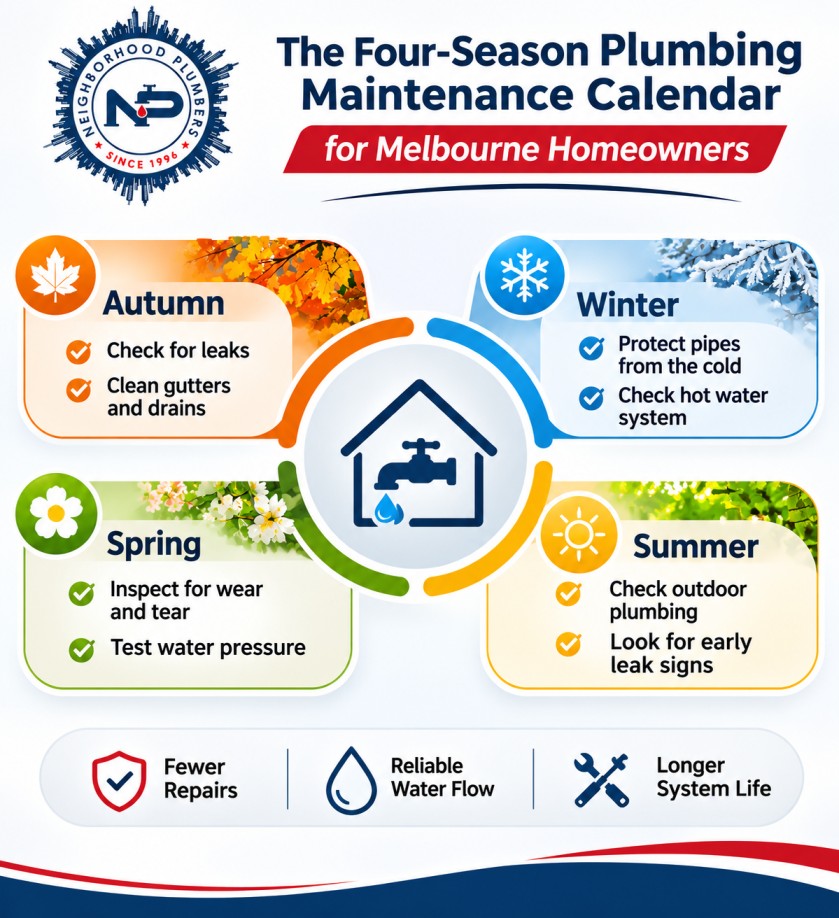
A Plumbing Maintenance Calendar works because it matches each job to the season that needs it most. Spring covers roots and storms. Summer covers pressure and holidays. Autumn covers drains and inspections. Winter covers hot water and frost.
Follow this Seasonal Plumbing Maintenance routine and you will spot most problems while they are still small and simple to fix. You also gain a clear record of your home’s plumbing health.
If you would like help building a Plumbing Maintenance Melbourne routine for your own home, start with a full autumn or spring inspection. The team at Neighborhood Plumbers is always happy to walk you through your system and explain which seasonal checks matter most for your property.
Frequently Asked Questions
What Is the Best Time of Year for a Professional Plumbing Inspection in Melbourne?
Autumn, especially April or May, is the best time for most Melbourne homes. Pipes are under little stress, and you have time to fix issues before winter brings cold nights and heavy hot water use. A second check in spring suits older homes, homes with clay sewer pipes or properties with large trees nearby. Spring checks catch winter damage and early root growth before the busy summer period arrives.
How Do I Know If Tree Roots Are Getting Into My Sewer Pipes?
Common signs include gurgling toilets, slow drains across several fixtures and sewage smells near outdoor gully traps. You may also notice lush, green patches of grass above the sewer line. Roots grow fastest in spring and summer, so symptoms often appear then. A plumber can confirm the problem with a CCTV drain camera. They can then clear the roots with a high-pressure jetter and suggest a longer-term repair if needed.
Why Does My Hot Water Run Out Faster in Winter?
Your hot water system works much harder in winter. Incoming cold water is colder, so the system needs more energy to heat it. People also take longer, hotter showers. If the tank holds sediment, it has less usable space for hot water. A faulty thermostat or heating element can also cut output. If the problem continues, ask a licensed plumber to test the system and check the tank and anode.
What Water Pressure Is Safe for a Melbourne Home?
Australian Standard AS/NZS 3500 sets 500 kPa as the maximum pressure at outlets inside a home. Most plumbers aim for 350 to 450 kPa, which gives good flow without stressing pipes and appliances. Some Melbourne suburbs receive mains pressure much higher than this. A pressure limiting valve fitted after the meter solves the issue. A plumber can test your pressure in about five minutes using a gauge on an outside tap.
Which Seasonal Plumbing Tasks Can Homeowners Do Safely?
Homeowners can safely clear gutters, clean drain traps, remove hair from shower drains and clean tap aerators. You can also test your stopcock, lag exposed pipes, check under sinks for leaks and run a water meter test. These tasks need no special tools or licence. Anything involving hot water systems, gas, sewer lines or pipe repairs should go to a licensed plumber. In Victoria, that rule protects both your safety and your insurance.
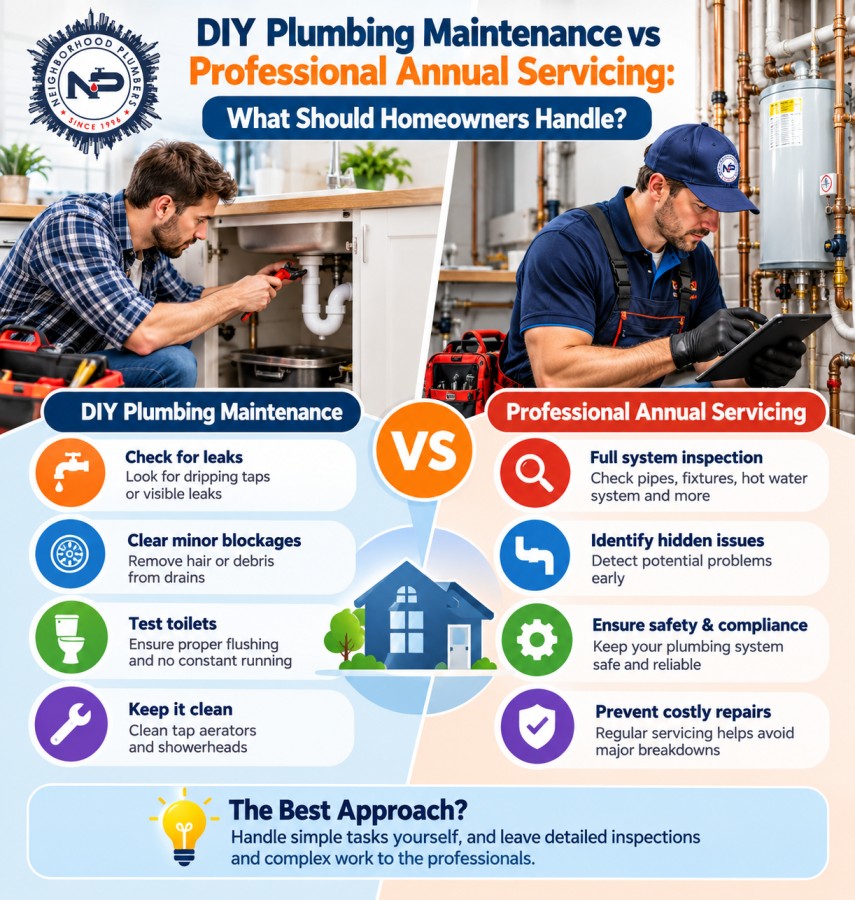
Most plumbing problems start small. A tap drips, a drain slows down, or a toilet keeps running after you flush. You can fix some of these yourself in ten minutes. Others hide a deeper fault that only trained eyes and proper tools will find. Knowing the difference is the heart of smart Plumbing Maintenance Melbourne homeowners can rely on.
Good DIY Plumbing Maintenance saves you time and catches small issues early. But it has clear limits. Push past those limits and a simple job can turn into a flooded laundry or an unsafe hot water system.
This guide draws a clear line between the two. You will learn which jobs belong to you, which need a Professional Plumbing Inspection, and how to spot the warning signs that tell you to stop and call for help.
Why Does the DIY vs Professional Question Matter?
Melbourne homes are a mix of old and new. Weatherboard cottages in Northcote still run galvanised steel pipes. Newer townhouses in Point Cook use plastic PEX lines and push-fit joints. Each system ages in its own way, and each fails in its own way.
Victoria also has firm rules. Almost all plumbing work connected to the water supply, sewer, stormwater or gas must be done by a registered or licensed plumber. Homeowners can handle simple upkeep, such as cleaning aerators, swapping a showerhead or clearing a sink trap. Anything beyond that is not just risky. In many cases, it is against the law and can void your home insurance.
So the real question is not “Can I do this?” It is “Should I, and is it safe?”
What Are the Best DIY Plumbing Tasks for Homeowners?
Some homeowner plumbing tasks are simple, safe, and genuinely useful. Doing them every month or season keeps your system healthy between visits.
Clean tap aerators and showerheads. Melbourne’s water carries fine sediment that builds up in aerators. Unscrew them, soak them in white vinegar overnight, and rinse them clean. You will often see stronger flow straight away.
Check under sinks for moisture. Open the cupboards under your kitchen and bathroom sinks once a month. Run your hand along the pipes and look for stains, swollen chipboard, or a musty smell. These are early signs of a slow leak.
Clear drain traps and hair catchers. Pull hair from shower drains and empty the bottle trap under the bathroom basin. Use a bucket and gloves. Avoid harsh chemical drain cleaners, because they can damage older pipes and seals.
Test the toilet for silent leaks. Add a few drops of food colouring to the cistern. Wait 20 minutes without flushing. If colour appears in the bowl, the flush valve seal is leaking and needs attention.
Know and test your main stopcock. In most Melbourne homes, it sits beside the water meter near the front boundary. Turn it off and on twice a year so it never seizes when you really need it.
Simple Leak Detection You Can Do Yourself
The water meter test is the best leak check any homeowner can do. Turn off every tap, appliance, and irrigation system. Write down the meter reading, then wait two hours without using any water. If the reading has moved, water is escaping somewhere on the property.
This test does not tell you where the leak is. It simply tells you that one exists. That is your signal to book a professional, not to start cutting into walls.
Where Does DIY Plumbing Become Unsafe?
Here is where many homeowners go wrong. Online videos make DIY Plumbing Maintenance look easy, even for complex jobs. They rarely show the risks or the rules.
Jesse, a homeowner in Reservoir, learned this the hard way. His hot water system’s relief valve kept dripping, so he watched a video and tightened it with a wrench. The drip stopped. Two weeks later, the system began making loud rumbling noises. Our plumber found the valve had been forced shut. That valve exists to release dangerous pressure. Blocking it put the whole tank at risk of rupture.
Leave these jobs to a licensed plumber, always:
Anything on the hot water system. Relief valves, tempering valves, anodes and thermostats control heat and pressure. A mistake here can cause scalding or a tank failure.
Any gas work. Gas appliances, gas lines and gas hot water units are strictly licensed work in Victoria. A small leak can become a fire or carbon monoxide risk.
Pipe repairs inside walls or under floors. Cutting, joining and replacing pipe needs the right fittings and pressure testing. A poor joint may hold for weeks, then fail without warning.
Sewer and stormwater lines. Blocked sewers, tree root intrusion and broken stormwater pipes need cameras, jetters and specialist knowledge.
New taps, toilets and fixtures that connect to the supply. Installing or relocating these counts as plumbing work and needs a licensed plumber.
What Happens During a Professional Plumbing Inspection?
A yearly Professional Plumbing Inspection covers the parts of your system you cannot see or safely test. At Neighborhood Plumbers, we often find issues the owners never noticed, because they sit behind walls or inside tanks.
A proper visit includes:
Water pressure testing. The plumber fits a gauge to an outside tap. Australian Standard AS/NZS 3500 sets 500 kPa as the maximum pressure at outlets inside a home. Many Melbourne suburbs exceed that, which strains every pipe and fitting.
Hot water system check. The plumber tests the relief valve, inspects the tank for corrosion, and checks that the tempering valve keeps bathroom water at a safe temperature.
Thermal and moisture scanning. Thermal cameras and moisture meters show hidden leaks behind tiles, in walls, and under floors. This finds problems long before they stain a ceiling.
Drain and sewer review. For older homes or homes with large trees, a drain camera can spot root intrusion or cracked clay pipes early.
A written report. You should receive clear notes and photos of what the plumber found and what needs attention first.
Why Professional Plumbing Servicing Catches What You Miss
Professional plumbing servicing works because plumbers see the same faults every week. They know that a faint knock in a laundry wall often means water hammer. They know that green crust on a copper joint means corrosion has started. These patterns are easy to miss when you only look at your own home once a year.
How Do You Build a Safe Plumbing Maintenance Routine?
The best approach blends both sides. You handle the regular, simple checks. A professional handles the annual deep review. Together, they give you safe plumbing maintenance all year round.
A simple Plumbing Maintenance Melbourne routine looks like this:
Every month. Check under sinks, look at visible pipes, and watch your toilet for running water. These checks take five minutes and catch most slow leaks early.
Every season. Clean aerators and showerheads, clear drain traps, and run the water meter test. Do an extra check of outdoor taps and exposed pipes before winter.
Every year. Book a full professional inspection, ideally in April or May. That gives you time to fix issues before cold nights and heavy rain arrive.
Write down what you check and when. A simple note on your phone works well. That record helps your plumber spot changes over time.
Common Mistakes Homeowners Make With Plumbing Maintenance
After years of call-outs, we see the same mistakes again and again:
Over-tightening fittings. Many people think tighter means safer. In fact, over-tightening cracks plastic fittings and crushes washers, which causes the very leak you wanted to stop.
Using plumber’s tape as a fix. Thread tape seals threads during installation. It does not repair a cracked pipe or a failed joint, and wrapping it around a leak only hides the problem.
Pouring fats and wipes down drains. Cooking fat sets hard in pipes, and “flushable” wipes do not break down. Both cause blockages that DIY plungers rarely clear.
Ignoring small signs. A dripping relief valve, a slow drain, or a noisy pipe all carry a message. Waiting usually turns a small job into a large one.
Expert Tips for Smarter Plumbing Maintenance
These tips come straight from our time on the tools across Melbourne homes:
Label your shut-off valves. Tag the main stopcock and the isolation valves under sinks and toilets. In an emergency, anyone in the house can then stop the water fast.
Take photos before you touch anything. If you clean a trap or swap a showerhead, photograph the parts first. It makes reassembly simple and helps your plumber if something goes wrong.
Ask your plumber to show you. A good plumber will happily point out your stopcock, pressure valve and relief valve. That five-minute walk-through makes your own checks far more useful.
Always check the licence. In Victoria, ask for your plumber’s registration or licence number and a compliance certificate for larger jobs. This protects your home and your insurance.
What Is the Final Verdict on DIY vs Professional Care?
DIY Plumbing Maintenance is about watching, cleaning, and testing. It is not about repairing pipes, valves, or gas lines. Keep your own jobs simple, and stop the moment a task needs tools, cutting, or a new part on the supply line.
A yearly Professional Plumbing Inspection covers everything you cannot see, test, or legally fix. That balance gives you a safer home and fewer surprises.
If you have not had a full Plumbing Maintenance Melbourne check in the past year, now is the right time to book one. The team at Neighborhood Plumbers is always happy to walk you through your system and show you which checks you can safely do yourself.
Frequently Asked Questions
What Plumbing Jobs Can I Legally Do Myself in Victoria?
Victorian homeowners can usually handle simple upkeep that does not change the plumbing system itself. This includes cleaning tap aerators, swapping a screw-on showerhead, clearing hair from drains, emptying a basin trap, and testing for leaks. Anything that connects to the water supply, sewer, stormwater, or gas generally needs a registered or licensed plumber. If you are unsure, check with a licensed plumber first. Unlicensed work can create safety risks and may affect your insurance cover.
How Often Should I Book a Professional Plumbing Inspection?
Most Melbourne homes benefit from one full inspection each year, ideally in April or May before winter. Older homes with galvanised steel, early copper or clay sewer pipes may need checks every six months. Homes with large trees near the sewer line also benefit from regular drain camera checks. Your plumber can suggest a schedule based on your home’s age, pipe materials and past issues. A written report each year helps track changes over time.
Why Is DIY Work on Hot Water Systems So Dangerous?
Hot water systems store water under heat and pressure. The relief valve releases excess pressure, and the tempering valve keeps bathroom water at a safe temperature. If either valve is blocked, adjusted, or fitted wrongly, the tank can fail or deliver scalding water. Many systems also run on gas, which is strictly licensed work in Victoria. A dripping relief valve is often normal, so never tighten or block it. Call a licensed plumber to test it instead.
What Are the Signs I Need Professional Leak Detection?
Call a plumber if your water meter moves when no water is in use. Other signs include damp patches on walls or ceilings, lifting floor tiles, musty smells, mould near wet areas, or a sudden drop in water pressure. Warm spots on a concrete floor can point to a leaking hot water line under the slab. Professionals use thermal cameras, moisture meters and pressure tests to find the exact spot without tearing out large sections of wall.
Can Regular DIY Checks Replace Professional Plumbing Servicing?
No, but they make professional servicing far more effective. Your monthly checks catch visible issues early, such as drips, slow drains, and running toilets. A professional inspection covers hidden risks like high water pressure, corroded joints, hot water valve faults, and sewer problems. The two work best together. Keep a simple log of your own checks and share it with your plumber. It helps them focus on the areas that matter most in your home.
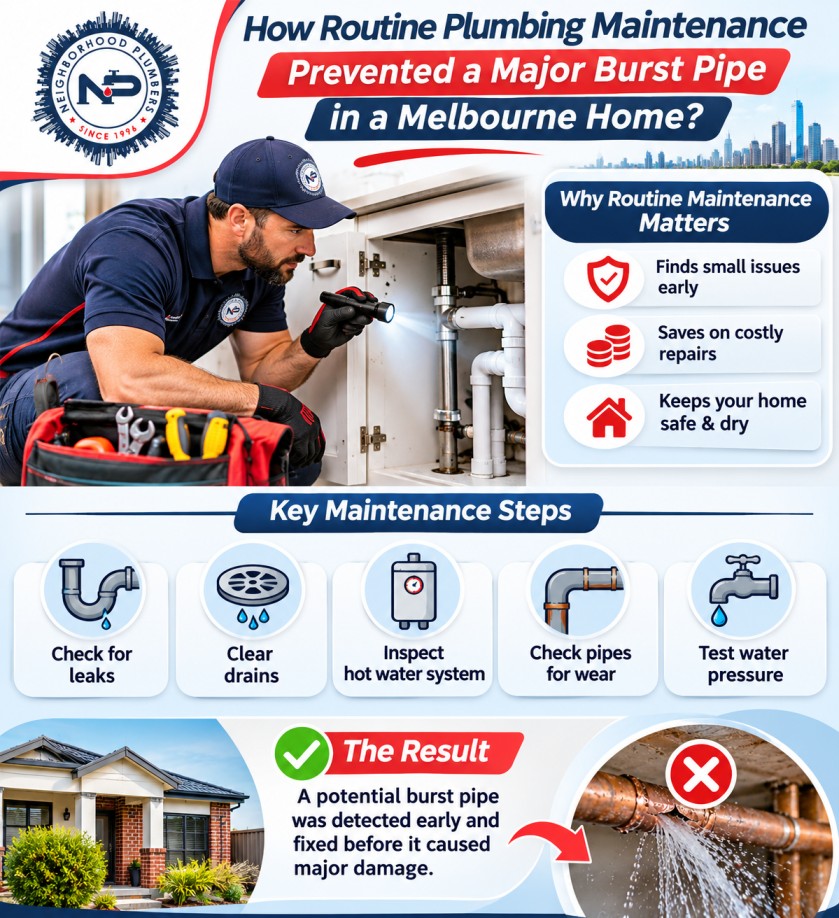
A burst pipe rarely gives you a warning. It usually fails at night, inside a wall or under a floor, while the house sleeps. By morning, carpets are soaked, plaster is sagging and the repair bill keeps growing. That is why regular Plumbing Maintenance Melbourne checks matter far more than most homeowners think.
This Plumbing Maintenance Case Study follows a 1970s brick veneer home in Bentleigh East. A routine yearly inspection found a corroded copper joint and dangerously high water pressure. The plumber fixed both issues in under three hours. Without that visit, the joint would most likely have split within weeks.
Below, you will see exactly what the plumber found, why it mattered and what it cost. You will also learn simple Burst Pipe Prevention steps that any Melbourne household can follow this week.
Why Do Burst Pipes Happen in Melbourne Homes?
Melbourne homes face a mix of risks that many other cities do not. Australian Standard AS/NZS 3500 sets 500 kPa as the maximum water pressure at outlets inside a home. Yet mains pressure in some Melbourne suburbs sits well above that. Without a pressure limiting valve, every pipe and joint in the house carries that extra load all day, every day.
Here are the four causes we see most often:
Ageing pipe materials. Many post-war and 1970s homes still run galvanised steel or thin early copper. Galvanised pipe rusts from the inside out, so the wall thins quietly until it splits under pressure.
High pressure and water hammer. When a washing machine or dishwasher valve snaps shut, water slams to a stop. That shock creates a loud knock and flexes the pipe. Thousands of small knocks a year fatigue joints and fittings.
Reactive clay soils. Large parts of Melbourne’s north and west sit on reactive clay. It shrinks in dry summers and swells in wet winters. That movement shifts slabs and footings, and it bends the pipes that run through them.
Cold winter mornings. Exposed pipes in outer areas such as the Dandenongs and Macedon Ranges can freeze on frosty nights. Ice expands inside the pipe and cracks it, and the leak starts when it thaws.
What Did Our Plumbing Maintenance Case Study Reveal?
The Home and the Owners
Priya and Tom own a three-bedroom home in Bentleigh East. They book a plumbing service every May, before winter. They had no visible problems this year. Tom only mentioned “a faint bang in the wall when the washing machine stops.” Most people would ignore that sound. Our plumber did not.
How Leak Detection Found the Hidden Risk
The plumber first fitted a pressure gauge to the front garden tap. It read 870 kPa, which is almost double the safe limit. Next, he scanned the laundry wall with a thermal camera. A cool patch showed up behind the washing machine taps. A moisture meter then confirmed damp framing.
He cut a small access panel and found the real issue. A copper elbow had green corrosion and a pinhole weep. The pipe also had no clips, so it jumped every time the machine valve closed. The framing was damp but not yet rotten. That combination of high pressure, a weak joint and constant movement is a textbook burst waiting to happen.
Pipe Repairs Completed in One Visit
The plumber completed four repairs on the same day:
Fitted a pressure limiting valve. He installed it after the water meter and set it to 450 kPa. This single part took stress off every pipe, tap and appliance in the home.
Replaced the damaged section. He cut out 1.2 metres of copper, including the corroded elbow, and fitted new pipe and fittings.
Secured the pipe run. He added saddle clips every metre so the pipe could no longer flex inside the wall.
Added a water hammer arrestor. He fitted it at the washing machine taps to absorb the shock when the valves snap shut.
Here is how the numbers compared:
Item
Routine Maintenance Visit
Likely Burst Pipe Outcome
Total cost
About $780
$8,000 to $15,000+
Time to fix
Under 3 hours
2 to 6 weeks of drying and repairs
Damage to home
One small wall panel
Wet framing, plaster, flooring and carpet
Insurance claim
Not needed
Excess paid, possible claim dispute
Disruption
Water off for 90 minutes
Laundry and nearby rooms unusable
What Are the Scheduled Maintenance Benefits for Your Home?
The Bentleigh East job shows the real value of scheduled maintenance benefits. A small fee caught a problem the owners could not see or hear clearly. At Neighborhood Plumbers, we find that most serious failures give small signs for months before they break. A trained eye simply spots them sooner.
Booking Plumbing Maintenance Melbourne services once a year brings several clear gains:
Small faults stay small. A weeping joint costs a few hundred dollars to fix. A burst one can cost thousands once water reaches floors and walls.
Lower water bills. Hidden leaks waste water around the clock. A slow drip inside a wall can add a noticeable amount to your quarterly bill without you knowing why.
Stronger insurance position. Many home policies exclude damage from gradual leaks or poor upkeep. A record of yearly servicing helps show you took reasonable care of your home.
Longer appliance life. Correct pressure protects your hot water system, dishwasher and washing machine. Their valves and seals last longer when they are not fighting 870 kPa.
What Does Preventative Plumbing Success Look Like in Practice?
Preventative plumbing success is not luck. It comes from a set routine that checks the same weak points every year. A proper service should test pressure, inspect visible pipes, check the hot water relief valve and scan high-risk walls for moisture.
Good Burst Pipe Prevention also means writing everything down. Our plumbers note the pressure reading, pipe materials and any wear each year. Over time, that record shows trends. A joint that looked fine last year but shows staining now gets fixed before it fails.
A Simple Plumbing Maintenance Schedule for Melbourne Homes
Task
How Often
Who Should Do It
Check under sinks for drips or stains
Monthly
Homeowner
Water meter leak test
Every 3 months
Homeowner
Water pressure test
Yearly
Licensed plumber
Hot water relief valve check
Yearly
Licensed plumber
Thermal and moisture scan of wet areas
Yearly
Licensed plumber
Inspect exposed and outdoor pipes
Before winter
Homeowner or plumber
Practical Burst Pipe Prevention Tips You Can Use Today
You do not need tools for most of these checks. You just need ten minutes and a little attention.
Find your main stopcock now. In most Melbourne homes, it sits next to the water meter near the front boundary. Make sure it turns freely. In an emergency, every minute you save means less water inside the house.
Do a meter leak test. Turn off every tap and appliance. Write down the meter reading, then check it again after two hours. If the number moved, water is escaping somewhere.
Listen for knocking pipes. A bang when taps or appliances shut off is water hammer. It is a clear sign that pressure is too high or pipes are loose.
Lag exposed pipes. Wrap outdoor and under-house pipes with foam insulation before June. It costs a few dollars per metre at any hardware store.
Watch for slow changes. Look for bubbling paint, musty smells, swollen skirting boards or a sudden jump in your water bill. Each one can point to a hidden leak.
Common Mistakes That Lead to Water Damage
Most water damage we see comes from habits, not bad luck. Avoid these four common mistakes:
Ignoring small drips. A slow drip is a pipe telling you something is wrong. Drips only get worse, and they often get worse all at once.
Assuming new homes are safe. New builds can have poorly fitted push-fit joints or no pressure valve at all. We regularly find pressure problems in homes less than five years old.
Relying on DIY patches. Tape, epoxy and clamps can buy a day or two. They are not a repair, and they can hide a growing problem behind a neat finish.
Never testing water pressure. Few homeowners know their own pressure reading. Yet it is one of the biggest drivers of pipe failure, and a gauge test takes five minutes.
Expert Advice on Professional Plumbing Care
After years of service calls, these are the tips we give every client who asks about professional plumbing care:
Book before winter. April and May are the best months. Pipes are under the least stress, and you fix issues before frosty nights arrive.
Ask for a written report with photos. A good plumber shows you what they found, not just what they charged. Keep those reports with your home records.
Retest pressure after nearby mains work. When your water retailer upgrades mains in your street, pressure can rise. A quick test confirms your valve still holds the right setting.
Always use a licensed plumber. In Victoria, plumbing work must be done by a registered or licensed plumber. Jobs over $750 also need a compliance certificate, so ask for one every time.
What Is the Key Takeaway?
This Plumbing Maintenance Case Study proves a simple point. A three-hour visit and about $780 stopped a failure that could have cost more than ten times that amount. The owners kept their home dry, their insurance untouched and their winter stress-free.
Smart Burst Pipe Prevention starts with checks you can do yourself, such as meter tests and listening for knocking pipes. A yearly professional inspection then covers the risks you cannot see.
If you have not booked Plumbing Maintenance Melbourne services in the last 12 months, now is a good time to start. The team at Neighborhood Plumbers is always happy to answer questions and check your water pressure, so your home stays dry all year.
Frequently Asked Questions
How Often Should I Book Plumbing Maintenance in Melbourne?
Most Melbourne homes need one full service each year. We suggest April or May, before winter brings colder nights and heavier rain. Older homes with galvanised steel or early copper pipes may need checks every six months, because corrosion moves faster in those materials. Homes on reactive clay soil also benefit from more frequent visits, since ground movement can stress pipes between services. Ask your plumber to set a schedule based on your home’s age and pipe type.
What Are the Early Warning Signs of a Burst Pipe?
Watch for knocking or banging when taps or appliances shut off. Also look for bubbling paint, damp patches, musty smells or swollen skirting boards near wet areas. Lower water pressure at one tap can point to a leak in that line. A sudden rise in your water bill is another strong clue. If you notice any of these, run a meter leak test straight away and call a licensed plumber before the problem grows.
What Water Pressure Is Safe for a Melbourne Home?
Australian Standard AS/NZS 3500 sets 500 kPa as the maximum pressure at outlets inside a home. Most plumbers aim for 350 to 450 kPa, which gives good flow without stressing pipes. Some Melbourne suburbs receive mains pressure far higher than this. A pressure limiting valve fitted after the meter fixes the problem for good. A plumber can test your pressure in about five minutes using a simple gauge on an outside tap.
Does Home Insurance Cover Burst Pipe Water Damage?
Many policies cover sudden and accidental bursts, but most exclude damage from slow leaks, wear and tear or poor upkeep. Insurers often ask how long a leak existed and whether you maintained the plumbing. Yearly service reports help you answer those questions with confidence. Policies differ widely, so read your product disclosure statement carefully. If anything is unclear, call your insurer and ask how they treat gradual leaks before you ever need to claim.
(H3) What Happens During a Professional Plumbing Maintenance Visit?
A full visit usually takes one to two hours. The plumber tests water pressure, checks the hot water relief valve and inspects visible pipes under sinks, in the laundry and outside. Many also use thermal cameras and moisture meters to scan walls near wet areas. They then check taps, toilets and stopcocks for wear. Finally, you should receive a written report with photos, a list of any issues and clear repair priorities.
Three quotes land in your inbox for the same job. One sits $800 below the others, and most people feel relief. After years of checking the plumbing quotesMelbourne homeowners send us, we feel caution instead. A low number often hides missing parts, missing permits, or missing labour.
This guide shows you how to Compare Plumbing Quotes line by line. You will learn what a fair quote includes, which gaps cost the most, and how to spot real value before you sign anything.
You will also learn how to check that a Licensed Plumber Melbourne homeowners trust will actually stand behind the price. That check matters as much as the number itself.
Why Do Plumbing Quotes Vary So Much in Melbourne?
Two plumbers can look at the same leaking pipe and write very different prices. Neither is always wrong. Each one makes different guesses about access, materials and risk.
Melbourne housing adds to the spread. A 1920s terrace in Fitzroy often hides old galvanised pipes that crumble once you touch them. A 2018 townhouse in Point Cook usually has modern PEX lines and easy access. A careful plumber prices that hidden risk. A rushed plumber ignores it, then adds a “variation” halfway through the job.
What Drives Plumbing Costs Behind the Scenes?
Every price breaks down into a few parts. Once you see them, quotes stop looking random.
Labour time: Most Melbourne plumbers charge roughly $100 to $150 per hour, with a call-out fee on top. A quote that seems cheap may simply assume fewer hours than the job really needs, and you pay the gap later.
Material grade: Brass fittings and copper pipe cost more than plastic alternatives, but they last longer in high-pressure systems. Ask which brand and grade each plumber plans to use, not just the item name.
Compliance and insurance: Licensed plumbers carry insurance and lodge certificates. These costs sit inside an honest price. A plumber who skips them can quote lower, but you carry the risk.
Travel and access: Tight subfloors, two-storey roof work and parking in inner suburbs all add time. A good quote names these access issues upfront rather than adding them later.
What Should a Proper Plumbing Quote Include?
A real quote is a written scope of work, not a number in a text message. Use this table as your checklist.
Quote Item
What to Look For
Red Flag
Scope of work
Clear steps, fixtures and locations
“Fix leak” with no detail
Materials
Brand, model and grade listed
“Parts extra”
Labour
Fixed price or estimated hours
Hourly rate with no cap
Compliance
Certificate of compliance included
No mention of paperwork
Removal and clean-up
Old unit disposal included
Disposal left out
Warranty
Written workmanship warranty
Verbal promise only
Payment terms
Small deposit, balance on completion
Full payment upfront
In Victoria, plumbing work valued over $750, and all gas work, needs a certificate of compliance. The plumber lodges it and gives you a copy. If a quote for a larger job does not mention this certificate, ask about it before you go any further.
How to Compare Plumbing Quotes Side by Side
Comparing totals tells you almost nothing. Comparing scope tells you everything. Follow these steps for a fair plumbing quote comparison.
Get three written quotes: Two quotes give you a coin toss. Three show you the normal price range and make the outlier easy to spot, whether it sits too high or too low.
Line up the scope first: Put each quote into the same table before you look at price. Mark every item one plumber includes and another leaves out. Those gaps usually explain most of the price difference.
Ask each plumber the same questions: What happens if you find hidden damage? What does your warranty cover? Who does the work on the day? Matching answers make the quotes truly comparable.
Price the exclusions: Call the cheapest plumber and ask what the missing items would cost. Add that figure to their quote. The real gap often shrinks or disappears completely.
A Real Plumbing Quote Comparison From a Brunswick Home
Last winter, a Brunswick couple asked us to review three quotes for a gas hot water replacement. Here is what the numbers looked like once we lined them up.
Item
Quote A
Quote B
Quote C
Quoted total
$1,650
$2,400
$2,900
Tempering valve
Not included
Included
Included
Old unit removal
Not included
Included
Included
Compliance certificate
Not mentioned
Included
Included
Warranty on labour
Not stated
2 years
5 years
True cost after extras
About $2,350
$2,400
$2,900
Quote A looked $750 cheaper. After adding the missing items, it sat almost level with Quote B, with no clear warranty. The couple chose Quote B. It offered the best balance of cost, compliance and cover.
We see this pattern again and again when we review Plumbing Quotes Melbourne families bring to us. The headline price rarely tells the full story.
At Neighborhood Plumbers, we write every quote as an itemised scope for exactly this reason. Customers can then compare our price fairly against anyone else’s, item by item.
Who Is a Licensed Plumber Melbourne Homeowners Can Trust?
A licence protects you, so always confirm it before you accept any quote. Since July 2025, Victoria’s Building and Plumbing Commission manages plumber registration and licensing.
Check the public register: Search the plumber’s name or licence number on the Commission’s website. Confirm the licence covers the right class of work, because gasfitting and drainage need separate classes.
Ask for insurance details: A professional plumber holds public liability insurance and will share proof without fuss. This cover protects your home if something goes wrong during the job.
Look for real reviews: Read recent reviews that mention specific jobs and suburbs. Vague five-star praise tells you little. Detailed comments about tidiness, timing, and communication tell you a lot.
A properly Licensed Plumber Melbourne residents hire will also explain the work in plain words. If a plumber dodges your questions, take that as useful information.
When Does Emergency Plumbing Change the Way You Compare?
A burst pipe at 11 pm leaves no time for three written quotes. Emergency plumbing still needs a quick check, just a faster one.
Ask three questions on the phone. What is your after-hours call-out fee? What is your hourly rate after that? Do you charge a minimum time? Write the answers down. Melbourne after-hours call-outs often run $150 to $300 before any work begins.
Then fix only the urgent problem tonight. Stop the water, make the area safe, and leave the bigger repair for daytime. You can then gather proper quotes for the full fix at normal rates.
What Are the Most Common Mistakes With Plumbing Services Quotes?
In our experience, these mistakes cost Melbourne homeowners the most money.
Trusting the “$99 fixed price” ad: A Werribee customer booked a $99 blocked drain offer. After a CCTV camera check and jetting, the final bill reached $640. The base price covered only the call-out.
Ignoring variation clauses: Some quotes let the plumber add costs for “unforeseen issues” without a limit. Ask for a cap, or ask the plumber to call you before any extra work starts.
Paying too much upfront: A deposit of 10 to 20 percent is normal for larger jobs that need materials ordered. Paying the full amount before work starts leaves you with little leverage if something goes wrong.
Where Does Value for Money Plumbing Really Come From?
Value for money plumbing means paying once for work that lasts. Professional plumbing pricing reflects skill, proper parts and paperwork, not just time on site.
Why Does a Local Plumber Often Give Better Value?
A local plumber knows your suburb’s housing stock and water pressure quirks. They spend less time travelling and can return quickly if a warranty issue appears. Their reputation also depends on neighbours talking, which keeps standards high.
Expert Tips From Years of Reviewing Quotes
Ask about the cheapest fix too: A good plumber will tell you if a $200 repair can replace a $2,000 upgrade. Honest advice like this signals someone you can trust for years.
Watch how they quote: Did they inspect the job in person or guess from a photo? An on-site inspection usually produces a more accurate price with fewer surprises later.
Conclusion: How Do You Choose the Right Plumbing Quote?
The cheapest quote and the best-value quote are rarely the same. When you Compare Plumbing Quotes properly, you look at scope, compliance, warranty, and the plumber’s licence before the final number.
Take your time, ask the same questions of every plumber, and price any missing items. That simple habit turns confusing Plumbing Quotes Melbourne homeowners receive into a clear, confident choice. Always confirm you are hiring a Licensed Plumber Melbourne regulators recognise.
If you want a second opinion or an itemised quote to compare against, Neighborhood Plumbers is happy to walk through the details with you, with no pressure to book.
Frequently Asked Questions
1. How many quotes should I get before choosing a plumber in Melbourne?
Get at least three written quotes for any job over a few hundred dollars. Three quotes show you the normal price range and make an unusually low or high price easy to spot. For small repairs like a dripping tap, one quote from a trusted Licensed Plumber Melbourne residents recommend is usually enough. For hot water systems, bathroom work or drain relining, take the time to compare properly before you commit.
2. Why is the cheapest plumbing quote often not the best choice?
The cheapest quote often leaves out items that other plumbers include, such as old unit disposal, compliance certificates or quality fittings. Once you add those missing items, the price gap usually shrinks. Some low quotes also rely on variation clauses that raise the final bill mid-job. When you Compare Plumbing Quotes by scope rather than total, you see the true cost and avoid paying twice for the same problem.
3. What should be written on a plumbing quote in Victoria?
A proper quote lists the scope of work, materials with brand and grade, labour cost, compliance certificate, removal of old parts, warranty terms and payment schedule. It should also show the plumber’s licence number and ABN. Ask the plumber how they handle hidden damage before work starts. A detailed written quote protects both of you and makes it easy to compare prices fairly across different plumbers.
4. How do I check if a plumber is licensed in Melbourne?
Search the plumber’s name or licence number on the Victorian Building and Plumbing Commission’s online register. Confirm the licence is current and covers the right type of work, since gasfitting, drainage and roofing each need separate classes. Also ask for proof of public liability insurance. A genuine professional will share these details quickly and without fuss. Any hesitation about licence details is a warning sign you should not ignore.
5. Are fixed-price plumbing quotes better than hourly rates?
Fixed-price quotes give you cost certainty, which helps with budgeting for jobs like hot water replacements. Hourly rates can work well for small or unclear jobs where the plumber cannot see the full problem yet. The key is clarity. Check what the fixed price includes and what triggers extra charges. When reviewing Plumbing Quotes Melbourne homeowners receive, ask hourly-rate plumbers for an estimated range and a maximum cap before work begins.
Your home’s plumbing system works quietly in the background every day. From supplying clean water for showers and cooking to carrying wastewater safely away, pipes play an essential role in keeping your household comfortable. However, because most plumbing pipes are hidden behind walls, beneath floors or underground, homeowners often overlook their condition until something goes wrong.
A small leak, unusual water pressure, rusty-looking water or a recurring drain blockage may seem like a minor inconvenience. Left unresolved, however, these warning signs can develop into significant plumbing problems, resulting in water damage, expensive repairs and unnecessary disruption.
This is why regular Pipe Maintenance Melbourne homeowners can rely on is important for protecting their properties. Understanding how your plumbing system works, recognising early warning signs and arranging timely inspections can help prevent avoidable damage.
This practical Pipe Maintenance Guide explains how to look after household pipes, improve their lifespan and identify problems before they become expensive. Whether you live in an older Melbourne property or a recently built home, the right maintenance habits can make a meaningful difference to your plumbing system.
Why Is Regular Pipe Maintenance Important for Melbourne Homes?
Plumbing pipes are exposed to everyday wear and tear. Water pressure, temperature changes, mineral deposits, corrosion and ground movement can gradually affect their condition.
Melbourne homes also have different plumbing requirements depending on their age, construction materials, location and previous maintenance history. An older property may have ageing metal pipework, while a newer home may use modern copper or approved plastic piping.
Regular maintenance helps homeowners identify developing issues rather than waiting for a pipe to fail.
Here are some important reasons to maintain your plumbing system:
Prevent water damage: Small leaks can gradually damage plasterboard, flooring, cabinetry and structural materials.
Maintain water quality: Deteriorating internal pipework can affect the appearance and quality of household water.
Protect water pressure: Mineral build-up, corrosion and restrictions can reduce water flow.
Reduce unexpected expenses: Early repairs are often less disruptive than dealing with extensive water damage.
Improve household efficiency: Fixing leaks and inefficient fittings helps avoid unnecessary water consumption.
For homeowners, preventative pipe maintenance is not about replacing every old pipe. It is about understanding the condition of the existing system and taking appropriate action at the right time.
1. Understand Your Home’s Plumbing Pipe Materials
One of the first steps towards effective Pipe Maintenance is understanding what type of pipes your property uses.
Different materials have different strengths, limitations and maintenance requirements. Knowing what is installed can help you recognise potential problems and make better decisions when repairs are needed.
Copper Pipes
Copper pipes have been widely used in Australian residential plumbing because they are durable and suitable for water supply systems.
However, copper is not completely resistant to deterioration. Corrosion can develop under certain water conditions, particularly where pipes are exposed to unsuitable materials, aggressive environments or poor installation practices.
Watch for:
Green or blue staining around pipe connections.
Small pinhole leaks.
Repeated moisture around joints.
Discoloured water after periods of non-use.
A plumber can investigate whether the issue is isolated or indicates broader deterioration.
Galvanised Steel Pipes
Some older Melbourne properties may still contain galvanised steel pipes.
These pipes have a protective zinc coating, but this coating can deteriorate over time. Internal rust and mineral accumulation may gradually restrict water flow.
Common warning signs include:
Reduced water pressure.
Brown or rusty-looking water.
Repeated leaks.
Uneven water flow between fixtures.
If several taps experience similar problems, the issue may involve the main supply pipework rather than individual tap fittings.
Plastic Plumbing Pipes
Modern plumbing systems may use approved plastic materials such as PEX or other suitable piping products.
These systems offer flexibility and resistance to certain types of corrosion. However, they still require correct installation, suitable fittings and protection against physical damage, excessive temperatures and environmental exposure.
Practical tip: If you have recently purchased an older home, ask a licensed plumber to identify the visible pipe materials and assess any accessible sections of the plumbing system.
2. Monitor Water Pressure Before It Damages Your Pipes
Water pressure affects how your plumbing system performs every day. Excessively high pressure can place unnecessary stress on pipe joints, valves, flexible connectors and appliances.
On the other hand, consistently low pressure may indicate restrictions, leaks, faulty fittings or supply-related issues.
What Are the Warning Signs of Incorrect Water Pressure?
Pay attention to changes such as:
Taps suddenly producing weaker water flow.
Shower pressure changing without an obvious reason.
Water hammer or banging noises when taps close.
Repeated leaks around fittings.
Pressure differences between different parts of the property.
A single tap with low flow may simply have a blocked aerator or showerhead. However, if several fixtures are affected, the problem may be further along the plumbing system.
How Can You Maintain Suitable Water Pressure?
A qualified plumber can measure the pressure and determine whether it is appropriate for the property’s plumbing and connected appliances.
Depending on the findings, the solution may involve:
Inspecting pressure-reducing valves.
Checking for partially closed isolation valves.
Removing suitable fixture-level restrictions.
Investigating concealed pipe blockages.
Assessing the water supply connection.
Avoid installing pressure-control devices or adjusting plumbing components without understanding the system’s requirements.
Maintaining appropriate Water Pressure is an important part of extending pipe lifespan because it helps reduce unnecessary stress on the entire system.
3. Identify Small Leaks Through Regular Leak Detection
A hidden leak can continue for weeks or months before becoming obvious.
Water may escape behind a bathroom wall, beneath a kitchen cabinet, under a concrete slab or through an underground supply pipe. By the time visible damage appears, moisture may already have affected surrounding materials.
This makes regular Leak Detection an essential part of residential plumbing care.
What Signs Suggest a Hidden Pipe Leak?
Look for these common indicators:
Unexplained increases in water bills.
Damp patches on walls, floors or ceilings.
Peeling paint or bubbling plaster.
Musty smells in enclosed areas.
Mould developing without an obvious source.
Wet areas in the garden during dry weather.
Water meter movement when no water is being used.
Not every damp patch indicates a plumbing leak. Roof problems, condensation, drainage issues and external moisture can create similar symptoms. Proper investigation is important before deciding what needs repair.
How Can You Perform a Basic Water Meter Test?
Melbourne homeowners can use their water meter as an initial check.
Follow these steps:
Turn off taps and water-using appliances.
Make sure irrigation systems and automatic water features are not operating.
Record the water meter reading.
Avoid using water for a suitable testing period.
Check the meter again.
If the reading has changed, repeat the test to rule out accidental water use.
A change in the reading may indicate continuous water consumption or a leak. However, some appliances and systems can use water automatically, so check these before drawing conclusions.
For a more detailed investigation, a plumber may use acoustic equipment, thermal imaging where suitable, pressure testing or specialised inspection tools.
Expert insight: A recurring damp patch that disappears and returns should never be ignored. Even if the area looks dry, moisture may still be present inside the wall or beneath the flooring.
4. Schedule Regular Plumbing Inspection
Waiting until a pipe bursts is not a sensible maintenance strategy.
A professional Plumbing Inspection can identify visible deterioration, loose connections, corrosion, unusual pressure conditions and other developing issues.
The appropriate inspection frequency depends on the property’s age, pipe materials, previous repair history and overall condition.
What Should a Plumbing Inspection Include?
A residential plumbing assessment may cover:
Accessible water supply pipes.
Visible joints and connections.
Taps, mixers and isolation valves.
Toilet connections and cisterns.
Hot water system connections.
Signs of corrosion or mineral build-up.
Water pressure and flow performance.
Accessible drainage components.
Evidence of moisture around plumbing fixtures.
Where necessary, the plumber may recommend additional testing rather than assuming the entire system is in good or poor condition based on a visual check.
When Should You Arrange an Inspection?
Consider arranging an assessment when:
You purchase an older property.
Your home has recurring plumbing problems.
Water pressure changes unexpectedly.
You notice unexplained dampness.
Your pipes have not been assessed for many years.
You are planning renovations that involve plumbing alterations.
A professional inspection gives you a clearer understanding of the system’s condition and helps prioritise maintenance work.
5. Protect Pipes From Temperature Changes and Physical Damage
Pipes can be affected by temperature changes, accidental impacts and unsuitable storage or renovation activities.
Although Melbourne does not experience the same prolonged freezing conditions as some colder regions, exposed pipework can still be affected by cold weather and temperature fluctuations.
Insulate Vulnerable Pipework
Pipes located in roof spaces, external areas, garages and other exposed locations may benefit from suitable insulation.
Proper insulation can help reduce temperature-related stress and protect vulnerable sections from environmental exposure.
Use insulation products suitable for the pipe material and installation location. Ensure that any work near hot water equipment follows the manufacturer’s safety requirements.
Avoid Accidental Pipe Damage
Many household plumbing problems begin during ordinary maintenance or renovation work.
For example, drilling into a wall to install shelving or fixing a garden post can accidentally damage concealed water pipes.
Before carrying out work that involves drilling, cutting or excavation:
Check available building and plumbing plans.
Identify likely pipe routes.
Use suitable detection equipment where appropriate.
Avoid drilling near known plumbing connections.
Engage qualified professionals when the pipe locations are uncertain.
Never assume that a pipe runs in a predictable straight line behind a wall.
6. Keep Tree Roots Away From Underground Plumbing
Tree roots are a common concern for underground drainage systems.
Roots naturally seek moisture and can enter existing cracks, loose joints or damaged sections of drainage pipes. Once inside, they may gradually collect debris and restrict wastewater flow.
The problem can be particularly disruptive when blockages return after temporary clearing.
Warning Signs of Root-Related Pipe Problems
Watch for:
Repeated drain blockages.
Gurgling sounds from toilets and drains.
Slow drainage across multiple fixtures.
Unpleasant smells near outdoor drains.
Sewage backing up through floor wastes.
Wet or unusually green patches in the garden.
How Can You Reduce the Risk?
Consider the following precautions:
Understand where underground drainage pipes are located.
Avoid planting large trees directly above known drainage routes.
Maintain suitable clearance between trees and plumbing infrastructure.
Investigate recurring blockages rather than relying on repeated temporary clearing.
Arrange a CCTV drain inspection if a plumber suspects root intrusion.
A camera inspection can help identify cracks, root entry, displaced joints and other internal drainage problems.
In some cases, targeted repairs may resolve the problem without replacing the entire drainage line.
7. Look After Drains and Avoid Chemical Overuse
Although drainage pipes and water supply pipes perform different functions, both require regular care.
Household drains collect soap residue, grease, hair, food particles and other materials. Over time, these substances can accumulate and restrict wastewater flow.
Simple Habits That Help Protect Drainage Pipes
Use suitable drain strainers in showers and kitchen sinks.
Avoid pouring cooking oil and grease down kitchen drains.
Dispose of food scraps in the appropriate waste bin.
Remove visible hair from shower strainers.
Avoid flushing wipes, sanitary products and other unsuitable items.
Investigate recurring slow drainage.
Are Chemical Drain Cleaners Always a Good Solution?
No. Strong chemical cleaners are not suitable for every blockage or pipe material.
Repeated or incorrect use can create safety risks and may damage certain plumbing components. Mixing different cleaning chemicals can also produce dangerous reactions.
For a minor accessible blockage, a suitable plunger may help. Persistent or recurring blockages should be investigated by a plumber who can identify the actual cause.
8. Arrange Timely Pipe Repairs Instead of Ignoring Small Problems
Small plumbing faults rarely improve simply because they are left alone.
A loose connection may begin as a minor drip but eventually cause water damage. A small crack in a drainage pipe may allow roots to enter and create a larger obstruction.
Arranging appropriate Pipe Repairs Melbourne homeowners need at an early stage can help prevent more extensive damage.
Common Plumbing Problems That Require Attention
Plumbing problem
Possible cause
Recommended action
Dripping pipe joint
Worn seal or loose connection
Professional assessment and repair
Low water flow
Restriction, leak or pressure issue
Check pressure and pipe condition
Rusty-looking water
Internal corrosion or sediment
Investigate water quality and pipework
Repeated drain blockage
Roots, debris or damaged drainage
Consider CCTV inspection
Damp wall or ceiling
Possible concealed leak
Arrange leak investigation
Water hammer
Pressure or pipe support issue
Inspect the plumbing system
When Is Pipe Repair Better Than Replacement?
The decision depends on the location, extent and cause of the damage.
A localised leak in an otherwise sound pipe may only require a targeted repair. However, repeated failures, widespread corrosion or significant internal deterioration may indicate that replacing an affected section is a more practical long-term option.
A good assessment should explain:
What has failed.
Why the problem occurred.
Whether surrounding pipework is also deteriorating.
What repair options are available.
Whether the proposed solution addresses the underlying cause.
This approach avoids unnecessary replacement while reducing the risk of repeated repairs.
9. Follow a Preventative Pipe Maintenance Routine
Consistent maintenance is easier when it becomes part of your household routine.
You do not need to inspect every pipe every week. Instead, combine simple visual checks with periodic professional assessments.
Monthly Maintenance
Check visible pipes beneath sinks.
Look for dripping taps and leaking toilet connections.
Check for moisture around the hot water system.
Notice unusual changes in water pressure.
Look for damp patches around plumbing fixtures.
Every Three to Six Months
Check the water meter for unexplained water use.
Clean suitable tap aerators and showerhead fittings.
Inspect exposed outdoor pipework.
Check garden taps and irrigation connections.
Look for signs of recurring drain problems.
Annually or As Recommended
Arrange a plumbing assessment where the property’s age or condition warrants it.
Review recurring leaks and previous repair work.
Check accessible isolation valves.
Assess exposed and vulnerable pipe sections.
Review any professional recommendations from earlier inspections.
This is a practical starting schedule, not a compulsory maintenance standard. Older properties or homes with a history of leaks may need more frequent attention.
10. Understand How Maintenance Helps Extend Pipe Lifespan
The lifespan of plumbing pipes varies significantly depending on their material, installation quality, water conditions, maintenance history and operating environment.
For example, a well-installed copper system may remain serviceable for decades, while poorly maintained or deteriorating galvanised steel pipework may develop restrictions and leaks much earlier.
There is no single replacement age that applies to every household plumbing system.
Practical Ways of Extending Pipe Lifespan
Address corrosion early: Visible corrosion, staining and recurring leaks deserve investigation before deterioration spreads.
Maintain suitable pressure: Excessive pressure can place additional stress on pipework and fittings.
Prevent unnecessary blockages: Appropriate drain habits reduce the likelihood of recurring restrictions and associated problems.
Protect exposed pipes: Suitable insulation and physical protection help reduce environmental and accidental damage.
Use compatible materials: When repairs are needed, the replacement fittings and pipes must be appropriate for the existing plumbing system.
Keep repair records: Documenting previous leaks, replacements and inspections helps plumbers understand the system’s history.
The main objective of extending pipe lifespan is not to make old plumbing last indefinitely. It is to maintain safe, reliable performance and replace deteriorating sections before they cause serious damage.
11. Common Pipe Maintenance Mistakes Homeowners Should Avoid
Even homeowners who regularly check their plumbing can make mistakes that increase the likelihood of damage.
Ignoring Small Leaks
A slow drip may seem harmless, but continuous moisture can damage cabinets, floors and nearby building materials.
Better approach: Investigate recurring leaks promptly, even when the water loss appears small.
Assuming Low Water Pressure Is Normal
Weak flow from one tap may indicate a simple fitting problem. Low pressure throughout the property may point to a larger issue.
Better approach: Compare different fixtures and arrange an assessment if the change is widespread or persistent.
Using Chemical Cleaners for Every Blockage
Chemical products do not resolve every underlying drainage problem.
Better approach: Use suitable basic methods for minor blockages and seek professional assistance for recurring issues.
Attempting Complex DIY Pipe Repairs
Working on regulated plumbing without the appropriate qualifications can create safety, compliance and insurance problems.
Better approach: Use a properly licensed or registered plumbing practitioner for regulated plumbing work in Victoria.
Replacing Pipes Without Identifying the Cause
Replacing one damaged section may not solve the problem if excessive pressure, corrosion or ground movement is affecting the surrounding system.
Better approach: Ask for an explanation of the underlying cause before approving major work.
12. When Should You Call a Licensed Melbourne Plumber?
Some plumbing problems require prompt professional attention rather than routine monitoring.
Contact a licensed plumber if you notice:
A burst or actively leaking water supply pipe.
Water entering electrical areas.
Repeated leaks in the same location.
Significant unexplained water loss.
Sewage backing up into the property.
Sudden widespread changes in water pressure.
Persistent dampness that may involve concealed pipework.
Visible deterioration across multiple pipe sections.
If water is near electrical equipment, keep away from the affected area and contact the appropriate emergency services or utility provider where necessary. Do not touch wet electrical fittings.
In Victoria, plumbing work must be carried out by an appropriately licensed or registered practitioner, or by a person working under the required supervision. Only a licensed plumber can issue a plumbing compliance certificate.
Homeowners should check the practitioner’s licence details and confirm that their licence covers the type of work required.
At Neighborhood Plumbers, a practical approach to residential plumbing care starts with understanding the problem, checking the condition of the affected pipework and recommending an appropriate solution. For homeowners, this means focusing on the cause of the issue rather than simply treating its visible symptoms.
Conclusion: Protect Your Plumbing With Consistent Maintenance
Your home’s plumbing system deserves attention long before a burst pipe or major leak occurs. Understanding pipe materials, monitoring water pressure, identifying hidden leaks and arranging appropriate inspections can help prevent unnecessary damage.
A consistent approach to Pipe Maintenance Melbourne homeowners can follow does not need to be complicated. Simple household checks, sensible water usage habits and timely professional assistance can make a significant difference to plumbing performance.
Use this Pipe Maintenance Guide as a starting point for better residential plumbing care. Remember that preventative pipe maintenance is about identifying problems early, making informed repair decisions and extending pipe lifespan wherever the condition of the system allows.
Neighborhood Plumbers encourages homeowners to take plumbing warning signs seriously and seek professional advice when something does not look right. Looking after your pipes today can help reduce avoidable disruption and protect your home for years to come.
Frequently Asked Questions About Pipe Maintenance
1. How Often Should I Arrange Pipe Maintenance in Melbourne?
The frequency depends on your home’s age, pipe materials, plumbing condition and previous repair history.
A newer property with modern plumbing and no history of leaks may only need routine visual checks and professional attention when a problem develops or an assessment is otherwise recommended.
Older properties, particularly those with galvanised steel pipes, recurring leaks or unexplained pressure changes, may benefit from more regular professional inspections.
A useful approach is to check visible plumbing monthly, monitor water usage and arrange a professional assessment whenever warning signs appear.
2. What Are the First Signs That My Water Pipes Need Repair?
The earliest signs are often subtle.
Look for small water stains, unexplained dampness, green corrosion around copper fittings, rusty-looking water, changes in water pressure and unexpected increases in water consumption.
You may also notice that several taps are producing weaker flow or that plumbing fixtures make unusual noises.
If the same problem keeps returning after a minor repair, the underlying pipework should be investigated rather than repeatedly treating the symptom.
3. Can High Water Pressure Damage Household Pipes?
Yes. Excessively high water pressure can increase stress on pipe joints, flexible hoses, valves and connected appliances.
Over time, this may contribute to leaks or premature component failure.
A plumber can measure the pressure and determine whether a pressure-reducing valve or another corrective measure is appropriate.
Avoid adjusting pressure-control equipment without professional guidance, as the correct setting depends on the property’s plumbing configuration and applicable requirements.
4. Is It Better to Repair or Replace Old Plumbing Pipes?
It depends on the condition and extent of deterioration.
If one isolated section has developed a leak and the surrounding pipework is in good condition, a targeted repair may be suitable.
However, widespread corrosion, repeated leaks, significant internal restrictions or multiple failing connections may make replacement more practical.
A professional assessment should consider the pipe material, damage location, expected remaining service life and the risk of future failures.
Replacing only what is necessary can be sensible, provided the repair addresses the underlying problem.
5. How Can I Check for a Hidden Water Leak at Home?
Start by turning off taps, appliances and other water-using systems. Record your water meter reading, wait without using water and check the meter again.
If the reading changes, repeat the test to rule out accidental water consumption or automatic appliances.
Also inspect cupboards, walls, ceilings and floors for dampness, discolouration or unusual smells.
Remember that a meter test can indicate unexplained water use but cannot identify the exact location of a leak. A licensed plumber may use specialised leak detection equipment to locate concealed problems accurately.
A dripping tap, a slow-draining sink or a small damp patch on the wall may not seem like a serious problem. It is tempting to put off repairs when everything still appears to be working. However, minor plumbing issues can gradually become expensive problems when they are left unattended.
For Melbourne homeowners, Plumbing Maintenance Melbourne is about more than fixing leaks. It involves identifying early warning signs, maintaining pipes and fixtures, monitoring water pressure, and addressing small faults before they disrupt daily life. Regular maintenance can also help reduce water waste and limit damage to floors, walls, cabinetry and other parts of a property.
Emergency repairs are sometimes unavoidable. A burst pipe, overflowing toilet or sudden loss of water requires prompt attention. The challenge is that these situations can involve urgent labour, additional repair work and damage that extends beyond the plumbing system itself.
So, which approach saves more money: preventative maintenance or emergency repairs? In most cases, a sensible maintenance routine costs less over time than repeatedly waiting for something to fail. However, the actual savings depend on the property’s age, plumbing condition, usage patterns and the type of problem involved.
This guide explains the differences, examines common household scenarios, discusses Plumbing Maintenance Costs, and shares practical ways Melbourne homeowners can protect their plumbing systems without spending unnecessarily.
What Is Preventative Plumbing Maintenance?
Preventative plumbing maintenance means checking, cleaning and servicing plumbing components before a major fault develops. Instead of waiting for a leak or blockage to become disruptive, homeowners address early signs of wear while the repair is still manageable.
A maintenance check may cover:
Taps, mixers and visible pipe connections for leaks.
Toilets for running water, faulty flush mechanisms and leaking cisterns.
Drains for slow flow, recurring blockages and unpleasant smells.
Hot water systems for visible leaks, corrosion and signs of poor performance.
Water pressure and accessible pipework for unusual changes or deterioration.
External taps and exposed pipes for damage, loose fittings or moisture.
The right inspection depends on the property’s condition. A modern townhouse with recently installed plumbing may need less attention than an older Melbourne home with ageing pipes and a history of recurring blockages.
Why does this matter? A small fault is often easier to investigate when there is no active flooding, damaged cabinetry or urgent need to restore water. Early attention also gives homeowners more time to compare quotes and plan suitable repairs.
Preventative maintenance does not mean replacing every ageing component or paying for unnecessary inspections. It means identifying genuine risks and dealing with them at the appropriate time.
Preventative Plumbing Maintenance vs Emergency Repairs
Both approaches have a place in responsible property care. The difference lies in timing, urgency and the potential cost of damage.
Preventative plumbing maintenance
Planned work
Problems are identified before they worsen.
Routine visits can be scheduled during business hours.
Repairs can be budgeted for in advance.
The risk of avoidable water damage may be reduced.
Emergency plumbing repairs
Urgent work
Immediate action may be necessary to control damage.
After-hours attendance can increase the bill.
Damaged walls, flooring or belongings may require separate repairs.
Parts may need urgent replacement to restore essential services.
How Emergency Plumbing Can Become Expensive
Imagine a homeowner notices a small damp patch beneath a bathroom vanity. The water seems to appear only occasionally, so the homeowner places a towel underneath and leaves it for several weeks.
Eventually, a connection fails or the leak becomes more severe. Water spreads into the cabinet base, damages nearby materials and creates a need for more extensive drying and repairs.
The original plumbing fault may have been relatively simple. The final bill can be much larger because the repair now involves additional damage.
This is an illustrative scenario, not a claim that every small leak will cause major damage. The key lesson is that the total cost of a plumbing failure includes more than the plumber’s invoice.
When Emergency Repairs Are Unavoidable
Not every plumbing emergency can be prevented. Sudden pipe failures, accidental damage, unexpected component breakdowns and severe blockages can occur even when a property is maintained properly.
If water is escaping rapidly, a drain is overflowing with sewage or a hot water system develops a serious leak, delaying action to wait for a routine appointment can make matters worse.
In these circumstances, contact an appropriately licensed plumber and follow safe isolation instructions where possible. Maintenance is designed to reduce avoidable failures, not eliminate every possibility of an emergency.
How Maintenance Cost Savings Add Up Over Time
The financial benefit of maintenance comes from managing small problems before they create larger expenses. The strongest savings usually come from preventing secondary damage, identifying faults early and avoiding repeated repairs to the same underlying issue.
Consider these common situations.
1. Fixing a Dripping Tap Early
A dripping tap may result from a worn washer, damaged seal or faulty cartridge. If the underlying problem is straightforward, repairing it early may require relatively little work.
Leaving it unresolved wastes water and allows the fault to continue. If the fitting deteriorates further, replacement parts or a more extensive repair may become necessary.
Practical tip: If a tap continues dripping after being turned off firmly, do not keep tightening it. Excessive force can damage the fitting. Arrange an assessment if a simple, appropriate adjustment does not solve the problem.
2. Investigating Slow Drains Before They Block Completely
A slow kitchen or bathroom drain may be caused by accumulated grease, hair, soap residue or a deeper drainage issue.
A minor, accessible blockage may be relatively simple to clear. However, repeated blockages can indicate a problem further along the drainage system, including damaged pipes or tree-root intrusion.
Practical tip: Avoid pouring cooking grease down kitchen drains. Use suitable drain strainers, and seek professional advice when a blockage keeps returning. Repeatedly using harsh chemical cleaners may damage some plumbing materials and does not address every underlying cause.
3. Maintaining Hot Water Systems
A hot water system that produces inconsistent temperatures, makes unusual noises or shows signs of leakage deserves attention.
A timely assessment may identify a repairable component before the system fails completely. However, maintenance cannot guarantee that an ageing unit will not need replacement.
Practical tip: Never remove covers from gas or electrical equipment, tamper with pressure-relief devices or attempt internal repairs yourself. Have qualified professionals assess the system.
4. Identifying Pipe Problems Early
Corrosion, loose connections and hidden leaks can develop gradually. Warning signs include unexplained dampness, peeling paint, discoloured walls, persistent musty smells and an unexpected increase in water consumption.
Professional Leak Detection can help locate the source of a suspected leak without unnecessary exploratory work. The appropriate method depends on the pipework, building materials and location of the suspected fault.
Early identification may limit the amount of flooring, plaster or cabinetry that needs to be removed for access.
Understanding Plumbing Maintenance Costs in Melbourne
The cost of maintenance varies according to the type of inspection, the property’s size and age, the accessibility of the plumbing and whether repairs are required.
For Melbourne homeowners, published 2026 pricing guides provide useful budgeting benchmarks. One Melbourne guide lists standard plumbing labour at approximately $84–$210 per hour and common leaking-tap repairs at $84–$275, while an after-hours emergency visit may range from $260–$735. These are indicative market estimates, not guaranteed prices.
A useful distinction is that an inspection, a repair and a major replacement are three different expenses.
Expense
What affects the price?
Routine inspection
Number of fixtures, inspection scope and accessibility
Minor repairs
Fault type, replacement parts and labour
Drain investigation
Blockage severity, access and diagnostic equipment
Leak detection
Leak location, building materials and detection method
Pipe repairs
Pipe material, damage extent and access requirements
Emergency attendance
Time of day, urgency, travel and work required
What Influences the Final Bill?
Several factors can change a plumbing quote:
Timing: Evening, weekend and public holiday attendance often costs more than planned weekday work.
Access: A visible leaking joint is generally easier to reach than a damaged pipe behind tiles or beneath a concrete slab.
Materials: Pipe type, fitting compatibility and replacement component availability affect the cost.
Extent of damage: A single faulty connection differs from widespread corrosion or damaged drainage.
Diagnostic requirements: CCTV drain inspections or specialist leak-detection equipment may be needed for difficult faults.
Additional restoration: Replacing tiles, plasterboard, cabinetry or flooring may require separate trades.
Before approving work, ask for a written quote or clear estimate that explains labour, parts, call-out fees, GST where applicable, and any likely additional charges.
Do not choose a plumber solely because the initial price is the lowest. A clear explanation of the fault and the proposed solution can help you judge whether the work addresses the actual problem.
Is Preventative Plumbing a Good Investment?
A preventative plumbing investment makes the most financial sense when the expected cost of inspection and necessary maintenance is reasonable compared with the likely cost of a failure.
However, not every property requires the same maintenance schedule. Spending money on unnecessary replacements can be just as unhelpful as ignoring genuine warning signs.
A practical approach is to prioritise maintenance according to risk.
Higher priority: Active leaks, recurring blockages, visible pipe corrosion and unexplained water damage.
Medium priority: Intermittent dripping taps, slow drains, inconsistent hot water and changes in water pressure.
Routine monitoring: Accessible fittings, external taps and plumbing components that appear to be working normally.
These are practical priority categories, not a substitute for professional assessment. Any sign of active flooding, sewage overflow or another serious failure should be addressed urgently.
For older homes, consider the plumbing system’s history rather than relying only on its age. Previous repairs, pipe materials, drainage issues and water-pressure problems can help determine where inspection effort is most valuable.
A property with a history of repeated leaks may benefit from more targeted inspections than a newer home with no known problems.
Emergency Plumbing and the Cost of Waiting
Some problems can wait for a planned appointment. Others need immediate attention. Knowing the difference helps homeowners avoid unnecessary emergency call-outs without taking risks with their property.
When Should You Call Emergency Plumbing Melbourne?
Contact an Emergency Plumbing Melbourne when the problem poses an immediate risk to people, property or essential plumbing services.
Examples include:
A burst water pipe causing rapid flooding.
A serious leak that cannot be contained safely.
Sewage backing up into a home.
A major water leak near electrical equipment.
A sudden plumbing failure that threatens significant structural or internal damage.
If a leak occurs, turn off the relevant water supply if it is safe to do so. If you cannot identify the correct isolation valve, contact your plumber or water provider for guidance.
If water is near electrical outlets, appliances or a switchboard, do not enter the affected area or touch electrical equipment. Keep clear and seek appropriate emergency assistance.
For a suspected gas leak, avoid flames and electrical switches, leave the affected area and contact the appropriate gas emergency service from a safe location.
When Can You Book a Routine Repair?
A minor dripping tap, a slow drain that is not overflowing or a loose external tap may be suitable for a planned appointment, provided there is no immediate safety or damage risk.
However, a small visible symptom can sometimes indicate a more serious hidden problem. A damp patch that keeps returning, for example, deserves investigation even if the water flow is not obvious.
The aim is not to delay repairs. It is to match the response to the level of risk.
Leak Detection and Pipe Repairs: Where Early Action Matters Most
Water leaks can be difficult to identify because the visible damage does not always appear close to the source.
A leak beneath a bathroom floor may cause moisture to appear in a nearby room. A pipe concealed inside a wall may leave a stain several centimetres away from the actual fault.
Signs That Your Home May Have a Hidden Leak
Look out for these warning signs:
Your water meter indicates usage when all known water outlets are switched off and no water-dependent appliances are operating.
Water bills increase without a clear explanation.
Paint bubbles, plaster softens or flooring becomes damp.
You notice persistent musty odours.
Water pressure changes unexpectedly.
A ceiling stain grows or reappears after being dried.
A water meter test can provide useful clues, but it cannot identify every leak. Meter arrangements, storage systems and automatic appliances can complicate the results. Follow the water provider’s instructions and ask a plumber to investigate unexplained usage.
Why Professional Pipe Repairs Can Save Money
A proper repair should address the cause of the leak rather than simply conceal its symptoms.
For example, replacing a damaged section of pipe may be more appropriate than repeatedly tightening a connection if the underlying material is corroded. Similarly, clearing a drain may provide temporary relief if the real issue is damaged pipework or root intrusion.
A professional assessment helps determine whether a repair, replacement or further diagnostic testing is justified.
Where practical, ask the plumber to explain:
What evidence identifies the source of the problem?
Is the proposed work a permanent repair or a temporary measure?
Are there signs of related damage nearby?
What is included in the quote?
Is follow-up inspection or monitoring recommended?
These questions make it easier to understand the work and avoid paying repeatedly for incomplete solutions.
Reducing Emergency Plumbing Expenses With a Simple Home Routine
You do not need specialist tools or complicated maintenance plans to reduce everyday plumbing risks. A few consistent habits can make a difference.
Monthly: Check visible plumbing
Look beneath sinks, around toilet connections and near the hot water system for moisture, rust marks or unexplained puddles. Do not dismantle equipment to inspect it.
Every few weeks: Keep drains clear
Remove visible hair and debris from accessible strainers. Keep grease, wipes and unsuitable waste out of household drains.
Know where to isolate the water
Learn the location of your property’s main water shut-off valve. Make sure household members know where it is and how to operate it safely.
Periodically: Review system condition
Follow manufacturer guidance for hot water equipment and arrange professional inspections when the system’s age, condition or history makes them appropriate.
Keep a Record of Recurring Problems
A basic plumbing record can help you make better maintenance decisions. Note when a leak appears, whether a drain blocks repeatedly, what repairs have already been completed and whether the same fault returns.
For rental properties or multi-occupant homes, encourage residents to report small leaks promptly rather than waiting until a scheduled inspection.
This information can help a plumber identify recurring patterns and determine whether a component needs replacement instead of another temporary fix.
Common Plumbing Maintenance Mistakes That Cost Homeowners More
Even well-intentioned homeowners can make choices that increase repair costs.
Ignoring Small Leaks
A small leak may seem harmless when it produces only a few drops. But persistent moisture can damage surrounding materials, and the source may be more serious than it first appears.
Better approach: Investigate recurring moisture promptly, especially when it appears near walls, ceilings, floors or cabinetry.
Using Chemical Drain Cleaners Repeatedly
Chemical cleaners are not a universal solution for blocked drains. Some products can be hazardous, may be unsuitable for particular plumbing materials and can leave dangerous residues when used incorrectly.
Better approach: Follow product instructions carefully, avoid mixing cleaning chemicals and seek professional advice for recurring blockages.
Attempting Repairs Beyond Your Skills
Incorrect fittings, excessive force or unsuitable sealants can turn a minor fault into a larger repair. Gas-related plumbing and many other regulated plumbing tasks require appropriately licensed professionals in Victoria.
Better approach: Limit DIY activity to simple tasks that are lawful and safe, such as cleaning accessible strainers or replacing suitable tap washers where permitted. Leave complex pipework, concealed leaks and regulated work to qualified tradespeople.
Waiting Until the Weekend
Putting off a repair can sometimes mean the fault becomes urgent outside normal business hours. That can increase the cost of attendance.
Better approach: If a problem is worsening or recurring, arrange an assessment before it becomes an emergency. Never delay urgent repairs simply to avoid an after-hours charge.
Choosing a Quote Without Checking the Scope
Two quotes may appear different because they include different materials, diagnostic work, warranties or restoration requirements.
Better approach: Compare the actual work proposed, not just the total price. Ask what happens if the initial investigation reveals a more extensive fault.
Expert Advice: How to Decide Whether Maintenance Is Worth the Cost
A useful way to compare maintenance with emergency repairs is to examine the expected total cost rather than focusing on the first invoice.
Consider a hypothetical example involving a minor pipe leak.
Option A: A homeowner arranges an early inspection and approves a small repair.
Option B: The homeowner ignores the leak until the pipe fails, potentially requiring urgent plumbing work and repairs to water-damaged materials.
Option A is likely to be cheaper if the early repair prevents substantial additional damage. However, the exact saving cannot be calculated without knowing the fault, labour, materials and extent of any later damage.
A simple decision framework can help:
Question
What it tells you
Is there active leakage or a safety risk?
Whether immediate action is needed
Has the same problem returned?
Whether the underlying cause remains unresolved
Is the plumbing system ageing or damaged?
Whether targeted inspection may be worthwhile
What does the quote include?
Whether the proposed cost is comparable with alternatives
Could waiting damage other parts of the home?
Whether postponement creates a larger financial risk
A Practical Budgeting Strategy
Set aside a reasonable amount for routine property maintenance, including plumbing. The appropriate budget depends on the home’s age, the number of bathrooms, the condition of its pipes and your previous repair history.
There is no universal percentage or fixed annual amount that suits every property.
Prioritise known faults first, then plan inspections and upgrades based on evidence. If your home has recurring leaks or drainage issues, spending money on a proper diagnosis may be more valuable than repeatedly paying for the same short-term repair.
The goal is reducing emergency plumbing expenses, not eliminating every maintenance expense. A sensible plan spends money where it has the greatest potential to prevent damage or improve reliability.
Conclusion: Make Plumbing Maintenance a Smarter Long-Term Investment
The choice between preventative maintenance and emergency repairs is not simply about paying a small bill today versus a large bill tomorrow. It is about understanding the condition of your plumbing system, responding to warning signs and avoiding damage that could have been prevented.
For most Melbourne homeowners, planned inspections and timely repairs are a sensible way to manage plumbing risks. Fixing a leaking tap, investigating a recurring blockage or identifying a concealed leak early may prevent more extensive work later. At the same time, maintenance should be proportionate to the property’s actual needs rather than a reason to replace components unnecessarily.
If you are reviewing your home’s plumbing condition, start with visible warning signs, previous repair records and any unexplained changes in water usage. Obtain clear advice and compare quotes before approving non-urgent work.
Neighborhood Plumbers can be a starting point for homeowners looking to take a more proactive approach to plumbing care. The most valuable investment is not necessarily the most expensive maintenance plan; it is the right repair, completed at the right time, before a manageable fault becomes a costly disruption.
Frequently Asked Questions
1. Is preventative plumbing maintenance cheaper than emergency repairs?
In many cases, yes. Routine maintenance can identify worn seals, leaking connections and developing blockages before they cause more extensive damage. Emergency repairs may involve higher attendance charges, urgent replacement parts and damage to floors, walls or cabinetry.
However, preventative maintenance does not guarantee savings on every property. The financial benefit depends on whether a genuine fault is identified and whether early action prevents a more expensive problem.
2. How often should Melbourne homeowners arrange plumbing maintenance?
There is no single schedule that suits every home. Newer properties with no known plumbing issues may need occasional checks and maintenance according to manufacturer guidance. Older properties, homes with recurring leaks and houses with ageing drainage systems may benefit from more targeted inspections.
Check visible plumbing regularly, respond to warning signs promptly and ask a licensed plumber to recommend an inspection schedule based on your property’s condition and repair history.
3. What are the most common signs that plumbing repairs are needed?
Common warning signs include dripping taps, slow drains, running toilets, unexplained increases in water consumption, damp walls, musty smells and inconsistent water pressure.
A single symptom does not always identify the underlying cause. For example, a slow drain may result from a simple obstruction or a more serious drainage fault. If the problem keeps returning, professional assessment can help prevent repeated spending on temporary fixes.
4. How much do plumbing maintenance and emergency repairs cost in Melbourne?
Costs depend on the work required, access to the plumbing, materials and the time of the appointment. Published Melbourne estimates for 2026 place standard plumbing labour at roughly $84–$210 per hour, while a leaking-tap repair may cost approximately $84–$275. After-hours emergency visits can cost substantially more.
These figures are indicative only, not a fixed price list. A routine inspection may have a different fee structure from a repair visit. Ask for an itemised quote or a clear explanation of call-out fees, labour, parts and any additional work before approving non-urgent repairs.
5. Can regular plumbing maintenance prevent every emergency?
No. Preventative maintenance reduces some avoidable risks, but pipes can fail suddenly, fixtures can be damaged and equipment can break down unexpectedly.
Its main value is identifying developing faults, keeping plumbing components in suitable condition and reducing the likelihood that a manageable issue will become a major problem. Homeowners should still know how to isolate their water supply and how to obtain urgent assistance when a serious failure occurs.
Your home’s plumbing pipes work every day to deliver clean water, remove wastewater and keep your household running smoothly. However, many homeowners only think about their pipes when a leak appears, the water pressure drops or a blocked drain disrupts their routine. By then, a small plumbing issue may have already caused damage to walls, floors or cupboards.
Following a practical Pipe Maintenance Melbourne routine can help homeowners identify early warning signs, reduce unnecessary plumbing expenses and keep their water systems working reliably. Melbourne homes have different plumbing needs depending on their age, pipe materials, water usage and exposure to changing weather conditions.
The good news is that you do not need to understand every technical detail of your plumbing system to look after it properly. A few sensible habits, regular checks and timely professional assessments can make a meaningful difference.
This Pipe Maintenance Guide explains how to care for your home’s plumbing pipes, recognise developing problems, maintain suitable water pressure and understand when professional attention is necessary. It also covers practical ways to extend pipe life and avoid preventable repair costs.
Why Is Pipe Maintenance Important for Melbourne Homes?
Plumbing pipes gradually experience wear from regular water flow, pressure changes, corrosion, movement and everyday use. The speed of deterioration depends on the materials used, installation quality, water conditions and the environment surrounding the pipes.
Older Melbourne properties may contain ageing metal pipes, deteriorating joints or sections that have been modified during previous renovations. Newer homes can also experience problems caused by poor installation, damaged fittings, excessive pressure or tree roots entering underground drainage pipes.
Regular Pipe Maintenance helps homeowners identify these issues before they become major disruptions.
For example, a small leak beneath a kitchen sink might initially appear harmless. However, if the leak continues for several weeks, moisture can damage cabinetry, encourage mould growth and affect nearby flooring. Repairing the original connection is usually simpler than dealing with the additional damage.
Routine maintenance can help you:
Identify minor leaks before they cause extensive water damage.
Recognise changes in water pressure and drainage performance.
Reduce the risk of sudden pipe failures.
Protect walls, floors, foundations and stored belongings.
Plan repairs before an urgent breakdown occurs.
Make informed decisions about replacing ageing pipework.
Maintenance cannot prevent every plumbing failure, but it can improve the chances of detecting problems early and managing repair costs.
How Can Preventative Pipe Maintenance Extend Pipe Lifespan?
Preventative pipe maintenance involves checking the condition of your plumbing system, managing avoidable risks and addressing small faults before they develop into larger problems.
The most effective approach combines simple household observations with professional inspections when needed.
1. Check Exposed Pipes for Early Warning Signs
Start with the plumbing that is easy to see. Look beneath kitchen and bathroom sinks, around laundry connections, near hot-water systems and along accessible sections of pipework.
Pay attention to:
Green or blue deposits on copper pipes.
Rust, flaking or discolouration on metal pipework.
Damp patches around joints and valves.
Cracked plastic fittings.
Water stains on nearby walls or cupboards.
Loose brackets or visibly unsupported pipes.
Unusual condensation that does not disappear under normal conditions.
Not every sign of moisture indicates a leak. Cold-water pipes can develop condensation in humid conditions, while some surface discolouration may be old staining. However, persistent dampness deserves investigation.
Practical example: If you notice a cupboard base becoming damp even when the sink has not been used, dry the area and inspect the accessible connections. Check again after normal use. If the moisture returns, arrange a plumbing assessment rather than repeatedly wiping it away.
Never dismantle pressurised pipework or attempt to repair a damaged hot-water connection without appropriate knowledge and equipment.
2. Keep an Eye on Your Water Meter
Your water meter can help identify a possible leak that is not immediately visible.
To perform a basic check:
Turn off taps, showers, washing machines and other water-using appliances.
Make sure toilets are not refilling and irrigation systems are not running.
Check whether the meter’s leak indicator or reading continues to move.
If water use is still registering, repeat the check after allowing for appliances that may operate automatically.
Investigate further if unexplained water use continues.
A moving meter does not automatically prove a leak in a pipe. A toilet cistern, an appliance or another connected system may be using water.
If the meter continues to register water consumption when everything should be off, a licensed plumber or your water provider may help identify the source.
This simple check is particularly useful when you receive an unexpectedly high water bill or notice dampness without an obvious explanation.
3. Protect Pipes from Physical Damage
Exposed pipes can be damaged by renovation work, heavy storage items, accidental impacts and poorly positioned equipment.
Avoid hanging heavy objects from plumbing pipes or using them as supports. When drilling into walls, check for plumbing and electrical services before starting work. Use reliable service plans or suitable detection equipment rather than assuming pipes follow a particular route.
Where pipes pass through cupboards, garages or utility areas, keep access clear so leaks and corrosion can be spotted.
Pipe insulation can also be useful in suitable locations, particularly around hot-water pipework where it reduces heat loss. Insulation must be appropriate for the pipe material, operating temperature and environment. It should not conceal existing leaks or trap moisture against vulnerable surfaces.
How Should You Manage Water Pressure to Protect Pipes?
Water Pressure affects how your plumbing system operates. Excessively high pressure can place additional stress on valves, flexible hoses, joints, taps and appliances. Very low pressure, meanwhile, can indicate a supply restriction, faulty fitting, leak or other plumbing problem.
Neither high nor low pressure should automatically be blamed on ageing pipes without further investigation.
What Are the Warning Signs of Excessive Water Pressure?
Possible warning signs include:
Taps producing unusually forceful water flow.
Repeated failures of flexible hoses or fittings.
Water hammer, which sounds like banging in the pipes.
Water hammer can also result from loose pipe supports, fast-closing valves or appliance operation, so its cause should be assessed rather than assumed.
How Can You Check Your Home’s Water Pressure?
A suitable pressure gauge can provide a more reliable reading than judging flow by eye. A plumber can measure static pressure and assess whether the system needs a pressure-limiting device or another adjustment.
In Victoria, plumbing work must comply with applicable requirements, including the relevant Plumbing Code of Australia provisions and Victorian regulations. A licensed plumber should determine the correct solution for the particular property.
Do not adjust pressure-control equipment without understanding its function. Excessive pressure reduction can also affect the performance of showers, appliances and other fixtures.
Expert tip: If several taps suddenly have weaker flow, investigate whether the problem affects the whole property or only one fixture. A single affected tap may have a blocked aerator or faulty cartridge. A property-wide change may point to a supply issue, pressure-control fault or leak.
How Does Leak Detection Help Prevent Expensive Damage?
Leak Detection is an important part of maintaining a healthy plumbing system because not every leak produces a visible puddle.
Water can escape behind walls, beneath floors, inside ceiling cavities or through underground pipes. The longer a concealed leak remains unnoticed, the greater the potential for damage to building materials and surrounding areas.
Which Signs May Indicate a Hidden Leak?
Look for recurring symptoms such as:
Unexplained increases in water bills.
Damp or musty smells in rooms without an obvious source.
Bubbling paint, peeling wallpaper or swollen skirting boards.
New water stains on ceilings.
Persistent wet patches in the garden during dry weather.
Water meter movement when water use has stopped.
A hot-water system or pipe connection that repeatedly loses water.
Some of these symptoms can have alternative causes, including roof leaks, poor ventilation or groundwater. Proper diagnosis matters because repairing the wrong component wastes time and money.
What Methods Can Professionals Use to Find Leaks?
Depending on the suspected location and pipe material, a qualified plumber may use:
Pressure testing to assess whether a system maintains pressure.
Acoustic equipment to listen for leak-related sounds.
Thermal imaging to identify temperature patterns that may indicate moisture or hot-water leakage.
Moisture meters to assess damp building materials.
Inspection cameras for suitable drainage pipes.
Targeted access after reviewing the evidence.
No single method works in every situation. For example, thermal imaging can reveal unusual temperature patterns but does not independently prove that a pipe is leaking. Results must be interpreted alongside other observations.
If a concealed leak is suspected, early professional assessment can help limit unnecessary wall or floor removal.
How Can You Prevent Blocked Drains and Protect Drainage Pipes?
Your home’s drainage system carries wastewater away from sinks, showers, toilets and appliances. Although drainage pipes do not always experience the same conditions as pressurised water supply pipes, they still require sensible care.
What Should You Keep Out of Household Drains?
Avoid treating sinks and toilets as general waste disposal systems.
Keep the following materials out of drains wherever possible:
Cooking grease and oil.
Coffee grounds and large food scraps.
Wet wipes, sanitary products and paper towels.
Hair and accumulated soap residue.
Construction debris, paint and unsuitable chemicals.
Grease can cool and accumulate inside pipes, trapping other waste and gradually restricting flow. Hair and soap residue can build up around bathroom drain fittings, while wipes may contribute to blockages even when labelled flushable.
Use sink strainers and shower hair catchers, and clean them regularly. Scrape excess food into the bin before washing dishes.
Avoid repeatedly pouring strong chemical drain cleaners into a blocked pipe. These products may damage some materials, create hazardous splashes or complicate subsequent repairs. Persistent blockages are better assessed to identify the actual cause.
Why Should You Take Tree Roots Seriously?
Tree roots can enter drainage pipes through existing cracks, damaged joints or openings. Once inside, they may collect debris and progressively restrict wastewater flow.
Warning signs include recurring toilet or drain blockages, slow drainage across several fixtures, gurgling sounds and persistent sewage odours.
A plumber may recommend a drainage camera inspection when root intrusion or pipe damage is suspected. The appropriate repair depends on the condition and location of the affected section.
Removing the immediate obstruction may restore flow, but damaged pipework can allow the problem to return. Addressing the underlying defect is often essential for a lasting result.
When Should You Arrange a Plumbing Inspection?
A Plumbing Inspection helps assess the condition of accessible pipework, connections, fixtures and relevant plumbing components. It may also identify issues that are difficult for a homeowner to evaluate safely.
There is no single inspection interval that suits every property. A newer home with no plumbing symptoms may need a different maintenance schedule from an older property with a history of leaks or repeated drainage problems.
Consider arranging an inspection when:
You purchase an older home.
The property has a history of leaks or pipe failures.
Water pressure changes without an obvious explanation.
Several fixtures drain slowly or repeatedly become blocked.
You notice corrosion, dampness or unusual pipe noises.
You plan renovations that may affect plumbing.
Your water bill rises unexpectedly.
You have concerns about the age or material of existing pipes.
An inspection can also be useful before renovating a bathroom or kitchen. Checking accessible pipework before new cabinets, tiles or flooring are installed may help identify problems while access is still straightforward.
A standard inspection is not necessarily a guarantee that every concealed defect will be found. Ask the plumber what areas will be examined, whether testing is included and which limitations apply.
How Can Pipe Repairs Melbourne Homeowners Need Be Reduced?
The goal of maintenance is not to eliminate every repair. Pipes and fittings eventually wear out, and some failures occur without much warning. The aim is to reduce preventable damage and make repairs more manageable.
For homeowners considering Pipe Repairs Melbourne, the right solution depends on the source of the problem, the pipe’s material, its accessibility and the extent of deterioration.
Which Plumbing Problems Need Prompt Attention?
Small drips from an accessible tap connection may be manageable for a short period while you arrange a repair, provided the area remains safe and dry. However, active leaks inside walls, burst pipes, sewage backflow and major water discharge need urgent attention.
If a pipe bursts:
Turn off the water at the appropriate isolation valve or main shut-off if it is safe to do so.
Keep clear of water near electrical outlets, appliances or wiring.
If water is threatening electrical equipment, do not enter the affected area; obtain appropriate electrical assistance.
Move belongings away from the water if it is safe.
Contact a licensed plumber and document the damage for insurance purposes where appropriate.
If you cannot locate the source of a leak, avoid opening walls or digging underground without professional advice.
What Repair Options May Be Available?
Depending on the fault, a plumber may recommend:
Replacing a damaged fitting or flexible hose.
Repairing a leaking joint.
Replacing a corroded section of pipe.
Clearing a drainage obstruction.
Repairing or relining suitable damaged drains.
Replacing pipework that has widespread deterioration.
Relining is not appropriate for every damaged drain, and a localised repair may not be economical when extensive sections are failing. Ask for an explanation of the defect, the proposed repair and any alternatives.
In the middle of your maintenance planning, Neighborhood Plumbers can be considered as a local service option when professional advice is needed. Whichever provider you choose, look for appropriate Victorian licensing, clear communication, an itemised quote where practical and an explanation of the work’s scope.
How Can You Focus on Extending Pipe Lifespan?
Extending pipe lifespan starts with understanding that different pipe materials age in different ways. Copper, galvanised steel, PVC, and other approved plastic piping systems have different installation requirements and vulnerabilities.
Copper pipes may develop corrosion under certain conditions. Galvanised steel can corrode internally and gradually restrict water flow. Plastic pipework may be affected by unsuitable temperatures, physical damage, incompatible fittings or incorrect installation.
The material alone does not determine how long a pipe will last. Water chemistry, workmanship, operating conditions and maintenance history also matter.
What Should You Know About Older Plumbing Materials?
If your home is older, do not assume every pipe needs immediate replacement simply because of its age. Equally, do not assume that visible sections represent the condition of concealed pipework.
A qualified plumber can assess accessible areas, identify known materials where possible and recommend further investigation when symptoms justify it.
Where the existing system has widespread corrosion, repeated leaks or persistent restrictions, replacing selected sections may only provide a temporary solution. A broader replacement plan could be more practical, particularly when major renovations are already planned.
How Should You Maintain Hot-Water Pipework?
Hot-water pipes experience different operating temperatures from cold-water lines. Insulation can help reduce heat loss in suitable locations, while secure supports and correctly installed fittings help protect the system.
Keep access around the hot-water unit clear and watch for visible leaks, corrosion or changes in operation. Never adjust temperature controls, safety valves or pressure-relief components without understanding the manufacturer’s instructions and applicable requirements.
If a hot-water system is leaking, producing unusual discharge or showing signs of damage, seek professional assessment rather than attempting to seal a safety-related component.
What Is a Practical Residential Plumbing Care Routine?
Consistent residential plumbing care does not need to be complicated. The following schedule provides a useful starting point, but adjust it to the age, condition and history of your home.
Frequency
Maintenance task
What to look for
Monthly
Check accessible sink and laundry connections
Drips, moisture and damaged hoses
Monthly
Observe taps, showers and toilets
Changes in flow, slow drainage or continuous refilling
Every few months
Clean strainers and hair catchers
Hair, food residue and soap accumulation
Every few months
Review the water bill or meter readings
Unexplained increases in water consumption
Annually
Review visible plumbing and previous issues
Corrosion, recurring leaks and ageing fittings
As needed
Arrange professional assessment
Hidden leaks, persistent blockages or unexplained pressure changes
This is a practical observation schedule, not a mandatory inspection standard. Homes with a history of plumbing failures may need more frequent checks.
Keep a simple record of repairs, dates, replaced fittings and recurring symptoms. This history can help a plumber identify patterns and recommend whether a local repair or a broader upgrade makes more sense.
What Common Pipe Maintenance Mistakes Should You Avoid?
Some well-intentioned habits can make plumbing problems worse.
Ignoring Small Leaks
A slow drip can seem unimportant, especially if it occurs inside a cupboard. However, ongoing moisture can damage surfaces and conceal a more serious connection problem.
Better approach: Investigate recurring moisture promptly, even when the amount of water appears small.
Assuming Low Water Pressure Means Old Pipes
Low flow may result from a blocked aerator, faulty mixer, partially closed valve, supply interruption or pressure-control issue.
Better approach: Compare several fixtures and note whether the change is sudden or gradual before deciding what needs repair.
Using Chemical Drain Cleaners Repeatedly
Repeated chemical treatment may fail to remove the cause of a blockage and can introduce additional safety risks.
Better approach: Remove accessible debris safely and arrange professional assessment for persistent or recurring obstructions.
Attempting Unqualified Pipe Repairs
Incorrect sealants, incompatible fittings and poorly tightened connections can create new leaks. Work on certain plumbing systems also requires a licensed professional.
Better approach: Restrict household maintenance to safe, accessible observations and straightforward cleaning. Use appropriately qualified tradespeople for repairs and regulated work.
Replacing Pipes Without Understanding the Cause
A damaged section may reflect a local fitting problem, but repeated failures can also indicate a wider issue involving corrosion, pressure or installation.
Better approach: Ask what caused the failure and whether the proposed repair addresses the underlying problem.
What Expert Tips Can Help You Avoid Costly Plumbing Repairs?
A few additional habits can make your maintenance routine more effective.
Know where your main water shut-off is located. Every adult in the household should know how to find it and operate it safely. In an emergency, this can reduce the amount of water escaping before assistance arrives.
Pay attention to changes rather than isolated events. One slow drain may be a local blockage. Several slow drains appearing together may indicate a shared drainage problem. A pattern of recurring symptoms is often more informative than a single observation.
Keep renovation records. Save invoices, inspection reports and details of replaced pipes or fittings. These records can help future tradespeople understand the system and avoid unnecessary investigative work.
Request a clear explanation before approving major work. Ask which component has failed, how the diagnosis was reached, whether the proposed repair is localised or system-wide, and what limitations remain after the work.
Do not postpone urgent problems to fit a routine schedule. Active leaks, burst pipes, sewage overflow and water near electrical hazards require prompt action. Routine maintenance is intended to reduce risk, not replace emergency responses.
How Can a Pipe Maintenance Guide Help You Protect Your Home?
A practical Pipe Maintenance Guide gives homeowners a repeatable way to notice early warning signs, manage avoidable risks and make informed decisions about repairs. Regular observations, sensible water-use habits, safe drainage practices and professional inspections when warranted can all contribute to a more reliable plumbing system.
The key is to act on changes rather than wait for a small defect to become an expensive emergency. Keep track of unusual water bills, recurring dampness, pressure changes and drainage issues. Where the cause is uncertain, a qualified assessment is generally more useful than repeated guesswork.
For Melbourne homeowners, Pipe Maintenance Melbourne should be approached as an ongoing part of property care, with maintenance decisions based on the home’s pipe materials, age, condition and actual symptoms. When a problem needs professional attention, Neighborhood Plumbers is a name to consider while comparing appropriately qualified local providers. A clear diagnosis and suitable repair plan can help protect your property and support the long-term performance of your plumbing system.
Frequently Asked Questions
1. How Often Should Plumbing Pipes Be Checked in a Melbourne Home?
Check visible pipes and accessible connections monthly for leaks, dampness, corrosion and other changes. Review water usage and drainage performance regularly, and consider a professional inspection when the property is older, has a history of failures or develops recurring symptoms.
There is no universal rule requiring every home to receive a full plumbing inspection annually. The appropriate frequency depends on the condition of the system, the materials used and any known problems. An inspection after purchasing an older property or before a major renovation may be particularly useful.
2. What Are the First Signs That a Plumbing Pipe Is Failing?
Common warning signs include unexplained water bills, damp cupboards, water stains, corrosion, recurring leaks, reduced flow and persistent drainage problems. You may also hear unusual banging or notice water meter movement when the property should not be using water.
None of these signs identifies the exact cause on its own. For example, low flow may come from a blocked tap aerator rather than a damaged supply pipe. Compare symptoms across different fixtures and arrange an assessment when the cause remains unclear.
3. Can High Water Pressure Damage Household Pipes?
Yes. Excessive pressure can place additional stress on joints, valves, flexible hoses, taps and connected appliances. Over time, this may contribute to leaks or premature component failure, particularly where fittings are already worn or incorrectly installed.
A pressure gauge can help establish the actual pressure, while a licensed plumber can assess whether pressure regulation is appropriate. Avoid making adjustments based only on how forcefully water comes from a tap, because flow rate and water pressure are not the same thing.
4. When Should I Call a Plumber for Pipe Repairs?
Arrange professional assistance when you have persistent leaks, suspected concealed pipe damage, repeated drain blockages, unexplained water use or significant pressure changes. Burst pipes, sewage overflow and active leaks that threaten electrical equipment require urgent attention.
If water is escaping rapidly, isolate the supply if it is safe and accessible. Stay away from wet electrical areas and seek appropriate assistance. For less urgent faults, explain the symptoms, when they began and whether they affect one fixture or the entire property. This information can help the plumber assess the likely cause.
5. Is It Better to Repair Old Pipes or Replace Them?
The best option depends on the pipe material, the extent of deterioration, the frequency of previous failures and the cost of accessing the affected section. A localised defect in otherwise sound pipework may be suitable for a targeted repair.
However, widespread corrosion, repeated leaks or extensive internal restrictions may make broader replacement more practical. A qualified plumber should explain the evidence supporting the recommendation, the expected benefits, any disruption involved and the limitations of each option. Age alone is not enough to determine whether all pipes need replacing.
Replacing a hot water system is rarely something homeowners plan for. One morning, the shower runs cold, the storage tank starts leaking, or the unit stops heating water altogether. Suddenly, you need to choose a replacement, compare quotes and work out how much the installation will cost.
For Melbourne homeowners, the right decision involves more than buying a new appliance. Your household size, existing plumbing, energy source, installation access and eligibility for government incentives can all affect the final bill.
Understanding Hot Water System Installation Melbourne pricing before requesting a quote can help you avoid unexpected expenses and choose a system that suits your home for years to come.
What Does Hot Water System Installation Cost in Melbourne?
The cost of replacing a hot water system depends primarily on the system type and whether the new unit can use the existing connections. A straightforward replacement is generally less expensive than switching from gas to an electric heat pump or relocating the appliance.
As a starting point, the following ranges can help you plan a household budget.
Hot water system type
Indicative installed cost
Electric storage system
$900–$3,150
Gas storage system
$1,250–$3,675
Continuous-flow gas system
$1,500–$3,800
Heat pump hot water system
$3,150–$6,500
Solar hot water system
$3,675–$7,500
These are indicative Australian and Melbourne-market budgeting ranges, not fixed quotes. The final price depends on capacity, brand, installation complexity, required compliance work and available discounts. Some installations may fall outside these ranges. Published 2026 pricing guides show substantial variation between system types and individual properties.
A like-for-like replacement may cost less because the existing location and connections can often be reused. A conversion to a different technology may require electrical work, additional pipework, a suitable mounting base or changes to the existing switchboard.
When requesting a quote, confirm whether the price includes GST, the new unit, labour, removal of the old system, valves, commissioning and any compliance documentation.
This guide explains typical replacement prices, the factors that influence Hot Water System Cost, how to compare different systems, and practical ways to manage Hot Water Installation Costs without compromising safety or long-term efficiency.
Which Factors Affect Hot Water Installation Costs?
Two Melbourne households can purchase similar water heaters and still receive significantly different installation quotes. The reason is that the physical work involved can vary considerably.
1. System type and capacity
The purchase price changes according to the technology, storage capacity, recovery rate and manufacturer.
A smaller storage tank may suit a couple, while a family with several bathrooms may need a larger tank or a system capable of supplying multiple outlets simultaneously.
Buying the cheapest available unit can become a false economy if it struggles to meet your household’s peak demand.
2. Existing plumbing and electrical connections
Replacing an old electric storage unit with a similar model is often relatively straightforward. Changing to a heat pump or a different fuel source may require new electrical circuits, isolation switches, pipework or drainage arrangements.
For example, a homeowner replacing a leaking gas storage heater with an electric heat pump may need electrical modifications in addition to the appliance installation. Those extra tasks should be identified in the quote rather than treated as unexpected additions on installation day.
3. Installation location and accessibility
A system installed in an accessible outdoor area is usually easier to replace than one positioned behind narrow gates, inside a restricted cupboard or on an elevated platform.
Restricted access can increase labour time and make lifting and transporting equipment more complicated. Heat pumps also need appropriate airflow, while solar systems require suitable roof space and collector positioning.
4. Safety and compliance upgrades
An older installation may need updated valves, temperature controls, pipework or other safety measures to meet applicable requirements.
These items are not necessarily unnecessary extras. A qualified installer should explain which work is required, why it is needed and whether it is included in the quoted price.
5. Emergency replacement and timing
A failed unit that can be safely isolated may give you time to compare options. An active leak, an unsafe gas appliance or a complete loss of hot water during winter can create pressure to arrange urgent work.
Emergency call-outs, after-hours labour and limited equipment availability can increase costs. Where possible, obtain an itemised quote before authorising replacement work.
How Much Does a Water Heater Cost by System Type?
Choosing a new water heater means balancing the upfront purchase and installation price against energy consumption, maintenance and expected service life.
Electric Hot Water: Is an Electric Storage System the Cheapest Option?
Conventional electric storage systems are often among the more affordable options to purchase and install. They heat water in an insulated tank and store it until it is needed.
Advantages include:
Relatively straightforward replacement where existing connections are suitable.
Familiar operating principles and broad product availability.
Storage capacities to suit different household sizes.
Potential to use an eligible off-peak electricity tariff.
However, conventional electric resistance systems can cost more to run than efficient alternatives, depending on electricity tariffs and household consumption.
They can be a practical choice when upfront spending is the main concern, but homeowners should compare estimated annual energy costs before making a final decision.
Gas Hot Water: What Should Homeowners Consider?
Gas hot water systems include storage heaters and continuous-flow units.
Storage systems heat water held in a tank, whereas continuous-flow systems heat water as it passes through the appliance. Continuous-flow models can reduce the need to maintain a large tank of hot water, but their performance depends on the model’s flow rate and the number of outlets being used.
Gas systems may suit homes with existing gas connections, but the full cost comparison should include gas supply charges, usage rates, servicing and any future conversion expenses.
Melbourne homeowners should also consider Victoria’s changing building requirements. From 1 March 2027, in most cases, a gas hot water appliance that breaks and cannot be repaired in a home must be replaced with an electric alternative. Check the current official rules and whether any exceptions apply to your circumstances before committing to a replacement.
Heat Pump Systems: Are Higher Upfront Costs Worth It?
Heat pump water heaters extract heat from the surrounding air to heat water. They use electricity to operate a refrigeration cycle rather than relying entirely on electrical resistance heating.
This technology can substantially reduce electricity consumption compared with a conventional electric storage heater. Australian Government guidance notes that heat pumps can use around 30% of the energy required by a conventional electric water heater, although actual performance varies by product and operating conditions.
Heat pumps generally cost more upfront, but potential energy savings and eligible incentives can improve their overall value.
Before purchasing one, check:
Whether the model is suitable for Melbourne’s winter conditions.
The available installation space and airflow requirements.
Compressor noise and its proximity to bedrooms or neighbours.
The required tank capacity and recovery time.
The installed price after confirmed discounts and rebates.
A household that uses substantial hot water and plans to stay in its home for several years may benefit from assessing a heat pump’s total ownership cost rather than judging it by the initial invoice alone.
Solar Hot Water: What Does Installation Involve?
Solar hot water systems use roof-mounted collectors to capture solar energy and heat water stored in a tank. Many systems include an electric or gas booster to provide hot water when sunlight is insufficient.
The initial cost can be higher because the installation may involve collectors, additional pipework, roof access and a backup heating system.
Solar hot water may suit properties with appropriate roof orientation, sufficient space and favourable installation conditions. However, shading, roof structure and the cost of any necessary modifications should be assessed before proceeding.
What Are the Biggest Plumbing Costs During Replacement?
The appliance is only one part of the overall budget. Additional plumbing and electrical work can affect the final price, particularly when the existing installation is old or the replacement uses a different technology.
Removal and disposal
Ask whether the installer will disconnect, remove and dispose of the old unit. A quote that excludes removal may initially look cheaper but leave you with an additional expense.
Valves, pipework and temperature controls
Existing components may need replacement or adjustment. The installer should explain the reason for each item and distinguish essential safety work from optional improvements.
Electrical upgrades
A heat pump or electric conversion may require additional wiring, an isolation switch or switchboard work. The cost depends on the existing electrical installation and the selected appliance.
Relocation and mounting
Moving the unit to a new position can require extended pipe runs, drainage changes or a new base. Solar systems may require roof-related work.
Commissioning and documentation
The completed installation should be tested to confirm correct operation and safe delivery of hot water. Ask what commissioning, compliance certificates, warranty registration and handover documentation are included.
For a fair comparison, request itemised quotes that identify these costs separately. This makes it easier to compare equivalent installations rather than choosing a provider based only on the headline price.
How Can Homeowners Reduce Hot Water Installation Costs?
There are several practical ways to control your budget without sacrificing safety or system suitability.
Compare at least two or three itemised quotes
Provide each installer with the same information about the existing system, household size and preferred technology.
Compare the total installed price, warranty, removal, compliance work and any exclusions. A lower quote is not necessarily better if important tasks are missing.
Check Victorian rebates before purchasing
Eligible households may qualify for incentives through the Victorian Energy Upgrades program and Solar Victoria’s Solar Homes program.
As published in October 2026, Victorian Government information describes potential discounts of up to $560 for eligible gas-to-heat-pump replacements and additional savings when eligible programs are combined. The available amount depends on the appliance, program rules and household eligibility.
Check the current requirements and obtain confirmation from an eligible provider before committing to the purchase. Do not assume that every system or household qualifies, or that a discount can be claimed retrospectively.
Choose the correct system size
A tank that is too small can run out of hot water during peak periods. An oversized system may increase purchase costs and, depending on the technology, operating expenses.
Discuss your household’s typical morning and evening demand with the installer. The number of occupants matters, but so do bathing habits, the number of bathrooms and whether appliances use hot water simultaneously.
Consider long-term running costs
Compare the estimated annual energy consumption, applicable tariffs, servicing requirements and expected replacement timeframe.
A more expensive system can provide better value over its lifetime if the energy savings are substantial. However, the result depends on your household’s usage, energy prices and the system’s actual performance.
Plan before the existing system fails
If your unit is ageing, arrange an inspection before it develops a major fault. Planning gives you time to investigate options, check incentives and select an appropriate replacement rather than making a rushed decision during an emergency. Neighborhood Plumbers provides reliable hot water system maintenance to help keep your system efficient, safe, and running smoothly all year round.
How Do Energy-Efficient Systems Affect Your Long-Term Budget?
The initial installation price does not tell the whole story. A more useful comparison considers the total cost of ownership.
For example, imagine two households comparing a conventional electric storage system with a heat pump. The conventional system may have the lower upfront price, while the heat pump may consume substantially less electricity.
To compare them fairly, estimate annual hot water consumption and use your current electricity tariff. Then calculate the potential annual savings and compare them with the additional upfront investment.
If the heat pump costs $2,000 more after confirmed incentives and saves an estimated $400 annually, the simple payback period would be five years. This is an illustration, not a forecast or guaranteed saving. Actual results depend on usage, tariffs, installation quality and system performance.
Melbourne households with rooftop solar may also benefit from scheduling a compatible system to heat water when solar generation is available. The suitability of this approach depends on the system controls, household routines and the value of exported electricity.
What Should You Ask Before Approving a Replacement Quote?
Before accepting a quote for Hot Water System Installation Melbourne, ask the installer these practical questions:
What is the complete installed price, including GST?
Is the old system’s removal and disposal included?
Are new valves, pipework or electrical upgrades required?
Does the selected capacity suit my household’s demand?
Are there any access, drainage or mounting requirements?
Which manufacturer and installation warranties apply?
Are rebates included in the quoted price, and has eligibility been confirmed?
Will the installation comply with current Victorian plumbing, gas and electrical requirements?
What happens if additional work becomes necessary?
Will I receive the relevant compliance and commissioning documentation?
A professional quote should clearly describe the work, identify exclusions and explain any uncertainties that could affect the final price.
Common Hot Water Replacement Mistakes to Avoid
Choosing a system based only on its purchase price
The cheapest unit may have higher operating costs or insufficient capacity. Compare installed cost and long-term performance together.
Assuming every replacement is like-for-like
Changing from gas to electric, relocating a tank or upgrading to a heat pump may require additional work. Confirm the scope before approving the job.
Overlooking eligibility requirements
Rebates often depend on the appliance, existing system, property and installer. Confirm eligibility before purchase rather than relying on an advertised maximum discount.
Ignoring noise, access and drainage
Heat pumps need suitable airflow and may produce noticeable compressor noise. Installation planning should consider neighbours, bedroom windows, condensate drainage and future maintenance access.
Delaying action when a system shows warning signs
Rust-coloured water, visible corrosion, recurring loss of hot water or a leaking tank can indicate a problem that warrants professional assessment. If a tank is leaking significantly, isolate the water supply if safe to do so and arrange prompt assistance. If you suspect a gas leak, avoid operating electrical switches, leave the affected area and contact the appropriate emergency gas service.
Expert Tips for Better Replacement Decisions
A few details can make the difference between a suitable installation and an expensive disappointment.
First, describe your real usage. Tell the installer how many people live in the home, whether showers overlap and whether there is a large bathtub or other high-demand fixture.
Second, ask for the assumptions behind any savings estimate. An estimate should identify the system being replaced, the proposed model, household consumption and energy tariff. Broad claims about savings are less useful than calculations based on your circumstances.
Third, check the warranty conditions. Confirm the manufacturer’s product warranty and the installer’s workmanship warranty separately. Ask who handles a fault and whether maintenance is required to preserve coverage.
Fourth, prioritise safety and compliance. Gas work must be undertaken by an appropriately licensed gasfitter, and relevant plumbing and electrical work must be completed by qualified tradespeople. Victorian safety guidance specifically advises using licensed gasfitters for hot water installation and related gas work.
Finally, keep the paperwork. Retain the quote, invoice, model and serial numbers, warranty documents, compliance records and rebate confirmation. These records are useful for future maintenance, warranty claims and property transactions.
Conclusion: Budget for Value, Not Just the Cheapest Installation
The right replacement depends on your household’s hot water needs, existing connections, available installation space and long-term energy budget. Conventional electric and gas systems can have lower upfront costs, while heat pump and solar options may offer different operating-cost advantages.
Before making a decision, compare itemised quotes, confirm current incentives and assess the full cost of ownership. These steps can help you make a better-informed choice and reduce the risk of unexpected expenses.
For homeowners researching Hot Water System Installation Melbourne, Neighborhood Plumbers can be considered as part of your process of comparing local plumbing options. Ask any prospective installer to explain the recommended system, itemise the full installation cost and clarify compliance requirements before authorising work.
Frequently Asked Questions
1. How much should I budget to replace a hot water system in Melbourne?
As a broad starting point, allow approximately $900–$3,675 for many conventional electric or gas replacements, with heat pump and solar systems potentially costing $3,150–$7,500 before applicable incentives. These are indicative ranges, not guaranteed prices. The actual cost depends on the unit, capacity, access, labour and additional work. Request an itemised quote for your property.
2. Is it cheaper to repair or replace a hot water system?
Repairing a system can be more economical when the fault is isolated, replacement parts are available and the tank remains in sound condition. Replacement may be more appropriate when the tank is leaking, corrosion is extensive, faults keep recurring or the system is nearing the end of its useful life. Ask a qualified plumber to assess the fault and compare the repair cost with the price and expected benefits of replacement. A leaking storage tank generally cannot be repaired in the same way as a replaceable valve or heating component.
3. Are heat pump hot water systems worth the extra upfront cost?
They can be, particularly for households with substantial hot water demand and suitable installation conditions. Heat pumps use ambient heat and electricity to heat water, often consuming considerably less electricity than conventional electric resistance systems. However, savings depend on the model, weather conditions, electricity tariffs and household usage. Compare the installed price after confirmed incentives with estimated annual running costs before deciding.
4. Can I receive a Victorian Government rebate when replacing my hot water system?
Potentially. Eligible households may access discounts through the Victorian Energy Upgrades program and, where applicable, the Solar Homes program. Eligibility depends on factors such as the property, existing appliance, replacement technology and approved installation arrangements. Check the latest requirements with the relevant government program or an eligible provider before purchasing. Do not assume that the maximum advertised incentive will apply to your installation.
5. How long does hot water system replacement take?
A straightforward like-for-like replacement may be completed within several hours, although the actual timeframe varies by system and property. Converting from gas to a heat pump, relocating the unit, upgrading electrical infrastructure or carrying out additional compliance work can take longer. Ask your installer for an estimated timeframe and confirm whether hot water will be available again on the same day.
For a replacement that is safe, suitable and properly budgeted, Neighborhood Plumbers recommends comparing the complete installation scope rather than focusing solely on the appliance price. A clear quote and an informed system choice are the best starting points for managing your replacement costs.