
A dripping tap seems harmless. A toilet that keeps running feels like a small annoyance. Yet both waste water every hour of every day, and both usually get worse. Knowing when taps and toilet repairs can fix the problem, and when a part has reached the end of its life, saves you stress and repeat call-outs.
This guide explains how plumbers decide between fixing and replacing. It also shows you what good toilet repair and tap replacement services should include, so you know what to expect before anyone opens a cistern or pulls a tap apart.
We will start with the most common household job of all. Leaking tap repairs make up a large share of everyday plumbing calls, and most of them come down to a few worn parts.
Then we will move to the bathroom. Quality toilet plumbing services cover far more than a quick jiggle of the flush button, and the details matter.
Why Do Taps and Toilets Fail Over Time?
Every tap and toilet has moving parts. Washers, seals, and valves open and close thousands of times a year. Rubber hardens, ceramic wears, and metal corrodes. Melbourne’s water also carries fine sediment that builds up inside valves and stops them from sealing properly.
High water pressure speeds up this wear. Australian Standard AS/NZS 3500 sets 500 kPa as the maximum pressure at outlets inside a home. Many homes sit above that, which pushes harder on every washer and seal. In our experience, homes with high pressure often need tap and toilet work far more often than homes with a pressure limiting valve.
What Causes a Dripping Tap?
Successful leaking tap repairs depend on the type of tap you have. Most Australian homes have one of two designs.
- Compression taps. These are the older style that you turn several times to open and close. Inside, a rubber washer presses against a brass seat to stop the flow. When that washer hardens or splits, water slips past and the tap drips.
- Ceramic disc taps and mixers. These open with a quarter turn or a single lever. Two ceramic discs slide over each other to control flow. They last longer, but grit can scratch the discs, and then the whole cartridge needs replacing.
Dripping Tap Repair and Washer Replacement
For compression taps, dripping tap repair and washer replacement is the standard fix. The plumber turns off the water, removes the tap handle and headwork, and fits a new washer and jumper valve. They also check the O-ring that stops water leaking around the spindle.
The step many people skip is checking the seat. If the brass seat is pitted or worn, a new washer cannot seal against it. A plumber will reface the seat with a reseating tool so the new washer sits flat. Without that step, the drip often returns within weeks.
Tap Repairs on Mixer Taps
Mixer taps rarely use washers. When a mixer drips, the cartridge is usually the problem. A plumber removes the lever, unscrews the cartridge, and fits an exact match for that brand and model.
Here is a real example. A homeowner in Coburg spent two weekends trying to fix a dripping kitchen mixer. He bought a pack of tap washers, but the tap had none. A plumber replaced the worn ceramic cartridge in under 30 minutes, and the drip stopped for good. Knowing your tap type before you start saves a lot of frustration.
What Are the Most Common Toilet Repairs?
Most toilet faults come from the cistern, the tank that holds water for each flush. At Neighborhood Plumbers, we see the same handful of problems in Melbourne homes every week.
- Running toilet. Water keeps trickling into the pan after a flush. This usually means the outlet valve seal has worn, or the inlet valve does not shut off when the cistern is full. A running toilet can waste a large amount of water without making much noise.
- Slow or weak flush. Mineral build-up can block the flush holes under the rim. A worn dual-flush button mechanism can also stop the valve from lifting fully.
- Leaking at the base. Water around the bottom of the pan often points to a failed pan connector or seal. Fix this fast, because water can soak into flooring and subfloor timber.
- Wobbly toilet pan. A loose pan can crack its seal and cause hidden leaks. The plumber will reseat and secure the pan properly.
Toilet Cistern Repair and Replacement
Toilet cistern repair and replacement depends on what has failed. Inlet valves, outlet valves, seals, and buttons are all replaceable parts. In most cases, a plumber can fix the cistern on the same visit.
Replacement makes more sense when the cistern is cracked, when parts are no longer made for that model, or when the toilet is an old single-flush unit. Older single-flush toilets can use up to 11 litres per flush. Modern dual-flush toilets with a good WELS star rating use far less. That makes an upgrade worth considering for both water use and reliability.
A family in Footscray called us for toilet plumbing services after their toilet “hissed all night.” Their inlet valve was failing to close, so water kept running into the overflow. The plumber replaced the valve and the outlet seal together, since both were the same age. Their next water bill showed a clear drop in usage.
When Should You Choose Repair Over Replacement?
This is the question most homeowners ask about taps and toilet repairs. Here is how an experienced plumber thinks about it:
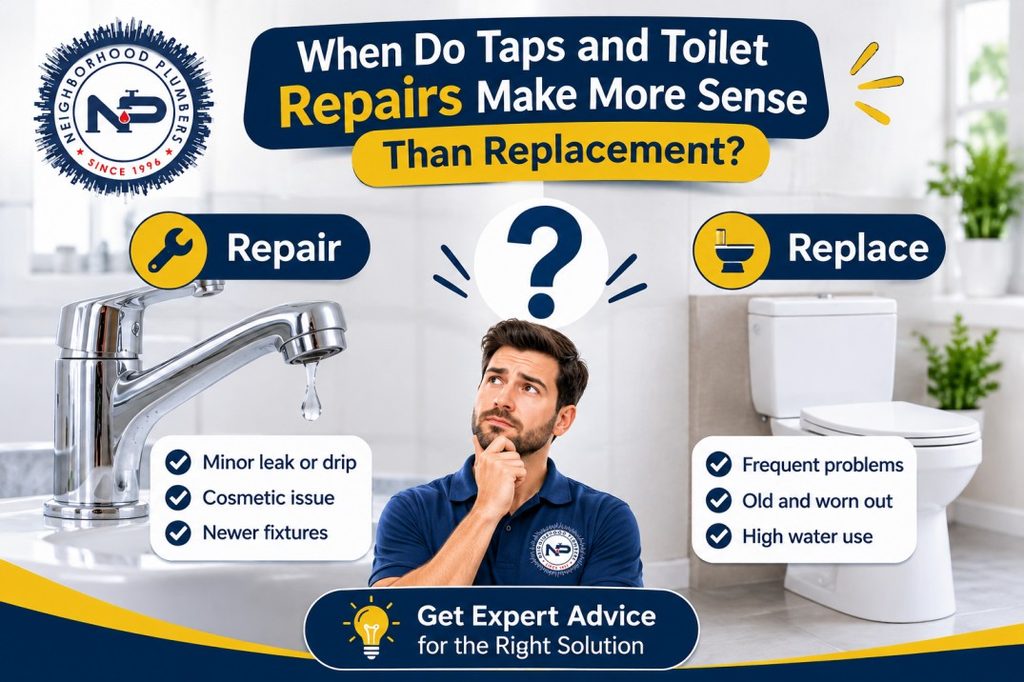
- Repair when the fault is a single worn part. A washer, cartridge, seal or valve is designed to be replaced. If the body of the tap or toilet is sound, a repair restores it to full working order.
- Replace when the body is damaged. Cracked ceramics, corroded tap bodies and stripped threads cannot be repaired safely. A patch on these will fail again.
- Replace when parts are hard to find. Some older or imported fittings have no spare parts available. In that case, you may face the same fault again and again.
- Replace when the same fault keeps returning. If a tap or toilet needs fixing several times a year, the problem is usually the fitting itself. A new unit often solves it for good.
How Do You Spot a Leaking Tap and Toilet Problem Early?
Leaking tap and toilet repairs are simpler when you catch the issue early. Try these quick checks at home:
- The food colouring test. Add a few drops of food colouring to the toilet cistern. Wait 20 minutes without flushing. If colour shows in the bowl, the outlet seal is leaking.
- Listen at night. A quiet house makes hissing cisterns and dripping taps easy to hear. Walk past each bathroom before bed once a month.
- Check under basins. Look for damp patches, stains, or swollen cupboard bases under every sink. Flexi hoses under basins can fail without warning, so watch for rust or bulges on their braided covers.
- Watch the water meter. Turn off every tap and appliance, then note the meter reading. If it moves within two hours, water is escaping somewhere.
Common Mistakes Homeowners Make
These mistakes often turn a simple job into a bigger one:
- Over-tightening a dripping tap. Cranking the handle harder squashes the washer and damages the seat. The drip slows for a day, then returns worse than before.
- Buying the wrong parts. Washers, cartridges, and cistern valves come in many sizes. A near match rarely seals properly, and it can damage the fitting.
- Ignoring a running toilet. Many people assume a little trickle does not matter. Over a few months, that trickle adds up to a large volume of wasted water.
- Using harsh cleaners inside the cistern. Bleach tablets and strong chemicals can harden rubber seals and shorten their life.
Expert Tips for Plumbing Services That Last
These tips come from years of fixing taps and toilets across Melbourne:
- Fix both seals at once. If one cistern valve has failed, the other is often the same age. Replacing both together avoids a second visit soon after.
- Ask about your water pressure. If taps and toilets keep wearing out, high pressure may be the real cause. A quick pressure test can reveal it.
- Keep the brand and model details. Take a photo of tap and toilet labels when they are installed. It makes finding the right parts much easier later.
- Use a licensed plumber for anything beyond a washer. In Victoria, installing or replacing toilets, cisterns, and taps connected to the water supply is licensed plumbing work. A licensed plumber also provides a compliance certificate for larger jobs.
What Is the Key Takeaway?
Most taps and toilet repairs come down to a few worn parts. Washers, cartridges, seals, and valves wear out, and replacing them early prevents waste and damage. Replacement only makes sense when the body is damaged, parts are unavailable, or the same fault keeps returning.
Good toilet repair and tap replacement services start with the right diagnosis, not a guess. When a plumber explains the cause and your options, you can choose the fix that lasts.
If a tap is dripping or a toilet will not stop running, do not wait. Early toilet plumbing services and tap fixes stop small faults from growing. The team at Neighborhood Plumbers is always happy to inspect the problem, explain what has failed, and help you decide between a repair and a replacement.
Frequently Asked Questions
How Long Do Leaking Tap Repairs Usually Take?
Most leaking tap repairs take between 20 and 45 minutes. A simple washer change on a compression tap is quick, especially if the seat is in good shape. If the seat needs refacing, allow extra time. Mixer taps need the correct cartridge, so the plumber may need to identify the brand and model first. In most cases, the water only needs to be off for a short time, and you can use the tap again straight after.
Why Does My Toilet Keep Running After I Flush?
A running toilet usually has a worn outlet valve seal or a faulty inlet valve. The outlet seal lets water leak from the cistern into the pan. The inlet valve may also fail to shut off, so water flows into the overflow pipe. Try the food colouring test to check the outlet seal. If you hear constant hissing, the inlet valve is the likely cause. A plumber can test both and replace the faulty parts in one visit.
Can I Replace a Tap Washer Myself?
Many homeowners can change a washer on a simple compression tap. You need to turn off the water, remove the handle and headwork, and fit the correct washer. The challenge is getting the size right and checking the seat for wear. If the seat is pitted, a new washer will not seal. Mixer taps, cartridges, and anything that changes the plumbing are best left to a licensed plumber. A poor job can cause a bigger leak.
When Should I Replace My Toilet Instead of Repairing It?
Consider replacing your toilet if the pan or cistern is cracked, if spare parts are no longer available, or if it is an old single-flush model. Older single-flush toilets can use up to 11 litres per flush, while modern dual-flush models use much less. Repeated faults are another sign. If you call for toilet plumbing services several times a year, a new toilet with a good WELS rating may give better reliability and lower water use.
What Should Good Toilet Repair and Tap Replacement Services Include?
Good toilet repair and tap replacement services start with a clear diagnosis. The plumber should explain what has failed and why, then outline repair and replacement options. They should use parts that match your fittings, test the work, and check for related issues such as high water pressure. In Victoria, they must hold the right licence or registration. For larger jobs, they should also provide a compliance certificate. Ask for photos of worn parts if you want to see the problem.