Tag Archives: Licensed Plumber Melbourne

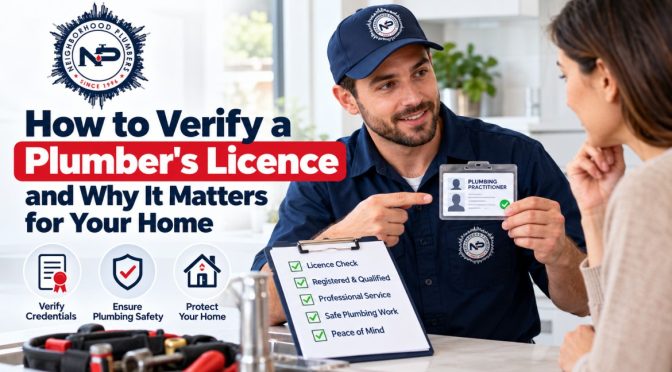
How to Verify a Plumber’s Licensed and Why It Matters for Your Home?

A leaking pipe, blocked drain, faulty hot water system, or unexpected plumbing emergency can quickly become a stressful problem for any homeowner. When water is spreading across the floor, or a bathroom renovation is running behind schedule, finding someone who can fix the issue promptly often becomes the main priority. However, choosing a plumber based on availability or price alone can create bigger problems if their qualifications and authorisations have not been checked.

Hiring a Licensed Plumber Melbourne homeowners can verify independently is an important step towards protecting your property, your household and your investment. A plumber may advertise professional services, display positive customer reviews or offer an attractive quote, but these details do not automatically establish that they hold the appropriate licence or registration for the work you need.

In Victoria, plumbing work is regulated through a formal licensing and registration system administered by the Victorian Building Authority (VBA), now operating within the Building and Plumbing Commission (BPC). The applicable requirements depend on the type of plumbing work, the practitioner’s authorisation, and whether the job requires a compliance certificate.

This Plumbing Licence Guide explains how to check a plumber’s credentials, understand the difference between registration and licensing, identify warning signs and make informed decisions before allowing someone to work on your home. Whether you are arranging routine maintenance, repairing a water leak or planning a major renovation, knowing what to verify can help you avoid unnecessary risks.

The goal is straightforward: understand who is qualified to carry out your plumbing work, confirm their authorisation through official sources and keep the right documentation once the job is complete.

What Is a Plumbing Licence in Melbourne?

A plumbing licence is an official authorisation that allows an appropriately qualified individual to perform specified plumbing work within the scope of their licence. It demonstrates that the practitioner has met the relevant competency and regulatory requirements for the authorised work.

However, not every plumbing task has identical licensing requirements. Victorian regulations distinguish between different classes of plumbing work, and the required authorisation depends on the nature and complexity of the job.

For example, a straightforward maintenance task may fall under different requirements from installing a gas appliance, altering drainage infrastructure or completing specialised work during a bathroom renovation.

A qualified practitioner should be able to explain which authorisation applies to your particular project and whether additional certification or inspection requirements are relevant.

Why a Licence Is More Than a Piece of Paper

A licence number is useful because it gives you a way to check a practitioner’s credentials against an official register. It is not, by itself, a guarantee that every job will be completed perfectly.

The real value comes from combining verified qualifications with clear communication, appropriate insurance, sound workmanship and the documentation required for the work.

Before hiring a plumber, consider these questions:

  • Are they currently licensed or registered for the work required?
  • Does their authorisation cover the relevant plumbing category?
  • Can they explain the proposed work and applicable safety requirements?
  • Will they provide a written quote and appropriate documentation?
  • Can they explain whether a compliance certificate is required?

These checks provide a more reliable basis for choosing a professional than relying on advertising claims alone.

1. Licensed Plumber vs Registered Plumber Melbourne: What Is the Difference?

One of the most important checks homeowners can make is understanding the difference between a Licensed Plumber Melbourne residents hire and a Registered Plumber Melbourne residents may engage for certain types of work.

According to the Building and Plumbing Commission, Victoria has two levels of plumbing accreditation: registration and licensing. Both allow a practitioner to perform work within their authorised classes, but their responsibilities and permissions differ.

What Can a Registered Plumber Do?

A registered plumber can legally perform plumbing work within the classes in which they are registered. However, registration alone does not authorise the practitioner to supervise apprentices or other plumbers or issue plumbing compliance certificates.

Where a job requires a compliance certificate, the registered plumber must work under the appropriate licensed plumber’s supervision, or the work must be arranged in accordance with the applicable regulatory requirements.

For example, a registered plumber may undertake authorised work on a residential plumbing project while the appropriately licensed plumber takes responsibility for the required supervision and certification.

What Can a Licensed Plumber Do?

A licensed plumber has additional qualifications, experience and responsibilities. Within their licensed classes, they can carry out authorised work, undertake relevant design work, supervise apprentices and registered plumbers, and issue compliance certificates where legally permitted.

This distinction is particularly important for homeowners arranging substantial plumbing repairs, gas-fitting work or installations that require formal certification.

The key point is that registration does not automatically mean a plumber is unqualified. Instead, the correct question is whether their accreditation, supervision arrangements and permitted responsibilities match the work being performed.

2. How to Verify a Plumber’s Licence in Melbourne

Checking credentials should happen before you accept a quote, sign an agreement or allow work to begin. The official practitioner register provides a more dependable source of information than a website, business card or verbal assurance.

The Building and Plumbing Commission provides an online tool for checking practitioner registration, licence status, authorised work categories and applicable conditions.

Step 1: Ask for the Plumber’s Full Name and Licence Number

Request the practitioner’s full name, accreditation details, and licence or registration number. A professional should understand why a customer wants to verify these details.

If a company sends a different plumber to your property from the person who prepared the quote, ask for the credentials of the person who will actually carry out the work.

This is particularly relevant when a larger business uses employees, subcontractors or apprentices. The business name alone does not establish the qualifications of every individual attending your home.

Step 2: Use the Official Practitioner Register

Visit the Building and Plumbing Commission’s Find a Practitioner page.

Search using the practitioner’s name, business name or accreditation number, where available. Confirm that the result corresponds to the person you intend to engage.

Do not rely exclusively on a screenshot sent by the contractor. Open the official register yourself so that you can review the information directly.

Step 3: Confirm the Status Is Current

Check whether the practitioner’s registration or licence is current rather than expired, suspended or otherwise restricted.

This matters because a person who previously held a valid licence may not necessarily hold the same authorisation today. Victorian plumbing licences and registrations have different renewal periods, so current status should be checked at the time of engagement.

If the register does not clearly establish current authorisation, contact the regulator before proceeding.

Step 4: Check the Authorised Work Categories

A valid accreditation does not necessarily authorise every type of plumbing work.

Review the classes listed on the register and compare them with your planned project. Work involving water supply, sanitary drainage, roofing, gas-fitting or other specialised areas may require different authorisations.

For instance, a homeowner planning a gas hot water installation should not assume that a practitioner authorised for unrelated plumbing work can automatically perform the gas-fitting component.

Ask the plumber to explain which accreditation covers the job and whether another appropriately authorised professional is required.

Step 5: Review Conditions and Available Disciplinary Information

The official register may identify restrictions, conditions and relevant compliance or enforcement information.

Check these details rather than stopping as soon as you find a matching name. The regulator also cautions that not every complaint, enquiry or compliance activity appears in its published records. Therefore, an empty enforcement history should not be treated as proof of perfect workmanship.

Step 6: Request to See the Practitioner’s ID Card

Registered and licensed plumbing practitioners receive a Building and Plumbing Commission identification card showing their accredited classes. Practitioners are required to carry it when undertaking plumbing work and show it upon request.

Compare the details on the card with the official register. If the name, accreditation, or work category does not match, clarify the discrepancy before allowing work to continue.

3. Plumbing Safety: Why Licence Verification Protects Your Home

Plumbing work affects more than the convenience of using a tap or shower. Poorly executed installations can cause water damage, drainage problems, gas-related hazards and issues that remain hidden until a much larger repair becomes necessary.

A leaking connection behind a wall, for example, may gradually damage plasterboard, flooring and cabinetry. A drainage defect may produce recurring blockages or unpleasant odours. Incorrect gas-related work can create serious safety risks.

Choosing a suitably authorised professional helps ensure that the work is undertaken within the applicable regulatory framework.

Protecting Your Property From Expensive Repairs

Consider a homeowner who hires an inexpensive contractor to replace bathroom pipework. The visible fixtures look neat, but a concealed joint begins leaking several weeks later.

The owner may then need to pay for leak detection, removal of damaged finishes, pipe repairs, and restoration work. If the original contractor cannot be contacted or the work was not properly documented, resolving the problem may become more difficult.

Verifying credentials before the job begins does not eliminate every possibility of defective work. It does, however, provide a meaningful first step towards accountability and appropriate compliance.

Reducing Risks During Gas and Hot Water Work

Gas-fitting and hot water installations require particular attention because errors can affect occupant safety as well as property condition.

For applicable gas work, confirm the practitioner’s relevant authorisation and ask what testing, commissioning and certification will be provided. Some complex gas installations follow separate requirements administered by Energy Safe Victoria, so a standard plumbing compliance certificate should not be assumed to cover every installation.

If you suspect a gas leak, leave the affected area, avoid operating electrical switches or creating ignition sources, and contact the appropriate emergency gas service from a safe location. Do not attempt to investigate or repair gas equipment yourself.

Understanding Australian Plumbing Regulations

Australian plumbing requirements operate through national plumbing standards and state or territory regulatory frameworks. For Melbourne homeowners, Victorian requirements are especially relevant.

The applicable rules may cover authorised practitioners, installation methods, suitable materials, testing, drainage and certification. Requirements depend on the work being performed, so general advice found online should not replace project-specific guidance from the regulator or a qualified professional.

This is why an experienced licensed plumbing contractor should be able to explain the relevant requirements rather than simply promising that everything will be compliant.

4. When Is a Plumbing Compliance Certificate Required?

Licence verification and compliance certification are related, but they serve different purposes.

Checking a licence helps establish whether a practitioner is authorised to perform particular work. A compliance certificate provides formal confirmation that covered plumbing work complies with the prescribed requirements.

In Victoria, a compliance certificate is generally required when the total value of the relevant plumbing work exceeds $750, including labour, materials, appliances and GST. Certain work, including specified gas installations and below-ground sanitary drainage work, requires certification regardless of the total price. Specific exceptions and separate arrangements may apply.

What Should You Do Before Work Starts?

Ask the plumber whether your project requires a compliance certificate and have the answer confirmed before work begins.

You should understand:

  • What work is included in the quote.
  • Whether the job falls within a category requiring certification.
  • Who will be responsible for issuing the certificate.
  • What testing or inspection is expected.
  • When you will receive the completed documentation.

Where a compliance certificate is required, the licensed plumber must generally provide it to the customer and lodge it with the regulator within five days of completing the work, subject to the applicable rules.

Keep Your Records After Completion

Save the quote, invoice, payment records, product information, photographs of relevant work and compliance certificate, where applicable.

These documents may be useful if you need follow-up repairs, make an insurance enquiry, sell your property or investigate a workmanship dispute.

You can also use the regulator’s compliance certificate lookup to check available certificate records.

A certificate is an important compliance document, but it should not be interpreted as a guarantee that no future maintenance will ever be required.

5. Home Repairs: Warning Signs to Watch for Before Hiring a Plumber

Not every plumbing problem requires a large project, but even relatively small repairs deserve appropriate care. Knowing the warning signs can help you avoid making a rushed decision.

Warning Sign 1: The Plumber Refuses to Provide Accreditation Details

If someone claims to be qualified but refuses to provide their name or relevant accreditation details, treat that as a reason to pause.

There may be a straightforward explanation for a missing detail, but you should resolve the issue through the official register before authorising regulated plumbing work.

Warning Sign 2: The Accreditation Does Not Match the Job

A practitioner may hold valid registration but lack the authorisation needed for a particular task. Another possibility is that the person quoting the work is not the person who will perform it.

Ask for a clear explanation of the proposed work, the practitioner’s role and any required supervision arrangements.

Warning Sign 3: You Receive an Unclear Quote

A vague quote can create disagreements about labour, materials, additional repairs and certification.

Request a written breakdown that identifies the work to be performed, the expected cost, relevant exclusions and how variations will be approved. If an unexpected problem is discovered after work begins, ask for an explanation and an updated price before approving non-emergency additional work.

Warning Sign 4: The Contractor Dismisses Safety or Documentation

Be cautious if a contractor insists that testing, required certification or basic documentation is unnecessary without explaining why.

Some minor tasks do not require the same documentation as substantial installations. However, a professional should be able to explain which requirements apply to your particular job.

Warning Sign 5: You Are Pressured to Pay Everything Upfront

Payment arrangements vary according to the project, but pressure to make a large immediate payment without a clear written agreement deserves scrutiny.

Check the business’s identity, understand the payment schedule and retain receipts. A legitimate emergency response may require prompt authorisation, but urgency should not prevent reasonable verification.

6. Expert Advice: How to Choose Qualified Plumbing Professionals

Finding a practitioner whose credentials check out is the starting point. The next step is evaluating how they communicate, manage the work, and document the outcome.

For homeowners comparing providers, including those considering Neighborhood Plumbers, the following checks offer a practical way to assess the service without relying on advertising claims alone.

Ask Questions That Reveal Professional Competence

Before accepting a quote, ask:

  • What is causing the problem, and how will you confirm the diagnosis?
  • Which repair options are available, and what are their advantages and limitations?
  • Are the proposed materials suitable for the existing plumbing system?
  • Will the work require access through walls, ceilings or flooring?
  • Is a compliance certificate required for this project?
  • What testing will be carried out before the work is considered complete?
  • What warranty or workmanship support applies to the quoted work?

A professional answer should be specific to your situation. For example, recurring drain blockages may require an investigation into the underlying cause rather than repeatedly clearing the immediate obstruction.

Compare Quotes on Scope, Not Just Price

A lower quote is not necessarily better value if it excludes essential testing, suitable materials or work needed to address the underlying fault.

Compare quotes using the same criteria:

What to compareWhat to look for
Scope of workA clear description of the repair or installation
QualificationsAppropriate, current accreditation for the work
MaterialsIdentifiable products suitable for the intended use
PricingLabour, materials, GST and possible additional costs
ComplianceExplanation of required certificates and testing
After-service supportClear terms for workmanship issues and follow-up

If two quotes differ substantially, ask each provider to explain the difference. One may include additional repairs, while another may only address the visible symptom.

Check Insurance and Business Details

Ask whether the practitioner maintains the insurance required for their licensed work and whether relevant public liability cover is in place.

Also confirm the business’s identity and retain the written agreement. Remember that in Victoria, plumbing accreditation is granted to individuals, not to plumbing companies themselves. A company’s branding or business registration does not replace the need to check the individual practitioner performing the regulated work.

Make a Final Inspection Before Signing Off

When the job is complete, ask the plumber to explain what was repaired, what was tested and whether any limitations remain.

Where appropriate, check that taps, drains and fixtures operate as expected and that the work area has been left in a reasonable condition. Request any required compliance certificate and keep it with your property records.

For concealed work, photographs taken during installation can be especially useful for future maintenance.

7. Common Misconceptions About Plumbing Licences

Several assumptions can lead homeowners to overlook important checks.

Misconception 1: Every registered plumber is unqualified.

This is incorrect. Registration is a recognised form of accreditation in Victoria. The important distinction is the work the practitioner may perform and whether licensing or supervision is required for the particular task.

Misconception 2: A business website proves that a plumber is licensed.

Advertising can help you find a provider, but it is not independent evidence of current accreditation. Check the official register.

Misconception 3: A licence means every type of plumbing work is permitted.

A practitioner’s authorisation is limited to the relevant classes. Verify the scope rather than assuming one licence covers every specialised task.

Misconception 4: Small jobs never need a compliance certificate.

Certain categories of work require certification regardless of price. The nature of the work matters as well as its total value.

Misconception 5: A compliance certificate means maintenance is no longer necessary.

A certificate confirms compliance for the covered work under the applicable scheme. Plumbing systems still require normal maintenance, and components can deteriorate over time.

Misconception 6: Online reviews are enough to establish trust.

Reviews may provide useful information about communication and customer experience, but they cannot replace credential checks, a clear quote and appropriate documentation.

8. A Practical Plumbing Licence Guide Checklist

Use this checklist before engaging a plumber in Melbourne.

  • Obtain the practitioner’s full name and accreditation number.
  • Verify their details through the official Building and Plumbing Commission register.
  • Confirm their licence or registration is current.
  • Check that their authorised classes cover the planned work.
  • Review any relevant restrictions or published enforcement information.
  • Ask about required supervision and compliance certification.
  • Obtain a written quote with a clear scope and payment terms.
  • Confirm relevant insurance arrangements.
  • Keep the invoice, testing records, and required certificates.
  • Ask for an explanation of completed work and any future maintenance needs.

This process does not need to be complicated. A few minutes spent checking the official register and clarifying the project details can help you make a more informed decision.

The Plumbing Licence Guide approach is simple: verify first, agree on the work in writing, and retain evidence of what has been completed.

Conclusion: Verify First for Safer Plumbing Work

Choosing the right plumber involves more than comparing prices or finding someone who can arrive quickly. Checking accreditation, understanding the difference between registration and licensing, confirming the authorised work categories, and establishing whether certification is required all contribute to a more informed hiring decision.

For homeowners looking for a Licensed Plumber Melbourne, property owners can verify that the most reliable starting point is the official practitioner register. Follow that check with a written quote, clear communication, appropriate insurance enquiries, and proper records of the completed work.

These steps are especially important for gas-fitting, drainage alterations, hot water installations and substantial plumbing repairs, where poor workmanship can create safety risks or expensive damage.

Neighborhood Plumbers can be considered as part of your search for a plumbing provider, but the same independent verification process should apply to any business you choose. Confirm the individual practitioner’s credentials and ensure that the proposed work meets the relevant Victorian requirements.

Ultimately, a careful approach to hiring helps you protect your home, understand your responsibilities and make decisions based on verified information rather than promises alone.

Frequently Asked Questions

1. How do I check whether a plumber is licensed in Melbourne?

Visit the Building and Plumbing Commission’s practitioner search. Search using the plumber’s name, business name or accreditation number. Confirm their current status, authorised work classes and any relevant conditions. If the information is unclear or inconsistent, contact the regulator before engaging them.

2. Is a registered plumber the same as a licensed plumber in Victoria?

No. Both are recognised accreditation levels, but their permitted responsibilities differ. A registered plumber can carry out work within their registered classes but cannot independently issue plumbing compliance certificates or supervise other plumbers under registration alone. A licensed plumber has additional permissions and responsibilities within their licensed classes, including issuing certificates where authorised. The right practitioner depends on the job and its certification requirements.

3. Do I need a licensed plumber for every home plumbing repair?

You should use an appropriately registered or licensed practitioner for regulated plumbing work. Not every task has identical requirements, and the required accreditation depends on the type of work. For example, a repair involving regulated pipework may have different requirements from a simple non-plumbing household maintenance task. If you are unsure, check the relevant requirements with the regulator before attempting the work or hiring someone.

4. When must a Melbourne plumber provide a compliance certificate?

In Victoria, certification is generally required when the total value of relevant plumbing work exceeds $750, including labour, materials, appliances and GST. Certain types of work, including specified gas installations and below-ground sanitary drainage work, require certification regardless of cost. The rules contain specific details and exceptions, so ask your plumber to confirm whether your particular project qualifies. Where required, the certificate must generally be provided to the customer within five days of completion.

5. What should I do if a plumber refuses to show their licence or provide a required compliance certificate?

First, request the relevant information in writing and explain which details you need to verify. Check the practitioner’s status through the official register. If the work is already complete and a required certificate has not been provided, make a written request and retain your correspondence, quote, and invoice. If the matter remains unresolved, contact the Building and Plumbing Commission to ask about the appropriate complaint or dispute process. Do not assume that a verbal assurance or an invoice substitutes for a required compliance certificate.
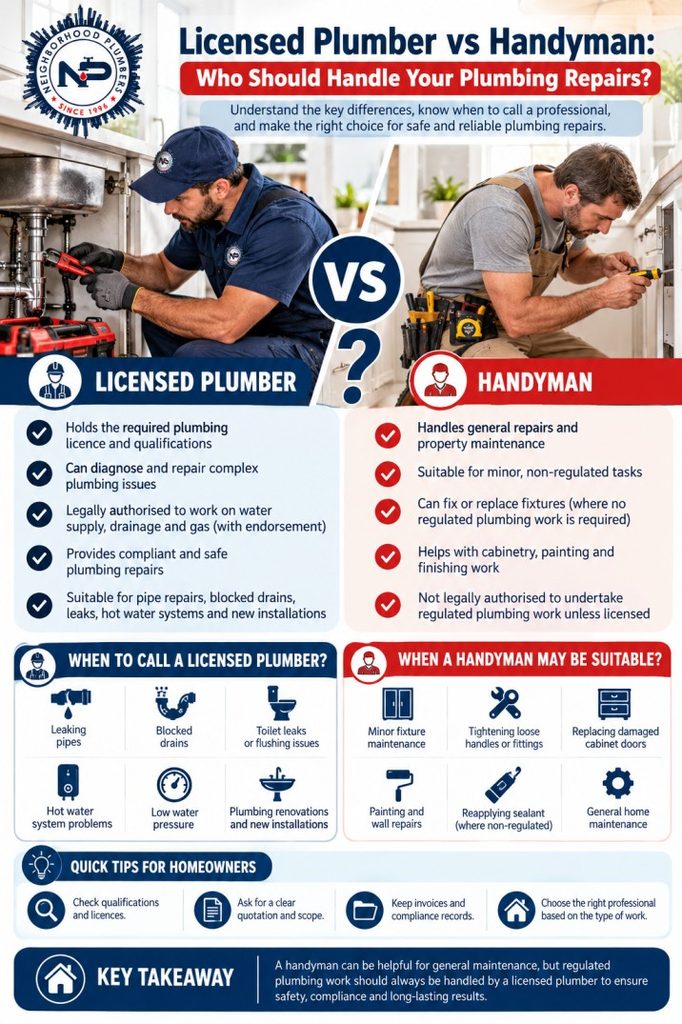
Licensed Plumber vs Handyman: Who Should Handle Your Plumbing Repairs?

When a tap starts dripping, a pipe begins leaking, or a toilet refuses to flush, the first question many homeowners ask is whether they need a licensed plumber or a handyman. Both professionals can help with home maintenance, but their skills, responsibilities and legal authority are not the same.

Choosing the wrong person for a plumbing job can lead to recurring leaks, water damage, poor workmanship and unexpected repair costs. Some minor maintenance tasks are suitable for a capable handyman, while other jobs require specialist plumbing knowledge, appropriate licensing and compliance with Victorian regulations.

Understanding the difference between a Plumber vs Handyman can help you make a safer and more cost-effective decision. If you are comparing options for a Licensed Plumber Melbourne, it is important to consider the nature of the problem, the potential risks and the qualifications required for the work.

This guide explains which professional is suitable for different household plumbing tasks, when a licensed plumber is necessary, and how to avoid common mistakes when arranging plumbing repairs.

Why Does the Difference Between a Licensed Plumber and a Handyman Matter?

Plumbing systems involve interconnected pipes, drainage lines, water pressure, fixtures and, in some homes, gas appliances. A problem that appears minor on the surface may have a more complicated cause.

For example, a small damp patch beneath a kitchen sink might result from a loose connection. However, it could also indicate a cracked pipe, a failing waste connection or water escaping from a concealed fitting.

A handyman may be able to identify an obvious maintenance issue and complete certain minor tasks. However, diagnosing a hidden plumbing fault or altering a water supply system requires specific technical knowledge.

The distinction matters for three main reasons.

Safety: Incorrect repairs can cause leaks, contamination risks, flooding or damage to surrounding structures.

Legal compliance: Certain plumbing work in Victoria must be performed by an appropriately licensed or registered plumbing practitioner.

Long-term reliability: A repair should address the cause of a problem rather than temporarily conceal its symptoms.

The right choice depends on what needs to be done, not simply on which professional offers the lowest initial price.

What Is a Licensed Plumber?

A licensed plumber is a plumbing professional who holds the appropriate licence for the work they are legally authorised to perform. In Victoria, the Victorian Building Authority (VBA), operating within the state’s building and plumbing regulatory framework, oversees plumbing practitioner registration and licensing.

Plumbing qualifications and authorisations vary according to the type of work involved. For example, water supply plumbing, sanitary plumbing, drainage and gasfitting involve different technical requirements and may require specific endorsements.

A suitably qualified plumber can assess a plumbing problem, identify its likely cause, recommend an appropriate repair and carry out work within their authorised scope.

What Does a Licensed Plumber Do?

Depending on their qualifications and endorsements, plumbing practitioners may undertake work such as:

  • Repairing leaking water supply pipes.
  • Diagnosing water pressure problems.
  • Repairing or replacing taps, valves and plumbing fittings.
  • Investigating blocked drains and sewer-related problems.
  • Repairing damaged drainage connections.
  • Installing or replacing water heaters where appropriately authorised.
  • Modifying water supply and sanitary plumbing systems.
  • Identifying faults that may be contributing to repeated leaks.
  • Completing relevant compliance documentation when required.

Not every plumber is authorised to perform every type of plumbing work. Homeowners should confirm that the practitioner holds the relevant registration or licence for the specific job.

Why Are Plumbing Qualifications Important?

Professional plumbing involves more than connecting pipes or tightening fittings. A plumber must understand pipe materials, flow rates, pressure, drainage gradients, backflow risks and the compatibility of different plumbing components.

Consider a home where the water pressure has suddenly dropped. Replacing a tap might not solve the issue if the underlying cause is a faulty pressure-control device, a partially closed isolation valve or a leak elsewhere in the system.

A qualified professional can investigate these possibilities systematically instead of relying on guesswork.

This is particularly important when a repair involves concealed pipework, changes to existing plumbing or connections to a larger water or drainage system.

What Can a Handyman Do?

A handyman generally handles minor repairs, installations and general property maintenance. Their services may include fixing cupboard doors, assembling furniture, patching small wall defects and carrying out certain simple fixture-related tasks.

However, a handyman does not automatically have the qualifications or legal authority to undertake regulated plumbing work.

The important distinction is between general maintenance and work that falls within Victoria’s regulated plumbing activities.

When Is a Handyman Suitable?

A handyman may be appropriate for tasks that do not require regulated plumbing work, provided they have the necessary practical skills.

Examples may include:

  • Tightening a loose cupboard handle beneath a sink.
  • Repairing water-damaged cabinet doors after the leak has been professionally resolved.
  • Replacing a damaged vanity drawer.
  • Reapplying suitable sealant around a fixture where the work is non-regulated and appropriate for their skills.
  • Repairing wall or floor finishes after plumbing work has been completed.
  • Fixing a loose toilet-roll holder or towel rail.
  • Completing general home maintenance unrelated to modifying plumbing connections.

The precise boundary depends on the task. A job that appears to involve only a fixture may require disconnecting or altering water supply, drainage or other regulated plumbing components.

For this reason, homeowners should not assume that every tap, toilet or sink repair is suitable for a handyman.

What Should a Handyman Not Do Without the Required Authority?

A handyman should not undertake plumbing work that legally requires a licensed or registered practitioner unless they hold the appropriate authorisation themselves.

Examples of work that may require an appropriately authorised plumber include:

  • Altering water supply pipework.
  • Installing new plumbing connections.
  • Modifying drainage systems.
  • Repairing certain concealed or pressurised pipework.
  • Undertaking regulated sanitary plumbing work.
  • Performing gasfitting without the required gasfitting authorisation.

A handyman who also holds the relevant plumbing qualifications and authorisation may legally perform work within that scope. The professional’s actual credentials matter more than their job title.

Plumber vs Handyman: What Is the Difference?

The main difference is the type of work each professional is qualified and authorised to perform.

ComparisonLicensed PlumberHandyman
Main responsibilityPlumbing diagnosis, repair and installation within their authorised scopeGeneral repairs and property maintenance
Plumbing qualificationsHolds relevant plumbing registration or licenceQualifications vary; plumbing authority is not automatic
Pipe RepairsSuitable for regulated pipe repairs within their scopeLimited to tasks that do not require unauthorised plumbing work
Water supply modificationsRequires appropriate plumbing authorisationShould not undertake regulated work without the required authority
Drainage faultsCan investigate and repair within their scopeMay assist with non-plumbing maintenance after the fault is resolved
General household repairsMay provide related services, depending on the businessCommon area of work
Plumbing complianceCan provide applicable documentation when authorised and requiredCannot replace required plumbing compliance documentation
Best usePlumbing faults, regulated repairs and specialist diagnosisSuitable minor maintenance and non-regulated repairs

The distinction is not about one professional being more useful than the other. Both can play an important role in maintaining a property, provided the job matches their skills and legal authority.

When Should You Hire a Licensed Plumber in Melbourne?

Some plumbing problems are easy to notice but difficult to diagnose correctly. If a task involves water supply, drainage, concealed pipework or potentially significant water damage, a licensed plumbing professional is generally the safer choice.

Here are common situations where specialist plumbing assistance is appropriate.

1. Leaking Pipes and Water Connections

A leaking pipe can cause damage to cabinetry, plasterboard, flooring and structural materials. Even a slow leak may worsen over time, especially if the pipe is concealed behind a wall or beneath a floor.

For example, a homeowner might notice a damp patch inside a kitchen cabinet. Drying the cabinet and applying sealant may make the area appear better temporarily, but neither action identifies the source of the moisture.

A plumber can inspect the accessible connections, test the system where appropriate and determine whether the issue involves a fitting, pipe or another component.

For regulated pipe repairs, choose a practitioner authorised to perform the required work.

2. Blocked Drains and Sewer Problems

A slow-draining sink may be caused by an accessible accumulation of hair, grease or food debris. However, recurring blockages can indicate a deeper issue.

Possible causes include:

  • Build-up inside the drainage line.
  • Damaged or displaced pipes.
  • Tree-root intrusion.
  • Incorrect drainage gradients.
  • Problems with shared or external sewer connections.

If several fixtures drain slowly at the same time, or wastewater returns through a floor drain, the problem may involve the property’s larger drainage system.

A plumbing professional can investigate the cause and determine the appropriate repair instead of repeatedly treating the same symptoms.

3. Toilet Leaks and Flushing Problems

A toilet that continuously runs, leaks around its base or struggles to flush may have a faulty internal component, a damaged seal or a problem with its water supply or drainage.

Some simple observations can help narrow down the issue. For example, a constantly refilling cistern may suggest a problem with its inlet valve or flushing mechanism.

However, water leaking around the toilet’s base requires careful investigation because it may involve the seal, waste connection or another fault.

A handyman may be able to address unrelated maintenance around the toilet, but plumbing repairs should be completed by a practitioner with the required authorisation.

4. Hot Water System Problems

A hot water system can develop leaks, inconsistent temperatures, unusual noises or problems with its controls.

The appropriate response depends on the system type and the source of the fault. Gas hot water systems introduce additional safety considerations, while electric systems may involve electrical hazards.

Do not attempt to dismantle gas components, bypass safety devices or work on electrical connections unless appropriately qualified and authorised.

A suitable plumbing professional can assess the issue and determine whether a plumbing, gasfitting or electrical specialist is required.

5. Low Water Pressure

Low water pressure can affect showers, taps and appliances. The cause may be a partially closed valve, a faulty pressure-control component, a leak, a restriction or an issue with the wider water supply.

Replacing individual fittings without investigating the underlying problem may waste money.

A plumber can assess the affected fixtures, compare pressure at different points where appropriate and recommend a repair based on the findings.

6. Plumbing Renovations and New Installations

Renovating a bathroom, kitchen or laundry may involve moving water outlets, changing drainage connections or installing new fixtures.

These tasks can require regulated plumbing work and must comply with applicable Victorian requirements.

Before work begins, confirm which practitioner will undertake the plumbing, whether permits or compliance certificates are required, and how the new installation will be tested.

A handyman can help with cabinetry, painting, shelving and other suitable finishing work, but regulated plumbing should be allocated to an appropriately authorised professional.

Which Plumbing Repairs Can a Handyman Handle?

Not every maintenance issue requires a plumber to complete the entire job. The key is to separate the plumbing fault from the surrounding property repairs.

For instance, suppose a leaking pipe damages the base of a bathroom vanity.

A sensible sequence is to have an appropriately authorised plumber identify and repair the leak first. Once the area is dry and the plumbing issue has been resolved, a handyman or cabinet repair specialist may replace the damaged panel.

This approach avoids paying one professional to perform work outside their expertise.

Similarly, if a bathroom renovation involves replacing damaged skirting boards, repairing plaster or painting a wall, a handyman may be suitable for those tasks. The plumbing connections should be handled by the appropriate practitioner.

When in doubt, ask the handyman to clarify whether the proposed task involves disconnecting, modifying or repairing a plumbing system. If it does, verify the legal requirements before proceeding.

Understanding Legal Plumbing Requirements in Victoria

Homeowners should understand that plumbing work in Victoria is subject to specific regulatory requirements. The legal position depends on the type of work, the practitioner’s authorisation and the applicable exemptions.

What Is Qualified Plumbing Work?

Qualified plumbing work is work undertaken by someone with the necessary training, competence and authorisation for the particular task.

For regulated work, the relevant practitioner must hold the required registration or licence. Having general trade experience does not automatically satisfy these requirements.

Before hiring a professional, consider the following checks:

  • Confirm the practitioner’s identity and relevant registration or licence.
  • Check that their authorised class or endorsement covers the work.
  • Ask who will physically perform the job.
  • Request a written description of the proposed work.
  • Confirm whether a compliance certificate is required.
  • Keep invoices, relevant certificates and warranty information.

You can verify practitioner details through the Victorian Building Authority’s official practitioner register.

These checks are particularly important for work involving drainage, water supply alterations, gasfitting and major plumbing installations.

What Are the Legal Plumbing Requirements for Homeowners?

Legal plumbing requirements may include using an appropriately authorised practitioner, complying with applicable plumbing standards and obtaining the required documentation.

In Victoria, a plumbing compliance certificate is generally required for prescribed plumbing work where the total value of the work, including labour, materials and GST, is $750 or more. Certain categories, including some gasfitting and specified plumbing work, may require a certificate regardless of the value.

Because the rules can depend on the type of work and current regulations, confirm the requirements with the VBA or your plumbing practitioner before work begins.

A certificate should not be treated as a general guarantee that every aspect of a property is free from defects. It is a regulatory document associated with the relevant plumbing work.

Why Does Compliance Matter?

Non-compliant plumbing can create problems when a fault develops, a property is sold or an insurer investigates water damage.

Poorly completed work may also lead to recurring leaks, drainage issues or expensive corrective repairs.

Keeping accurate records of plumbing work helps homeowners understand what was completed, who performed it and which documents apply.

The objective is not simply to satisfy a regulatory requirement. It is to ensure that the plumbing system operates safely and reliably.

How to Choose the Right Professional for Plumbing Repairs Melbourne?

When arranging Plumbing Repairs Melbourne, avoid making the decision on price alone. A suitable professional should understand the problem, explain the proposed solution and be authorised to undertake the required work.

Ask These Questions Before Booking

1. Are you licensed or registered for this type of work?

Ask for the relevant registration details and verify that the practitioner is authorised for the particular plumbing activity.

2. What do you believe is causing the problem?

A professional should explain the likely cause, what needs to be inspected and whether further investigation may be necessary.

3. What does the quotation include?

Clarify labour, materials, call-out fees, testing, disposal and any additional costs that may arise if hidden damage is discovered.

4. Will you provide the required documentation?

Ask whether a compliance certificate or other records are required and whether these are included in the proposed arrangement.

5. What happens if the problem returns?

Discuss applicable workmanship warranties, product warranties and the process for addressing a recurring fault. Do not assume that every repair carries identical warranty terms.

6. Who will perform the work?

If a business sends subcontractors or several tradespeople, confirm that the person carrying out regulated plumbing work has the required authorisation.

Clear answers to these questions can help you compare quotes fairly and reduce uncertainty before work starts.

Common Mistakes Homeowners Should Avoid

Choosing the Cheapest Quote Without Checking Qualifications

A lower quote may appear attractive, particularly for a repair that seems straightforward. However, the cost of correcting unsuitable or non-compliant work can exceed the initial savings.

Compare the proposed scope, materials, qualifications and documentation rather than looking at the final price alone.

Assuming Every Leak Is a Simple Fix

A leaking tap, damp wall or wet cupboard does not always reveal the underlying cause. Replacing a visible component without investigating the source may leave the real problem unresolved.

Pay attention to recurring moisture, unexplained water bills and dampness that returns after cleaning.

Using Sealant as a Permanent Solution

Sealant can be appropriate for certain joints and finishing applications, but it is not a universal repair for leaking pipes, damaged waste connections or failed plumbing seals.

Using it to conceal an active leak may delay proper diagnosis and allow further damage to develop.

Ignoring Small Warning Signs

A slow-draining basin, intermittent water pressure or occasional damp patch may seem unimportant. However, changes in the way a plumbing system operates can provide useful clues about developing faults.

Investigating a recurring issue early may prevent a more extensive repair later.

Failing to Keep Plumbing Records

Discarding invoices and compliance documentation can make it harder to establish what work was completed and which products were installed.

Keep records in a dedicated digital folder or home maintenance file. Include the date, description of work, practitioner’s details, invoices and relevant certificates.

Expert Advice: How to Prevent Costly Plumbing Problems

Good home maintenance is not only about responding to breakdowns. It also involves recognising warning signs and using the right professional before a small issue becomes a larger one. Neighborhood Plumbers provides reliable plumbing solutions for homes and businesses. From leaking pipes and plumbing repairs to general maintenance, our team focuses on safe, efficient service and quality workmanship. Choose Neighborhood Plumbers for professional assistance and peace of mind.

Know Where Your Main Water Shut-Off Valve Is

Every household should know where its main water isolation valve is located and how to operate it safely.

If a pipe suddenly bursts or a major leak develops, shutting off the water supply may help limit damage while professional assistance is arranged.

If you cannot locate the valve or it is difficult to operate, ask a suitable professional to identify it during a maintenance visit.

Watch for Changes in Water Pressure

A sudden pressure change affecting several fixtures deserves attention, particularly if it occurs alongside dampness, unusual sounds or unexplained water usage.

Do not assume that replacing a showerhead or tap will resolve the issue without further investigation.

Inspect Accessible Areas Periodically

During ordinary cleaning, look beneath sinks and around visible plumbing connections for moisture, corrosion, mineral deposits or damaged flexible hoses.

These checks do not replace professional inspections, but they can help you notice developing problems earlier.

Avoid touching exposed electrical equipment or entering areas where water may have reached electrical installations.

Keep Drains Clear Without Using Aggressive Chemicals Recklessly

Avoid disposing of cooking fats, oils and unsuitable waste through household drains. These materials can contribute to blockages.

Use drain-cleaning products only as directed and never mix chemical cleaners. If a blockage repeatedly returns, seek professional diagnosis rather than relying on increasingly aggressive treatments.

Schedule Repairs Before They Become Emergencies

A small, persistent leak may be easier to address than a failure that has already damaged flooring, cabinetry or plasterboard.

Arrange an assessment when you notice recurring symptoms, and explain when the problem started, how frequently it occurs and which fixtures are affected.

Specific observations help the professional investigate the fault more efficiently.

Conclusion: Make the Right Choice for Your Home

Choosing between a licensed plumber and a handyman comes down to the nature of the task, the professional’s competence and the legal requirements that apply.

A handyman can be valuable for general property maintenance, cosmetic repairs and suitable non-regulated tasks. Plumbing faults involving water supply, drainage, concealed pipes or regulated installations should be assessed and repaired by a practitioner with the appropriate authorisation.

Understanding the difference between a Plumber vs Handyman helps homeowners avoid unnecessary risks, make better decisions and protect their properties from preventable damage.

When comparing options for a Licensed Plumber Melbourne, verify the practitioner’s credentials, ask clear questions about the repair and keep the relevant records. Taking these steps can help you secure safe plumbing repairs and maintain a dependable plumbing system for years to come.

Frequently Asked Questions

1. Can a handyman legally fix a leaking tap in Melbourne?

It depends on the exact task and whether it constitutes regulated plumbing work under Victorian law. Some simple maintenance activities may be permissible, but work involving regulated water supply connections or other plumbing components may require an appropriately licensed or registered practitioner.

Do not assume that a tap repair is automatically exempt because the fitting is small or accessible. Confirm the scope of the proposed work and check the applicable requirements before hiring someone.

2. Do I always need a licensed plumber for pipe repairs?

If the repair involves regulated plumbing work, you must use a practitioner with the required authorisation. This is particularly important for pressurised water pipes, concealed pipework and modifications to water supply or drainage systems.

A non-regulated maintenance task may not require a licensed plumber, depending on its exact nature. When the cause of a leak is unclear, obtaining an assessment from an appropriately authorised plumbing professional is a sensible first step.

3. How can I check whether a plumber is licensed in Victoria?

You can check practitioner details through the Victorian Building Authority’s official register. Confirm the person’s registration or licence status and whether their authorised class or endorsement covers the work you need.

You should also ask for a written quotation, confirm who will carry out the work and clarify whether a plumbing compliance certificate is required. A business name or advertisement alone is not proof of the practitioner’s authorisation.

4. Is hiring a handyman cheaper than hiring a licensed plumber?

A handyman may charge less for suitable general maintenance tasks, but the cheapest option is not always the least expensive in the long term.

If a job requires regulated plumbing work, hiring someone without the required authorisation can lead to additional costs, compliance issues or damage that requires correction. Compare quotes for the same scope of work, including materials, diagnosis, testing and documentation.

For plumbing faults, the priority should be a lawful and reliable repair rather than the lowest initial price.

5. When should I call a plumber instead of attempting a DIY repair?

Contact an appropriately authorised plumber when a leak continues after basic isolation, water pressure changes unexpectedly, a blockage repeatedly returns, wastewater backs up or a plumbing component requires regulated repair or installation.

If a pipe bursts, isolate the water supply if it is safe to do so and arrange urgent assistance. If water reaches electrical equipment, avoid the affected area and seek appropriate emergency assistance.

For suspected gas leaks, do not operate electrical switches or create flames. Leave the affected area and contact the relevant emergency gas service from a safe location.

12 Questions to Ask a Licensed Plumber Melbourne Before Hiring

When something goes wrong with your pipes, drains or water supply, finding a Licensed Plumber Melbourne homeowners can trust is often harder than identifying the plumbing problem itself. Most people do not know whether they need an emergency visit, a simple repair, an inspection or a larger plumbing job. They also want to know what the work will cost and whether the person arriving at the door is properly qualified.

Those questions are reasonable. Plumbing work can affect your home’s water supply, drainage, gas appliances and, in some cases, the structure of the property. A few checks before booking can help you avoid misunderstandings and make a more informed choice.

Hiring a Plumber Guide: 12 Questions Worth Asking Before You Book

This Hiring a Plumber Guide is based on the questions homeowners commonly need answered before allowing plumbing work to begin. Some are about qualifications. Others concern pricing, emergency work, inspections and what happens if the initial problem turns out to be larger than expected.

The aim is not to make the process complicated. It is to help you know what to ask.

1. Is the plumber licensed or registered for the work I need?

This should be one of your first questions.

In Victoria, plumbing practitioners must be licensed, registered, provisionally registered or working as apprentices under the required supervision. The BPC advises homeowners to engage a licensed or registered plumber and provides a public practitioner search tool.

Do not rely solely on a website, business card or verbal claim. Ask for the plumber’s details and check them through the BPC directory.

2. What is the difference between a registered and licensed plumber?

They are not identical.

A registered plumber can lawfully carry out plumbing work within the relevant class, but a licensed plumber has additional experience and responsibilities. Only a licensed plumber can issue a plumbing compliance certificate. Licensed plumbers must also hold the relevant insurance required for their licence.

That distinction becomes particularly important when your job requires certification.

3. Does the plumber have experience with my type of problem?

A blocked kitchen sink and a concealed water leak are very different jobs.

Before booking Plumbing Services Melbourne, explain the symptoms clearly. Mention unusual water pressure, recurring blockages, damp areas, unusual smells, noisy pipes or previous repairs.

A good Local Plumber should ask questions rather than immediately assume they know the cause.

For complex work, experience with the particular plumbing system can be just as important as general plumbing experience.

4. Do I need an inspection before agreeing to repairs?

Not always, but sometimes it is the sensible first step.

Suppose you notice water appearing on the floor near a bathroom. The visible water does not necessarily identify where the leak started. It could be coming from a pipe, fixture, shower area or another concealed location.

A Plumbing Inspection can help establish the condition and likely source before unnecessary repair work begins.

For older properties, inspections can also identify issues such as deteriorated pipework, pressure problems or drainage concerns that are not obvious during everyday use.

5. Should I get a plumbing inspection before buying a house?

If you are buying a property, a professional inspection can provide useful information about hidden defects and likely maintenance needs.

Consumer Affairs Victoria recommends buyers carry out due diligence and consider professional inspections before signing a contract. It notes that an independent inspection report can identify faults and potential repair requirements.

A plumbing-specific inspection can look at areas that a general property inspection may not examine in the same depth, including water supply lines, drainage, fixtures and visible pipe conditions.

It will not guarantee that every concealed problem is discovered, but it can give a buyer more information before making a major financial commitment.

6. How much will the Plumbing Services cost?

There is no sensible universal price for plumbing work.

The cost can change depending on access, labour, materials, urgency, equipment, the complexity of the fault and whether additional work becomes necessary.

Ask what the quoted amount includes.

Consumer Affairs Victoria recommends confirming whether quotes cover items such as transport, materials, labour, call-out fees and weekend or public holiday rates.

That one conversation can prevent a surprisingly common problem: comparing two quotes that actually cover different amounts of work.

7. Should I get more than one Plumbing Quote?

For non-urgent work, comparing quotes can be useful.

Consumer Affairs Victoria recommends getting at least three quotes for smaller home improvement jobs and comparing them against the same detailed description of the work.

But three quotes are not always practical during an active burst pipe or serious flooding.

For planned work, compare the scope rather than simply choosing the lowest number.

8. When should I call an emergency plumber?

Call for help fast if you cannot stop the water, or if the damage is getting worse right now.  

Here are common signs:

  • A pipe has burst  
  • A leak will not slow down or stop  
  • Sewage is backing up  
  • Flooding is starting or spreading  
  • A shutoff valve fails, so you cannot turn off the water  
  • A gas issue that could be dangerous  

If it is safe, turn off the right water supply to reduce further harm while you wait. Do not try complex fixes on your own just because the situation feels urgent. Emergency Plumbing is about controlling the immediate risk first, then properly diagnosing and repairing the fault.

9. Will you explain what caused the problem?

A useful plumbing visit should leave you understanding more than simply what part needs replacing.

For example, a repeatedly blocked drain could result from ongoing buildup, pipe damage, tree root intrusion or another underlying issue.

If the same problem keeps returning, ask why.

Trusted plumbing professionals should be able to explain the likely cause in straightforward language and tell you whether the proposed repair addresses the underlying issue or only the immediate symptom.

10. Will I receive a written quote?

For planned work, a written quote is much easier to understand and compare.

Consumer Affairs Victoria advises that quotes should clearly explain what is covered and how changes, delays and additional work will be handled. The guidance also says to write down what you discuss about price and workmanship.  

If the job changes after work starts, request an updated scope or cost note before you agree to more work, when you can.  

11. Will I get a compliance certificate?

This depends on what type of plumbing job it is. Only a licensed plumber can provide a compliance certificate. These papers are meant to show the work meets the required rules.  

Ask if your job should include one, and make sure you receive the paperwork. This matters a lot for homeowners who may need proof for future property work, insurance, or upkeep records.  

12. How do I confirm the plumber is real?

Check the details before any work begins. The BPC says to look up the plumber’s registration or licence, the job types they are allowed to do, and any limits linked to their approval.   Consumer Affairs Victoria also notes that some fake businesspeople use very low quotes, push people to decide quickly, or ask for money upfront.

Its advice includes checking licence details, getting written quotes and avoiding pressure to accept work immediately.

A legitimate business should not object to reasonable questions about credentials, scope or pricing.

What Experienced Homeowners Do Differently?

People who have dealt with several plumbing problems tend to notice something simple: the cheapest first response is not always the cheapest overall solution.

A recurring blocked drain may need investigation rather than another temporary clearing. A slow leak may deserve attention before it damages cabinetry or flooring. An old pipe may continue failing even after one section is repaired.

That is why choosing a licensed plumber should involve more than checking the hourly rate.

Look for someone who explains the problem, identifies the cause where possible and gives you enough information to decide what happens next.

Final Decision

Hiring a plumber becomes much easier when you know what to ask before the work starts. Check credentials, understand the scope, compare like-for-like quotes for planned work and ask the plumber to explain what caused the problem. These simple steps can help you avoid unnecessary repairs and unpleasant surprises later.

For homeowners looking for a Licensed Plumber Melbourne, the goal should be clear communication and properly qualified work, not simply the lowest advertised price. Neighborhood Plumbers has more than 30 years of local experience and approaches plumbing problems through inspection, diagnosis and practical repair options. Taking a few minutes to ask the right questions can make a significant difference to the quality and clarity of the entire plumbing job.

FAQs

How do I find a licensed plumber in Melbourne?

Use the Building and Plumbing Commission’s practitioner search to check whether the plumber is currently registered or licensed and whether they are authorised for the type of work you need. Ask to see their practitioner ID if necessary. The BPC specifically advises consumers not to rely only on advertising or verbal claims.

What should I ask a plumber before hiring them?

Ask about their licence or registration, experience with your type of problem, the expected scope of work, quote inclusions, call-out charges, likely timeframe and whether compliance documentation is required. For planned work, also ask how additional work will be priced if the initial diagnosis changes.

How many Plumbing Quotes should I get?

For planned, non-urgent work, comparing several quotes can help you understand the scope and market. Consumer Affairs Victoria recommends at least three quotes for certain smaller home improvement projects, provided the quotes are based on the same detailed description of the job.

Is a cheap plumber always a bad choice?

No. Price alone does not establish quality. The problem is when a very low quote leaves out materials, labour, call-out costs or necessary parts. Compare what each quote actually includes, and verify the plumber’s credentials before work begins.