
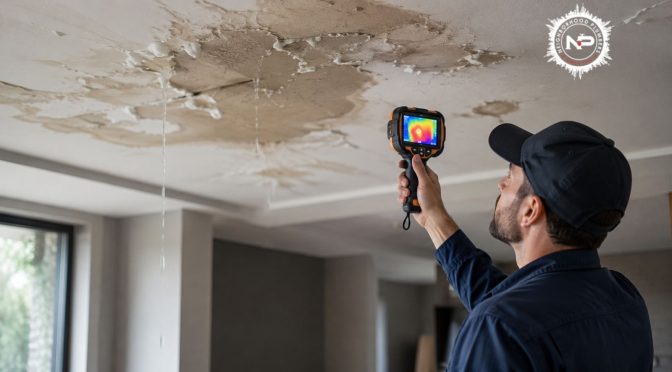
A small water stain on a ceiling or a slightly damp patch near a wall can be easy to ignore. Many homeowners assume it is a minor maintenance issue that can be dealt with later.
In reality, a hidden plumbing leak can continue releasing water for days, weeks, or even months without being obvious. By the time the problem becomes visible, moisture may already have affected plasterboard, timber framing, insulation, flooring, cabinetry, or other parts of the building.
This is why early Leak Detection can make such a significant difference.
Consider a typical Alphington home where a homeowner noticed a faint discoloured patch appearing on a wall near a bathroom. There was no obvious dripping tap, no flooded floor and no strong smell of moisture. Instead of painting over the mark, the homeowner arranged an inspection.
The investigation identified a Hidden Water Leak in Alphington behind the wall. A deteriorating plumbing connection was allowing a small but continuous amount of water to escape. Because the problem was identified early, the affected section could be repaired before moisture caused extensive structural deterioration.
This type of situation demonstrates an important lesson for homeowners: the visible symptom is not always the actual location or size of the plumbing problem.
For homeowners searching for Plumbers in Alphington, understanding how hidden leaks develop, how professionals locate them and what warning signs to take seriously can help prevent much more expensive repairs.
Why Hidden Plumbing Leaks Are So Difficult to Notice
A visible burst pipe is easy to identify. Water may pool on the floor, a fixture may stop working properly, or there may be an obvious flow of water.
Hidden plumbing leaks are different.
They can occur inside:
- Wall cavities
- Ceiling spaces
- Under flooring
- Behind cabinets
- Around bathrooms
- Beneath kitchens
- Near pipe connections
- Around hot-water systems
- Within external or underground pipework
A small leak may release only a limited amount of water at a time. That does not mean it is harmless.
Water can travel along framing, flooring or other building materials before becoming visible. Consequently, the first sign a homeowner notices may be several metres away from the actual leak.
This is one reason professional Leak Detection in Alphington should focus on finding the source rather than simply treating the visible damage.
Leak Detection: A Real-World Alphington Example
Imagine a two-storey Alphington home where the occupants noticed a slight musty smell in a hallway.
There was no obvious plumbing failure. The bathroom appeared normal, the taps worked and there was no standing water.
The homeowner initially suspected the smell was caused by poor ventilation.
However, a closer inspection revealed that the hallway wall was adjacent to bathroom plumbing. Moisture readings indicated elevated moisture inside part of the wall cavity.
Further investigation identified a slow leak around a concealed plumbing connection.
The leak had not yet caused major visible damage, but moisture had begun affecting nearby materials.
The response was relatively straightforward:
- The leak source was identified.
- The damaged plumbing component was repaired.
- The affected area was assessed for moisture.
- Wet materials were allowed to dry appropriately.
- Damaged materials were replaced where necessary.
- The area was monitored to confirm that moisture levels returned to normal.
The important point is what did not happen.
The homeowner did not need to deal with extensive structural repairs, widespread mould remediation or major flooring replacement because the issue was addressed before it progressed.
This is the practical value of early leak detection.
Water Damage Can Develop Before You See Water
Homeowners often associate water damage with obvious flooding.
But significant damage can develop without a dramatic event.
A slow plumbing leak can gradually expose building materials to moisture. Depending on the location and conditions, this may contribute to:
- Swollen timber
- Damaged plasterboard
- Deteriorated flooring
- Staining
- Peeling paint
- Damp insulation
- Musty odours
- Corrosion around plumbing components
- Mould growth where moisture remains
- Deterioration of surrounding finishes
The severity depends on factors such as the amount of water escaping, how long the leak continues, ventilation, material type and whether the affected area can dry.
This is why homeowners should not wait for a ceiling to collapse or a floor to become visibly wet before investigating a suspected plumbing issue.
How Experienced Local Plumbers Find Hidden Leaks
Finding a concealed leak is not simply a matter of opening every wall until a wet pipe is found.
Experienced local plumbers generally begin by collecting information and narrowing down the possible source.
The process may involve several stages.
1. Understanding the Symptoms
The plumber may ask when the problem was first noticed and whether it changes under particular conditions.
Useful observations include:
- A stain that becomes darker after using a bathroom
- A water meter that moves when no fixtures are running
- Unexplained dampness
- A persistent musty smell
- Sudden changes in water pressure
- Unusually high water consumption
- Sounds of running water
- Damp flooring
- Repeated paint bubbling
These details can help establish where the investigation should begin.
2. Checking Accessible Plumbing
The plumber can inspect visible fixtures, connections and pipework first.
This helps rule out simpler causes before more advanced investigation is considered.
3. Using Moisture and Detection Equipment
Depending on the situation, professionals may use specialist equipment to identify areas of abnormal moisture or trace the likely path of a leak.
The exact equipment used depends on the property and suspected leak.
4. Confirming the Source
The objective is not simply to identify a damp area.
A damp patch could be the result of water travelling from another location.
The source should be confirmed as accurately as practical before repairs begin.
Pipe Repairs: Why Fixing the Source Comes First
One of the most important principles in plumbing work is simple:
Do not repair the symptom while leaving the source active.
For example, painting over a stained wall may make the surface look better temporarily, but it does nothing to stop water escaping behind it.
Similarly, replacing damaged flooring without addressing a leaking pipe can result in the same damage returning.
Depending on the cause, Pipe Repairs may involve repairing or replacing a damaged connection, fitting, valve or section of pipework.
The appropriate repair depends on:
- Pipe material
- Age of the plumbing
- Location of the damage
- Condition of surrounding pipework
- Accessibility
- Cause of the failure
- Applicable plumbing requirements
A professional assessment is important because a localised failure can sometimes indicate that other components are also reaching the end of their useful service life.
Emergency Plumbing: When a Leak Needs Immediate Attention
Not every leak requires the same response.
A minor issue may be investigated during normal service hours, while an active leak that is releasing substantial water requires urgent action.
Consider the following situations more serious:
- Water is actively flowing from a wall or ceiling
- A pipe has burst
- Water is spreading across flooring
- The ceiling is visibly bulging
- A major fixture is leaking continuously
- The water cannot be safely controlled
- Electrical components may have been exposed to water
In these circumstances, Emergency Plumbing may be appropriate.
If safe to do so, homeowners should shut off the relevant water supply and avoid interacting with electrical equipment in wet areas.
Do not take unnecessary risks trying to access concealed plumbing yourself.
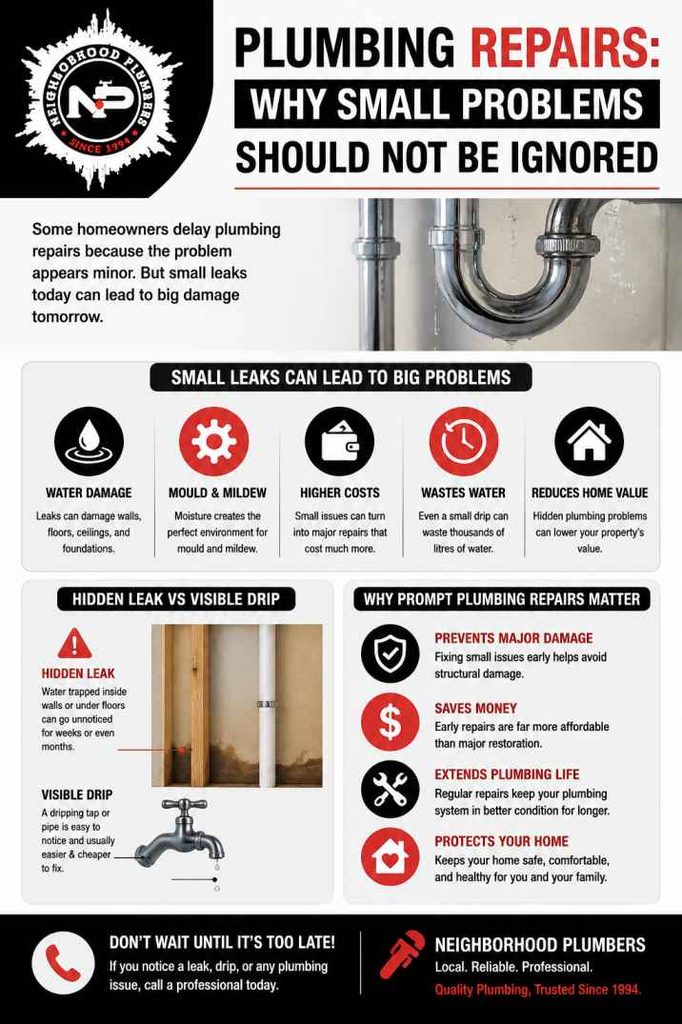
Plumbing Repairs: Why Small Problems Should Not Be Ignored
Some homeowners delay plumbing repairs because the problem appears minor.
A dripping connection may seem insignificant compared with a burst pipe.
However, the financial consequences of a leak are not determined solely by the amount of water escaping.
The location matters.
A small leak inside a wall can cause more complicated damage than a visible drip into an easily accessible sink.
For example, water trapped behind a cabinet may remain unnoticed for an extended period. By the time swelling becomes visible, the cabinet base, wall lining or flooring may already be affected.
Prompt Plumbing Repairs can therefore be a preventative measure rather than simply a response to an emergency.
Warning Signs of a Hidden Water Leak in Alphington
Homeowners should pay attention to changes that do not have an obvious explanation.
Unexplained Water Bills
A sudden or persistent increase in water consumption can indicate a leak, particularly when household usage has not changed.
It is not conclusive on its own, but it is worth investigating.
Damp or Discoloured Walls
Brownish marks, bubbling paint or unexplained dampness can indicate moisture entering from behind the surface.
Musty Odours
A persistent damp or musty smell can sometimes indicate moisture that is not readily visible.
Sounds of Running Water
Hearing water movement when all taps and fixtures are turned off deserves attention.
Flooring Changes
Warping, swelling, lifting or unusual softness can indicate moisture beneath or around flooring.
Repeated Surface Damage
If a stain returns after repainting or a section repeatedly develops dampness, the underlying cause should be investigated rather than repeatedly treating the surface.
Common Mistakes Homeowners Make
Mistake 1: Painting Over a Water Stain
A fresh coat of paint may hide the evidence temporarily.
It does not resolve the plumbing problem.
Mistake 2: Waiting for the Leak to Become Obvious
A leak does not need to produce a puddle to cause damage.
Small leaks can create long-term moisture exposure.
Mistake 3: Assuming the Visible Spot Is the Source
Water can travel through building materials.
The visible stain may be downstream from the actual plumbing failure.
Mistake 4: Ignoring a Small Increase in Water Usage
A gradual change in water consumption may be one of the earliest clues that something is wrong.
Mistake 5: Attempting Complex Repairs Without Understanding the Plumbing
DIY work may be appropriate for very simple maintenance tasks, but concealed plumbing can involve more complicated access, connections and building considerations.
Incorrect repairs can make the original problem worse.
Pro Tips From an Experienced Plumbing Perspective
Take Photographs When You First Notice a Change
A stain may become larger gradually, making it difficult to remember how it originally looked.
Photographs provide useful information for tracking progression.
Pay Attention to Patterns
Notice whether moisture appears after:
- Showering
- Running the dishwasher
- Using the washing machine
- Heavy rain
- Using a particular bathroom
- Running multiple fixtures
Patterns can provide valuable diagnostic clues.
Know Where Your Main Water Shut-Off Is
Every homeowner should know how to isolate the home’s water supply in an emergency.
This can limit water loss while professional assistance is arranged.
Do Not Ignore Recurring Dampness
If an area repeatedly becomes damp after apparently being dried, there is probably an underlying cause that needs investigation.
Ask What Caused the Failure
After the repair, ask the plumber what caused the leak.
Understanding whether the problem resulted from a failed connection, corrosion, age, movement or another factor can help with future maintenance decisions.
How Early Leak Detection Protects a Home
The biggest benefit of early leak detection is not simply stopping water loss.
It is limiting the chain reaction that can follow an unresolved plumbing problem.
A concealed leak can potentially progress from:
Small plumbing failure → moisture accumulation → damaged building materials → deterioration → more extensive repairs
Early intervention can interrupt that process.
This is particularly valuable when plumbing is concealed inside walls, ceilings or floors, where access and restoration can increase the overall complexity of the job.
The earlier the source is identified, the more options may be available for controlling the problem.
Choosing Plumbers in Alphington for Leak Investigation
When choosing Plumbers in Alphington, homeowners should look beyond availability and price.
For suspected concealed leaks, ask whether the plumber has experience with:
- Leak investigation
- Concealed pipework
- Moisture-related plumbing problems
- Accurate fault identification
- Targeted repairs
- Residential plumbing systems
A reliable professional should explain what they have found, what remains uncertain and what repair is recommended.
Clear communication is particularly important when a leak is located inside a wall or floor because the plumbing repair may only be one part of the overall restoration process.
Conclusion
A Hidden Water Leak in Alphington does not always announce itself with a burst pipe or flooded room. Sometimes it starts with a faint stain, an unusual smell, a small change in water usage or a patch of unexplained dampness.
Those early signs are worth taking seriously.
The Alphington homeowner described earlier avoided potentially extensive repairs because the leak was investigated before moisture had time to cause widespread damage. The lesson is straightforward: identifying the source early can be considerably easier than dealing with the consequences of a long-term concealed leak.
For homeowners, the most useful approach is to watch for warning signs, understand where the home’s water shut-off is located and arrange professional assessment when something does not look or feel right.
When you need Plumbers in Alphington, choose professionals who focus on identifying the underlying cause rather than simply treating the visible symptom. Good plumbing work is not only about fixing today’s leak; it is about helping protect the home from preventable problems tomorrow.
FAQS
1. How can I tell if I have a hidden plumbing leak?
There may not be one definitive sign. Common indicators include unexplained increases in water usage, damp or discoloured surfaces, musty smells, bubbling paint, warped flooring, unexplained sounds of running water and moisture appearing without an obvious source.
If several of these signs occur together, professional Leak Detection in Alphington is worth considering.
2. Can a small plumbing leak really cause structural damage?
Yes, depending on its location and how long it remains active.
A small leak inside a wall or ceiling can repeatedly expose timber, plasterboard, insulation and other materials to moisture. The extent of damage varies considerably, so the presence of a small leak does not automatically mean major structural damage will occur.
The important point is that early investigation gives the homeowner an opportunity to address the source before the situation becomes more extensive.
3. Is a water stain always caused by a leaking pipe?
No.
Water stains can have several possible causes, including plumbing leaks, roof leaks, condensation, drainage problems or water entering from another part of the building.
This is why it is important not to assume that a visible stain identifies the source. A qualified professional should investigate the circumstances and determine where the water is actually coming from.
4. What should I do if I suspect a Hidden Water Leak in Alphington?
Start by observing the symptoms and, if safe and practical, check whether the water supply can be isolated.
Avoid covering the affected area with paint or carrying out cosmetic repairs before the source is identified.
If water is actively escaping or the situation is causing significant damage, treat it as urgent and seek professional plumbing assistance.
5. How often should homeowners check for hidden plumbing leaks?
There is no universal inspection interval that applies to every property.
Older homes, properties with ageing plumbing, homes that have previously experienced leaks and houses with concealed pipework may benefit from closer monitoring.
Regardless of the home’s age, homeowners should respond promptly to unusual water consumption, dampness, stains, smells or changes in plumbing performance rather than waiting for a major failure.