Homes in Alphington have plenty of character, from established properties with ageing pipework to renovated homes with modern kitchens, bathrooms and upgraded fixtures. But regardless of a property’s age or renovation history, certain plumbing problems appear again and again.
For Plumbers in Alphington, this means many service calls are not caused by one dramatic failure. Instead, they often start with something small: a slow drain, a dripping tap, a toilet that keeps running or a water stain that gradually becomes more noticeable.
These issues are easy to dismiss when everything still appears to be working. The problem is that minor plumbing defects can develop into expensive repairs when they are left unresolved.
At Neighbourhood Plumbers, we believe homeowners benefit from understanding not only what goes wrong, but also why it happens and what warning signs should not be ignored.
This guide looks at seven of the Common Plumbing Problems in Alphington that homeowners are likely to encounter, what typically causes them, and what you can do to reduce the risk of a larger plumbing problem.
Why These Common Plumbing Problems Matter in Alphington
Every home has different plumbing requirements. An older property may have ageing pipework and drainage infrastructure, while a recently renovated home may have newer fixtures but more complex plumbing connections.
Local conditions, household habits, property age and previous repair work can all influence how a plumbing system behaves.
For residential plumbing Alphington, one of the most important lessons is that symptoms do not always reveal the underlying problem.
For example, a slow kitchen sink may appear to be nothing more than a blocked drain. However, repeated blockages could indicate a deeper drainage issue, unsuitable pipework or a developing restriction further along the system.
Similarly, a small water stain on a ceiling does not necessarily mean the ceiling itself is the problem. Water may have travelled from a leaking pipe or bathroom connection above it.
Understanding these differences helps homeowners make better decisions about when a DIY fix is appropriate and when professional investigation is warranted.
The 7 Common Plumbing Problems We See Most Often
1. Plumbing Repairs for Leaking Taps and Fixtures
A dripping tap is one of the easiest plumbing problems to ignore.
A few drops of water may not seem important, particularly when the tap continues to operate normally. But persistent dripping usually indicates that an internal component is no longer sealing correctly.
Depending on the fixture, the cause could include:
- Worn washers or seals
- Damaged cartridges
- Loose or deteriorated connections
- Corrosion
- Excessive water pressure
- Age-related deterioration
The practical issue is not simply the wasted water. A leaking connection can sometimes become progressively worse.
When should a dripping tap be investigated?
If tightening the handle or cleaning the aerator does not resolve the problem, repeatedly replacing temporary components may not be the best solution.
A plumber can determine whether the fixture should be repaired or whether replacement makes more sense based on its condition.
For homeowners considering Plumbing Repairs, this distinction matters. Spending repeatedly on a deteriorating fixture can eventually cost more than addressing the underlying issue properly.
2. Water Leaks That Are Difficult to See
Some of the most troublesome plumbing problems are the ones that remain hidden.
Visible leaks under a kitchen sink are usually easy to identify. Leaks inside walls, under floors or around concealed pipe connections can be much harder to detect.
Warning signs of hidden Water Leaks
Look for changes such as:
- Damp or discoloured walls
- Peeling paint
- Swollen cabinetry
- Musty smells
- Persistent mould growth
- Unexplained increases in water usage
- Water stains on ceilings
- Flooring that becomes unusually damp
- Sounds of running water when fixtures are turned off
One common mistake is waiting for a large amount of visible water before investigating.
By that stage, moisture may already have affected surrounding building materials.
A practical approach is to treat unexplained moisture as a symptom worth investigating rather than simply cleaning up the visible area.
A real-world example
Imagine a homeowner notices a faint brown mark on a ceiling below a bathroom. The area is dried and repainted, but several weeks later the mark returns.
Painting over the stain has addressed the appearance, not the cause.
The plumbing needs to be assessed to determine whether the moisture is coming from a pipe, fitting, fixture or another source.
That is why experienced licensed plumbers Alphington can add value beyond simply repairing the visible symptom.
3. Burst Pipes and Sudden Plumbing Failures
A burst pipe is considerably more urgent than a minor dripping tap.
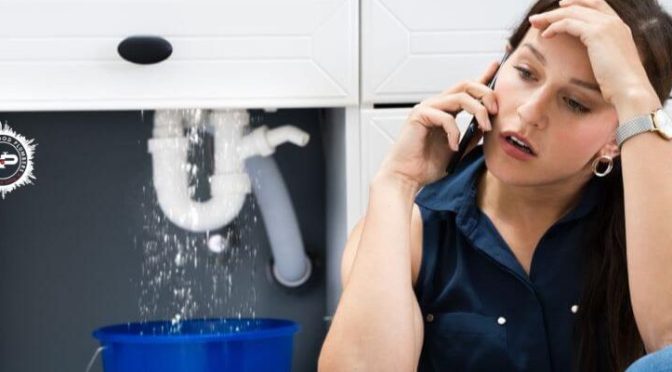
When a pressurised water pipe fails, water can enter walls, floors, cabinetry and other parts of a property very quickly.
What can cause Burst Pipes?
Pipe failures may be associated with:
- Ageing materials
- Corrosion
- Physical damage
- Deteriorated connections
- Excessive pressure
- Temperature-related stress
- Previous poor-quality installation
- General deterioration over time
Not every burst pipe looks dramatic. A failed connection behind a cabinet can also release a significant amount of water.
What should you do first?
If you discover a major water leak:
- Turn off the water supply if it is safe to do so.
- Move valuables and electrical items away from the affected area where possible.
- Avoid electrical equipment in wet areas.
- Contact a qualified plumber promptly.
- Document the damage for your insurer if appropriate.
Do not spend time attempting a complicated repair if water is continuing to flow.
A professional Emergency Plumber in Alphington can assess the immediate failure, isolate the affected section and determine what needs to be repaired.
The priority during a burst pipe is containment first and permanent repair second.
4. Blocked Drains and Recurring Drainage Problems
Blocked drains are among the most familiar plumbing issues for homeowners.
A bathroom basin, shower, kitchen sink or floor drain may gradually become slower before becoming completely blocked.
That gradual progression is useful because it gives homeowners an opportunity to act before the situation becomes more disruptive.
Common causes include:
- Hair
- Soap residue
- Food waste
- Grease and oils
- Foreign objects
- Tree root intrusion
- Build-up within drainage pipes
- Structural problems within older drains
A household drain cleaner may sometimes provide temporary relief, but it does not necessarily remove the cause.
If a drain repeatedly blocks after being cleared, that pattern deserves further investigation.
Repeated blockages can indicate that the obstruction has not been completely removed or that there is a broader drainage problem.
5. Running Toilets and Toilet Leaks
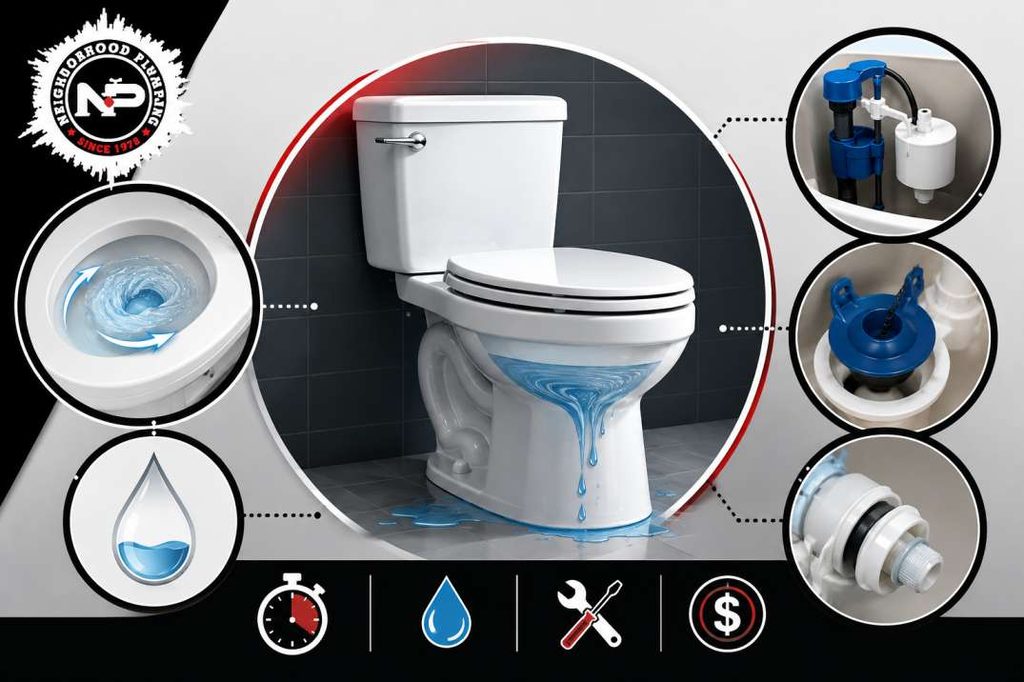
A toilet that continues running after flushing is another problem homeowners often tolerate for too long.
The cause may be relatively simple, such as a worn valve, damaged seal or faulty flushing mechanism.
However, the longer the toilet runs, the more water it can waste.
A toilet that intermittently refills when nobody has used it is also worth investigating. This can indicate a slow internal leak that may not be obvious.
An easy homeowner check
If you suspect a toilet is leaking internally, listen for periodic refilling when the toilet has not been used.
You can also inspect the area around the toilet for signs of moisture.
Never assume that a toilet that flushes correctly is necessarily functioning efficiently. Internal components can deteriorate while the fixture remains operational.
6. Low Water Pressure and Inconsistent Flow
Low water pressure can be frustrating, particularly when multiple fixtures are being used.
However, the location and timing of the problem provide useful clues.
For example, ask:
- Is the pressure low at one fixture or throughout the home?
- Did the problem appear suddenly?
- Is hot water pressure different from cold?
- Does the pressure change when another tap is opened?
- Are there signs of a leak?
- Has plumbing work recently been completed?
A problem affecting only one tap could be associated with the fixture itself.
A whole-house pressure change may require a broader assessment.
For homeowners in older properties, ageing or restricted pipework may also contribute to inconsistent flow.
The important point is not to assume that replacing one tap will solve a problem affecting the entire plumbing system.
7. Hot Water Problems
Hot water systems are another frequent source of household plumbing complaints.
The symptoms can vary significantly:
- Water takes too long to heat
- Hot water runs out unusually quickly
- Water temperature fluctuates
- The system makes unusual noises
- Water is leaking around the system
- Hot water is not available at all
The appropriate response depends heavily on the type of hot water system and the nature of the fault.
A minor component issue may be repairable, while an ageing system may require replacement.
Why diagnosis matters
Replacing equipment without first establishing why it has failed can lead to unnecessary expense.
A professional assessment should consider the system’s condition, age, installation and symptoms before recommending the most appropriate course of action.
Emergency Plumbing: Knowing When a Problem Cannot Wait
Not every plumbing issue requires an emergency response.
A dripping tap can generally be scheduled for a convenient repair. A major uncontrolled leak is different.
Situations that may warrant urgent attention include:
- A burst water pipe
- Rapidly spreading water damage
- A major leak that cannot be isolated
- Sewer overflow
- Significant flooding caused by plumbing
- No water where an urgent supply issue exists
- A serious hot water system leak
If you are dealing with an urgent plumbing failure, knowing where your main water isolation point is can save valuable time.
Every homeowner should ideally know how to shut off the home’s water supply and where relevant isolation valves are located.
Local Plumber Advice: Small Warning Signs Are Worth Investigating
One of the most useful lessons from everyday plumbing work is that plumbing systems often provide warning signs before a major failure occurs.
A drain becomes slower.
A tap starts dripping.
A toilet begins refilling by itself.
A water stain appears.
The hot water supply becomes inconsistent.
None of these automatically means a major repair is coming. But they are signals that something has changed.
A Local Plumber can help identify whether the issue is isolated or part of a larger problem.
This is particularly valuable when several small symptoms appear at the same time.
For example, low water pressure combined with dampness or unexplained water usage should not simply be treated as unrelated inconveniences.
Preventative Plumbing Maintenance Can Reduce Surprises
Homeowners generally think about plumbing when something breaks. A better approach is to incorporate preventative plumbing maintenance into normal property care.
This does not mean constantly paying for unnecessary inspections or replacing functioning equipment.
Instead, it means paying attention to the condition of the plumbing system and addressing reasonable warning signs before they become failures.
Useful preventative habits include:
- Check under sinks periodically for moisture.
- Look for corrosion around exposed connections.
- Do not pour cooking grease down drains.
- Use suitable drain strainers.
- Monitor unusual changes in water usage.
- Pay attention to recurring blockages.
- Check toilets for persistent running.
- Know where water isolation valves are located.
- Have recurring plumbing issues properly diagnosed.
- Avoid repeatedly relying on temporary fixes.
Preventative maintenance is particularly relevant for established homes where some plumbing components may have been installed many years ago.
What Homeowners Often Get Wrong About Plumbing Problems
“If the leak is small, it is not serious.”
Size does not always indicate severity.
A small concealed leak can cause considerable damage over time, while a visible dripping tap may be relatively straightforward to repair.
The location and source matter more than the number of drops.
“Drain cleaner fixes a blocked drain.”
It may improve symptoms temporarily, but recurring blockages require diagnosis.
If the same drain repeatedly becomes blocked, investigate why.
“All plumbing problems need to be fixed immediately.”
Not necessarily.
Some problems are urgent; others can be scheduled.
The important skill is recognising the difference.
“The cheapest repair is always the best option.”
A low-cost temporary repair may be appropriate for a minor issue, but repeatedly repairing a failing component may not represent good value.
A good plumber should explain the available options rather than automatically recommend the most expensive solution.
Expert Tips for Managing Plumbing Problems in Your Home
1. Describe the symptom accurately
Instead of simply saying “the shower is broken,” explain what is happening.
For example:
“The shower pressure drops after about five minutes, and the basin remains normal.”
Specific information helps the plumber diagnose the problem more efficiently.
2. Mention when the problem started
A sudden change can point toward a different cause than a problem that has gradually developed over six months.
3. Tell the plumber about previous work
Previous repairs, renovations or fixture replacements can provide important context.
4. Ask what caused the problem
Understanding the cause helps prevent the same issue from returning.
5. Ask about temporary versus permanent repairs
If there are multiple options, ask what each solution involves, how long it is expected to last and what risks remain.
6. Do not conceal recurring symptoms
If a drain has blocked four times in six months, mention all four incidents.
The history may be more useful than the latest blockage itself.
Why Choosing Plumbers in Alphington Should Be About More Than Availability
When selecting Plumbers in Alphington, homeowners naturally consider price and availability. Those factors matter, particularly during urgent situations.
However, technical competence and communication are equally important.
A trustworthy plumbing professional should be able to explain:
- What they believe is causing the problem
- What needs to be repaired
- Whether the repair is urgent
- What options are available
- Whether further investigation is recommended
- What limitations or uncertainties exist
- What maintenance could reduce recurrence
For residential plumbing Alphington, this practical communication can make the repair process considerably easier for homeowners.
You do not need to become a plumbing expert yourself. You should, however, receive enough information to make an informed decision about your property.
Final Takeaway: Pay Attention Before a Small Problem Becomes a Big One
The Common Plumbing Problems in Alphington are not always dramatic when they begin.
A slow drain, dripping tap, running toilet, low water pressure or small water stain can seem insignificant. Yet these symptoms can sometimes provide early evidence of a developing plumbing fault.
The most useful approach is neither to panic over every minor issue nor to ignore problems until they become emergencies.
Instead:
- Recognise warning signs.
- Deal with recurring problems properly.
- Know how to isolate your water supply.
- Use qualified professionals for work that requires specialist knowledge.
- Ask questions about the cause and available repair options.
- Consider preventative maintenance for an ageing or heavily used system.
Whether you need routine Plumbing Repairs or an urgent response to a burst pipe, informed decisions can help protect your home and reduce unnecessary disruption.
If you are dealing with an unexplained leak, recurring blockage, failing fixture or another plumbing concern, Neighbourhood Plumbers can assess the problem and explain the practical next steps.
Frequently Asked Questions
1. What are the most common plumbing problems in Alphington homes?
Common issues include leaking taps and fixtures, blocked drains, concealed water leaks, running toilets, low water pressure, burst pipes and hot water problems. The exact causes vary depending on the property’s age, plumbing installation, maintenance history and household usage.
One important point is that recurring problems deserve more attention than isolated minor faults. For example, a drain that blocks repeatedly may indicate an underlying drainage issue rather than simply requiring another quick clearing.
2. When should I call an Emergency Plumber in Alphington?
An Emergency Plumber in Alphington may be appropriate when a plumbing failure is causing or could rapidly cause significant damage. Examples include burst pipes, uncontrolled water leaks, sewer overflow or major flooding that cannot be safely isolated.
If water is flowing uncontrollably, the first priority is to shut off the water supply if you can do so safely. Then arrange professional assistance rather than attempting a complex repair yourself.
3. How can I tell if I have a hidden water leak?
Look for unexplained dampness, water stains, mould or musty smells, swollen cabinetry, damaged flooring or unusual water consumption.
Another useful warning sign is moisture that repeatedly appears in the same location despite no obvious source.
A hidden leak should not be ignored simply because the amount of visible water is small. Water can travel through building materials before appearing some distance from the actual leak.
4. How often should homeowners arrange preventative plumbing maintenance?
There is no single maintenance interval that is appropriate for every property. A newer home with modern plumbing may have different requirements from an older property with ageing fixtures and pipework.
Instead of relying only on a calendar, homeowners should monitor the condition of their plumbing and investigate recurring or changing symptoms. Professional advice can also help determine whether particular components or systems require periodic inspection based on their age and condition.
5. Should I repair or replace a faulty plumbing fixture?
It depends on the condition, age and type of fixture, as well as the nature of the fault.
A worn internal component may make a repair sensible. If a fixture is heavily deteriorated, repeatedly failing or difficult to source replacement parts for, replacement may provide better long-term value.